

What Is a Salah Time Indicator? A Complete Guide for Masjids
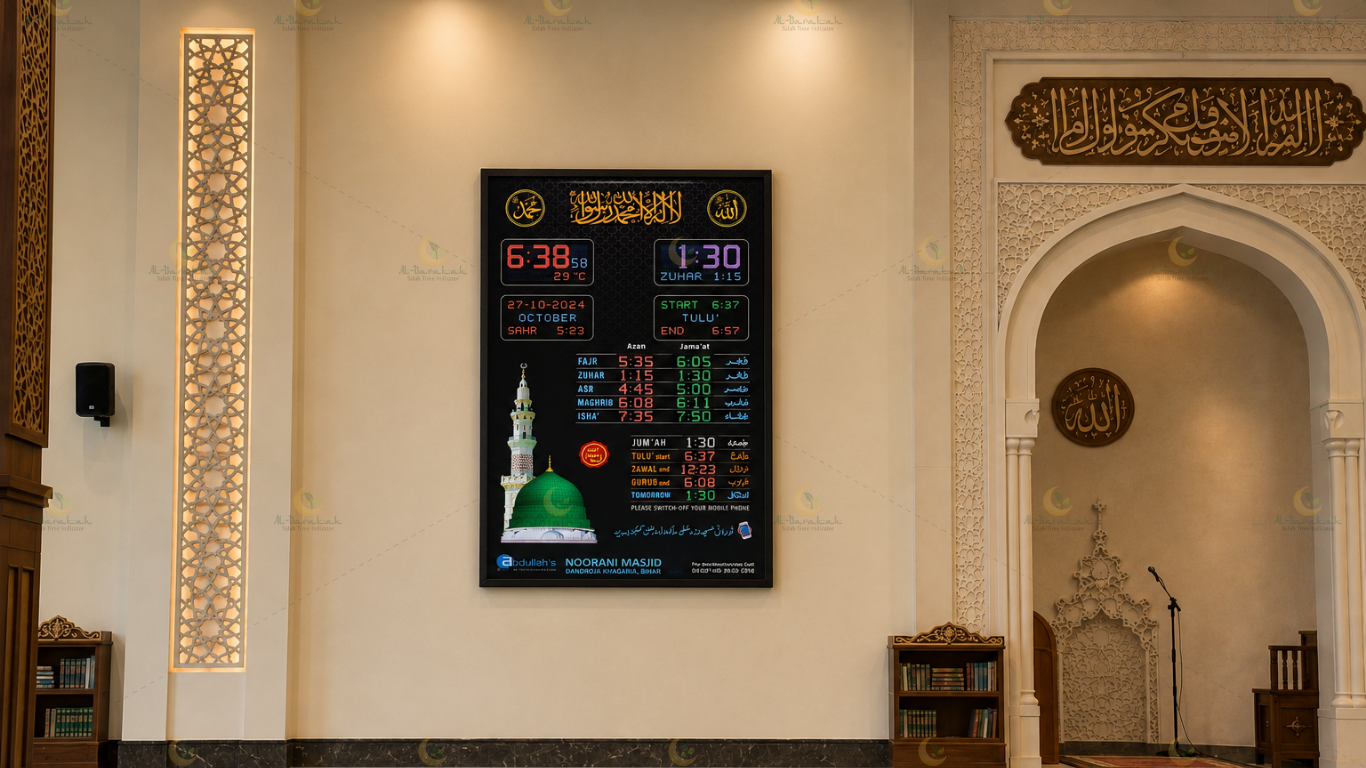
A Salah Time Indicator is a digital prayer-time display designed to help people in a masjid quickly see important Salah-related timings such as Azan time, Jama’at time, current time, next Jama’at, and other prayer-related information.
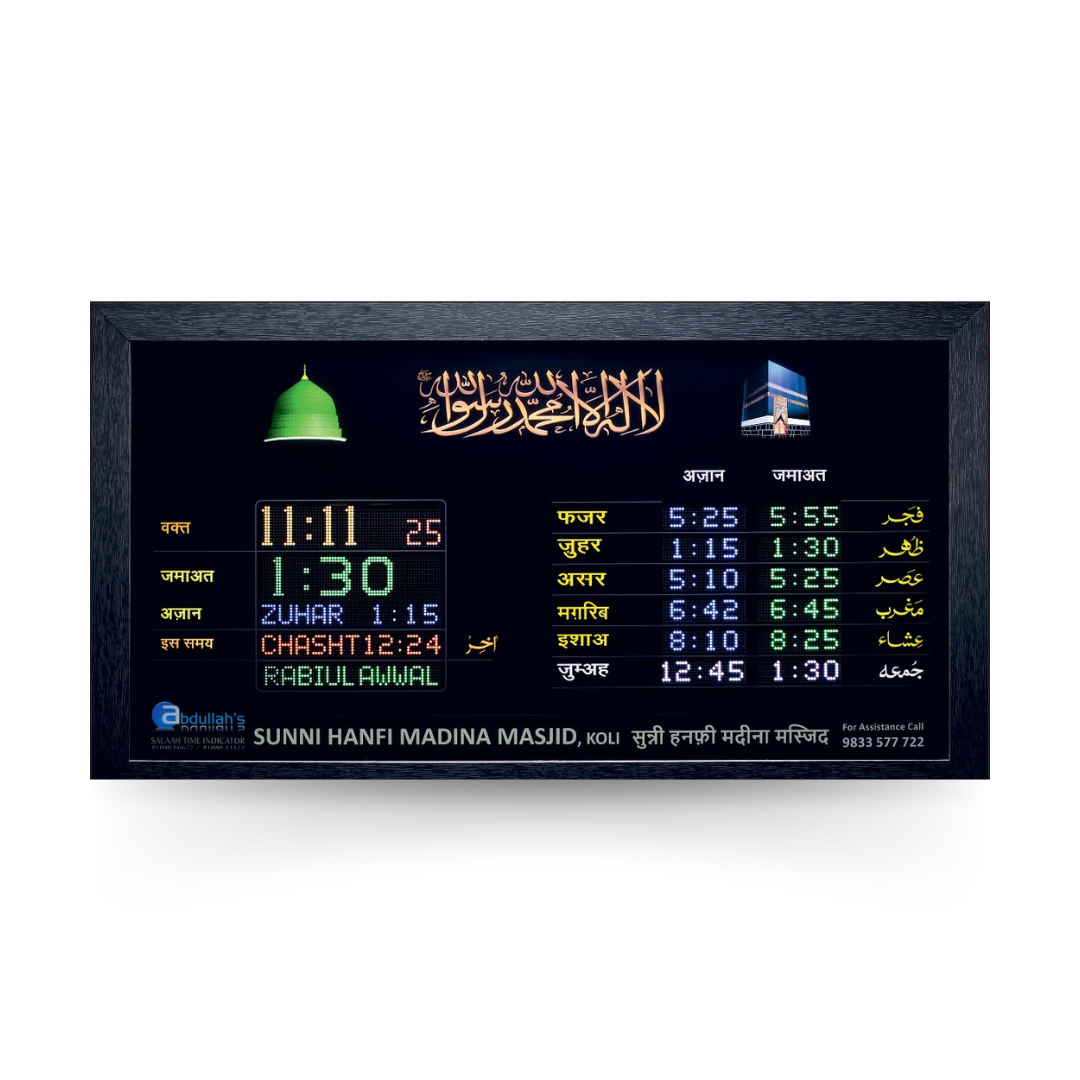
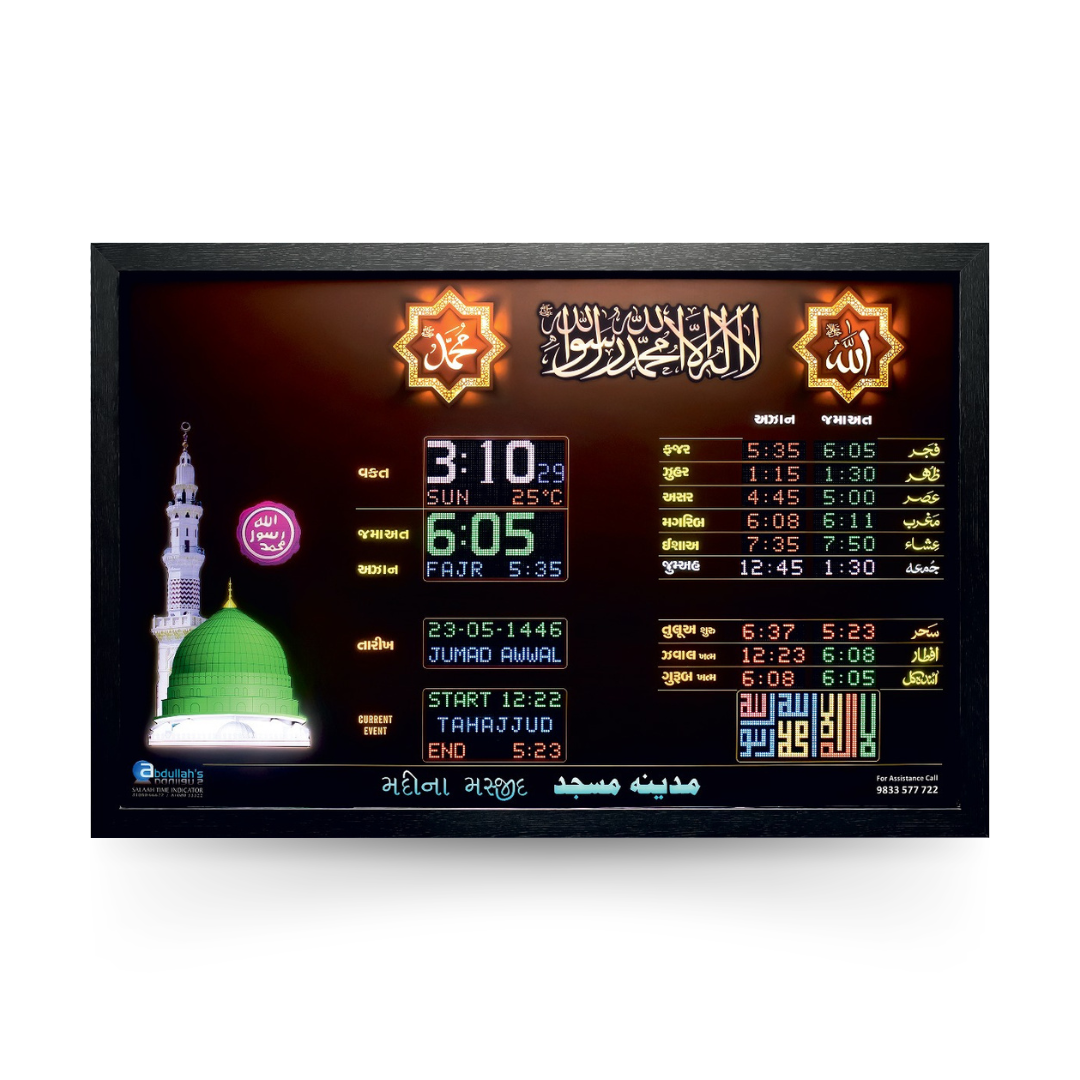
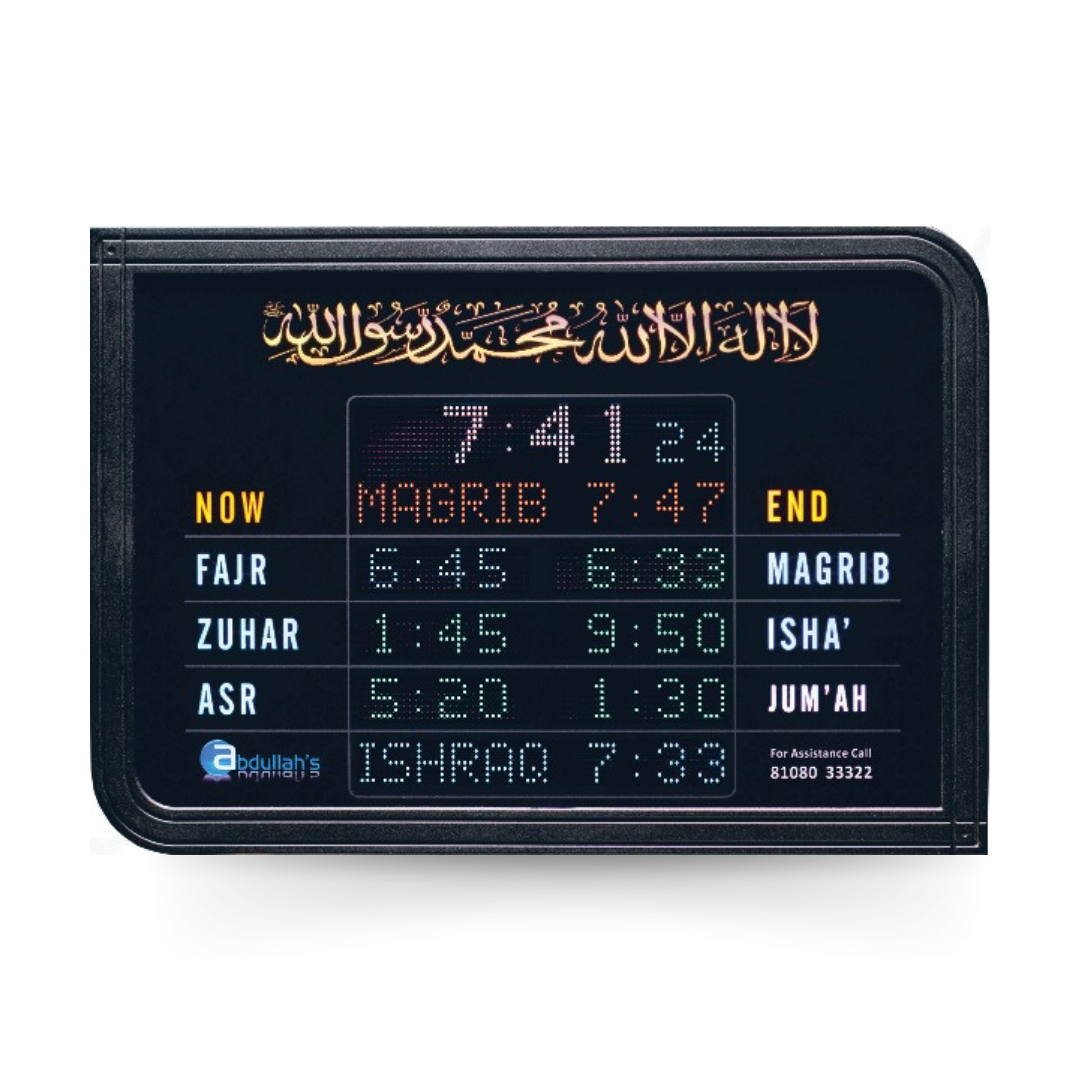
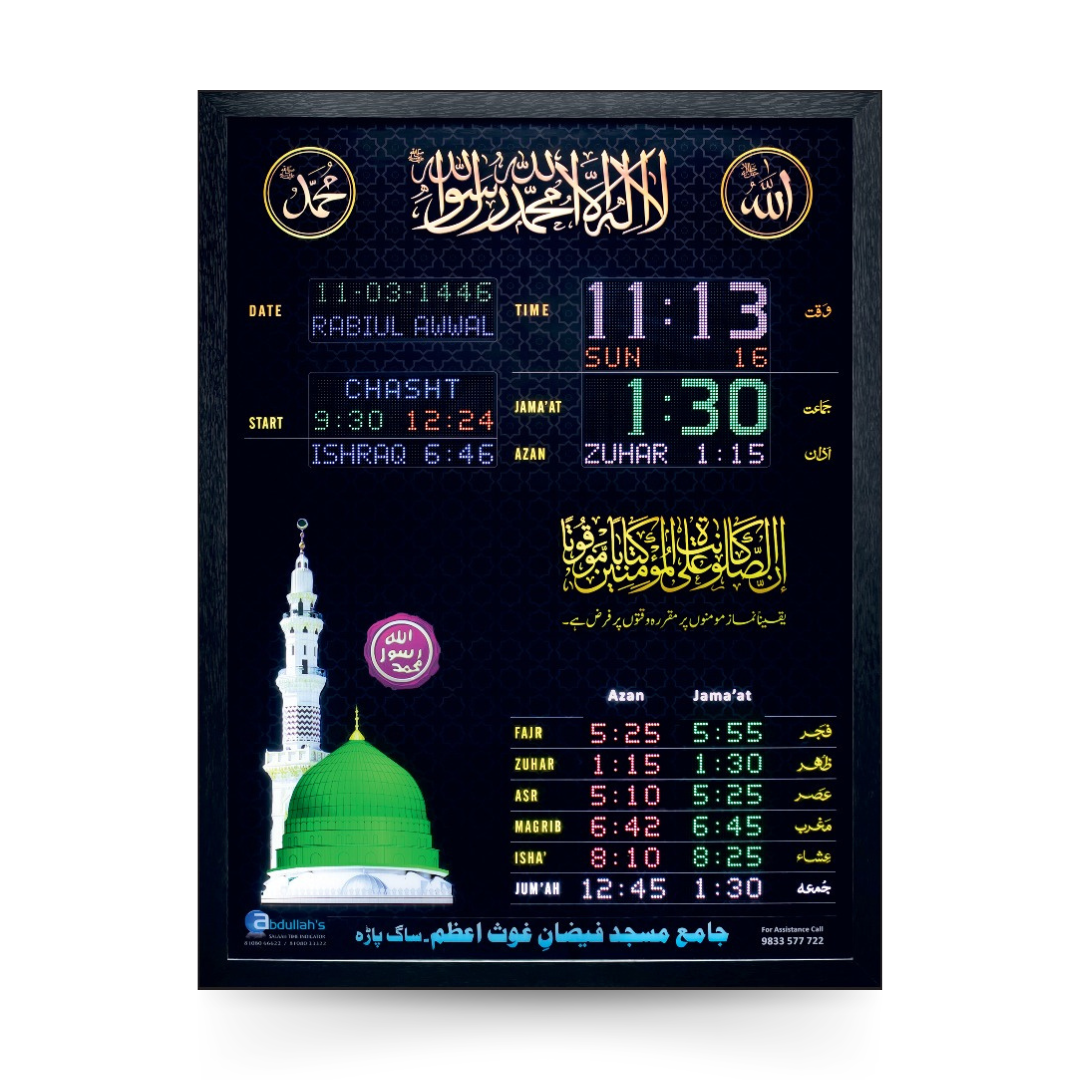
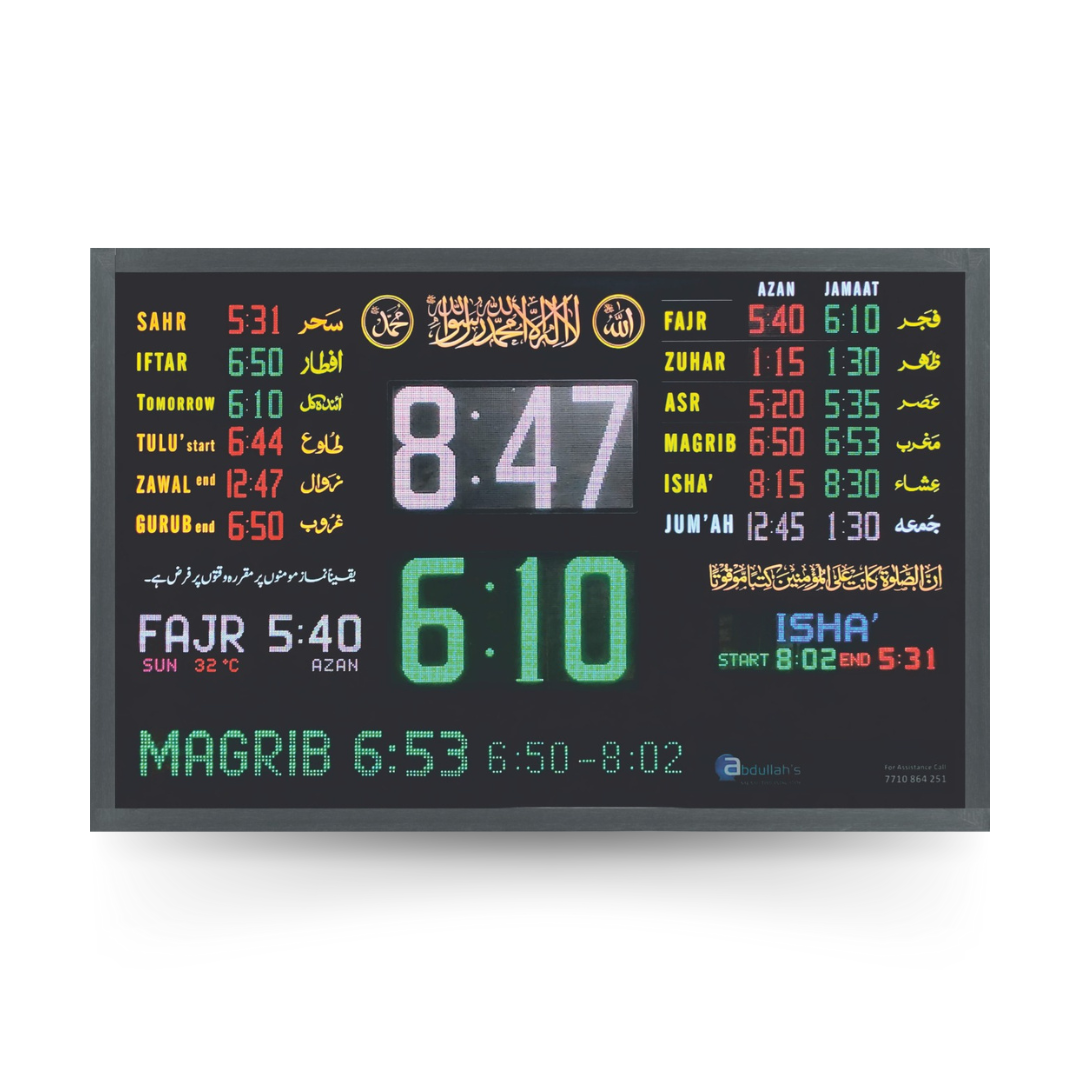
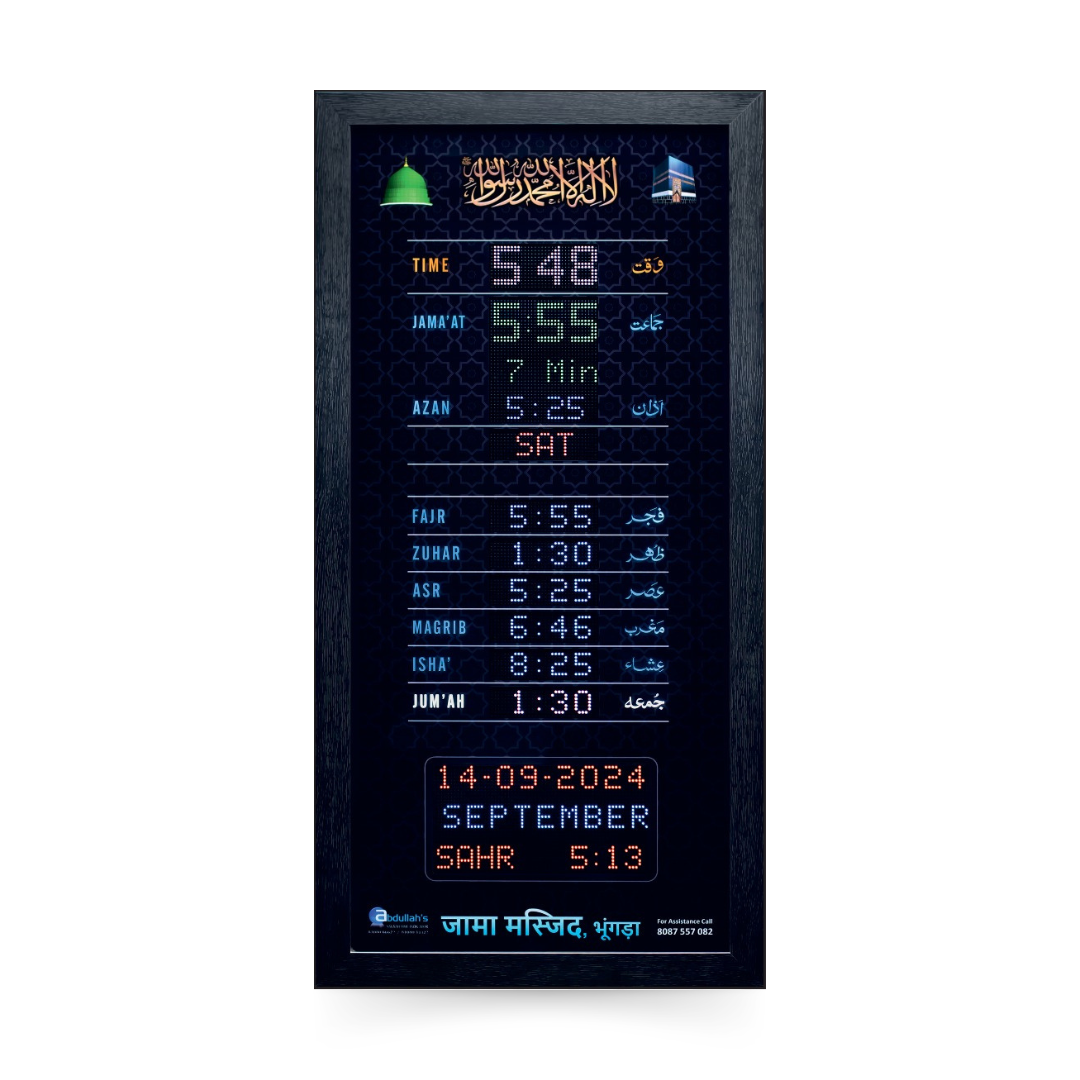
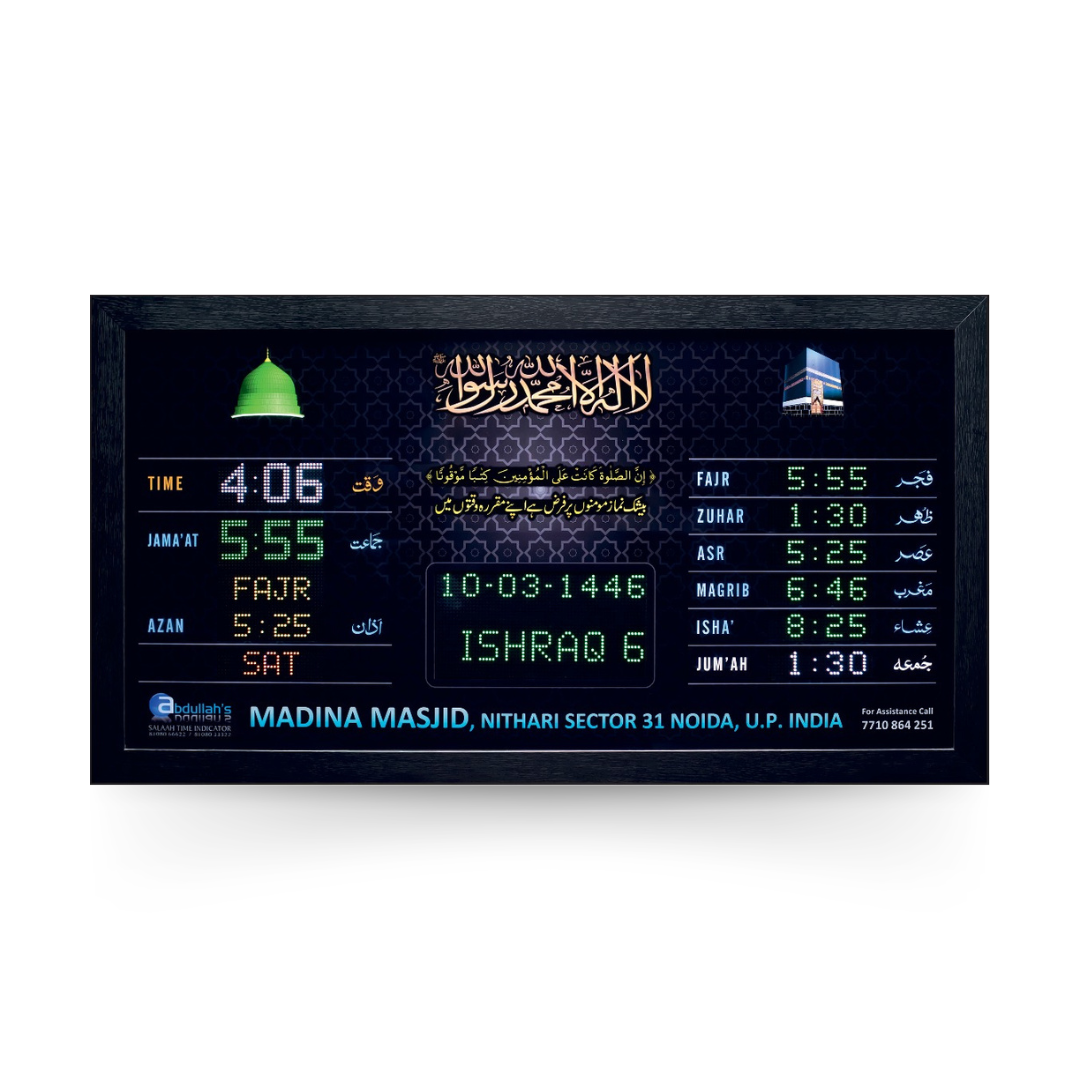
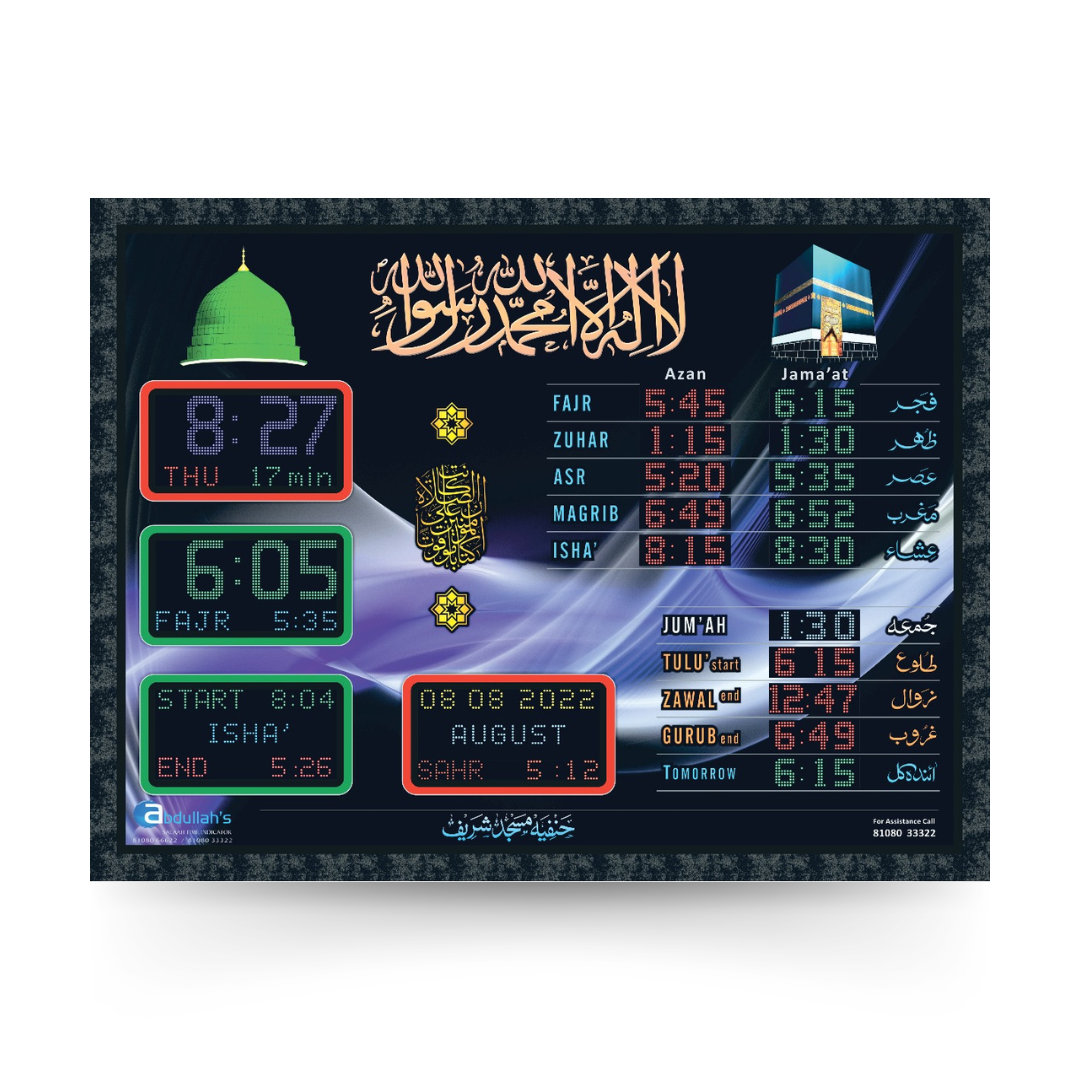
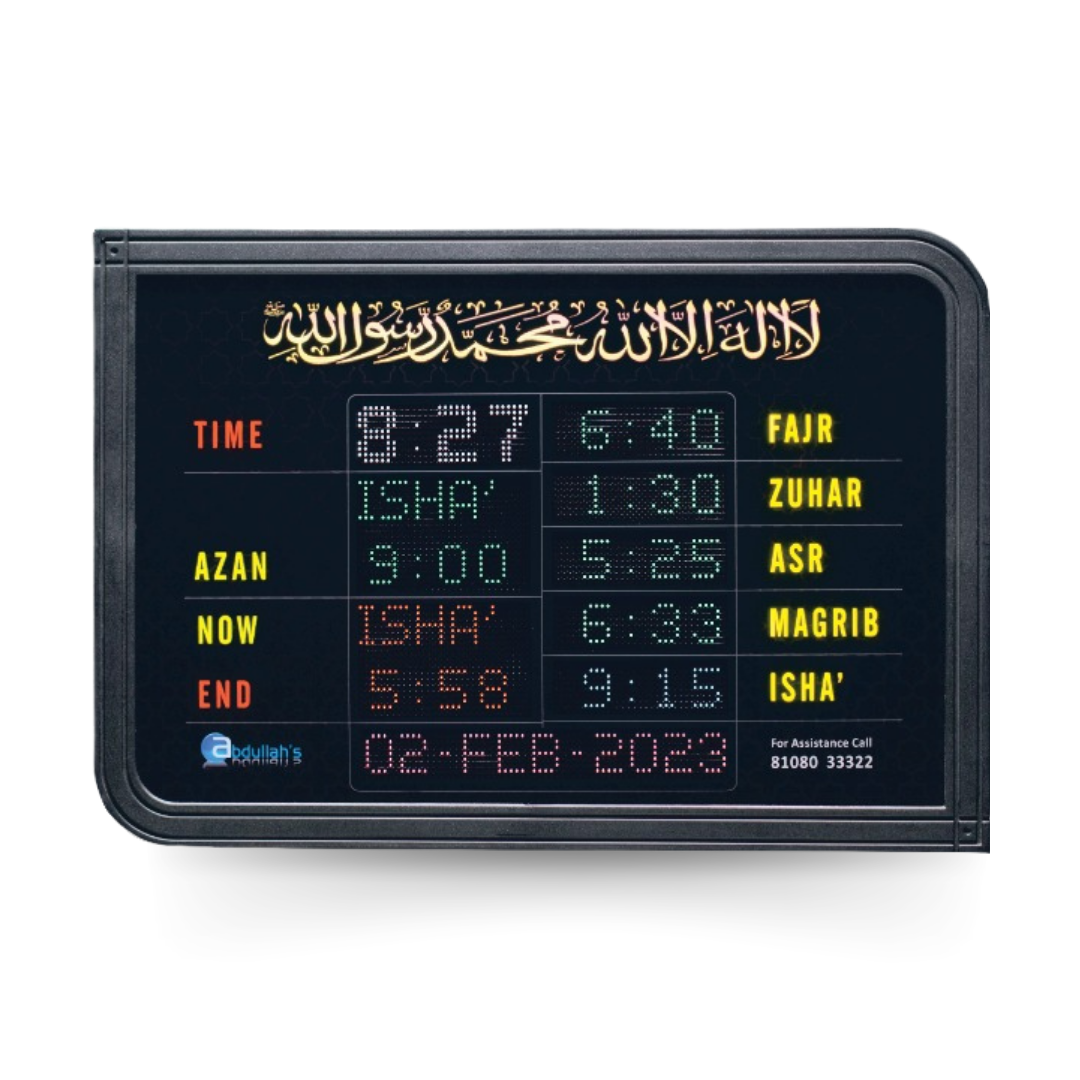
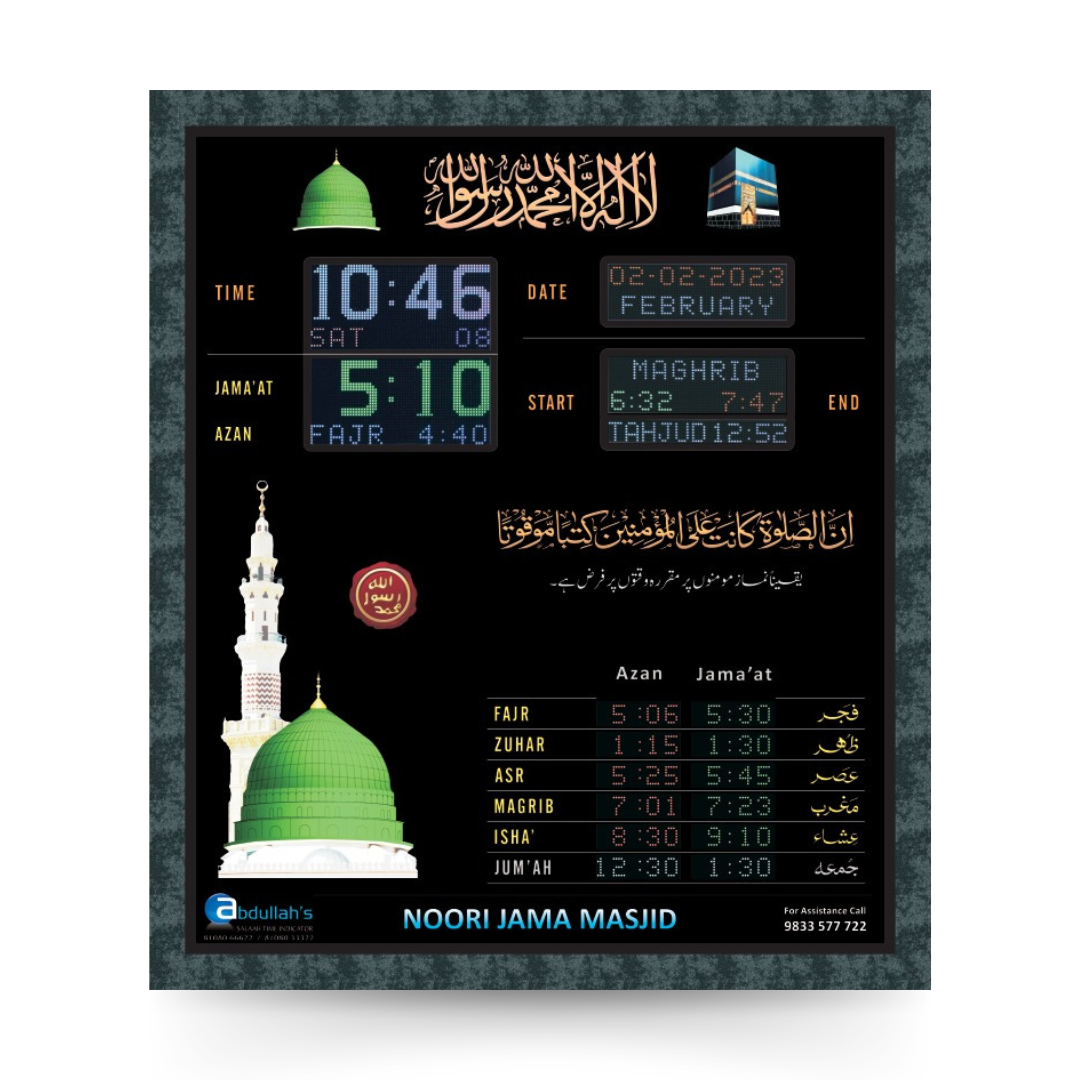
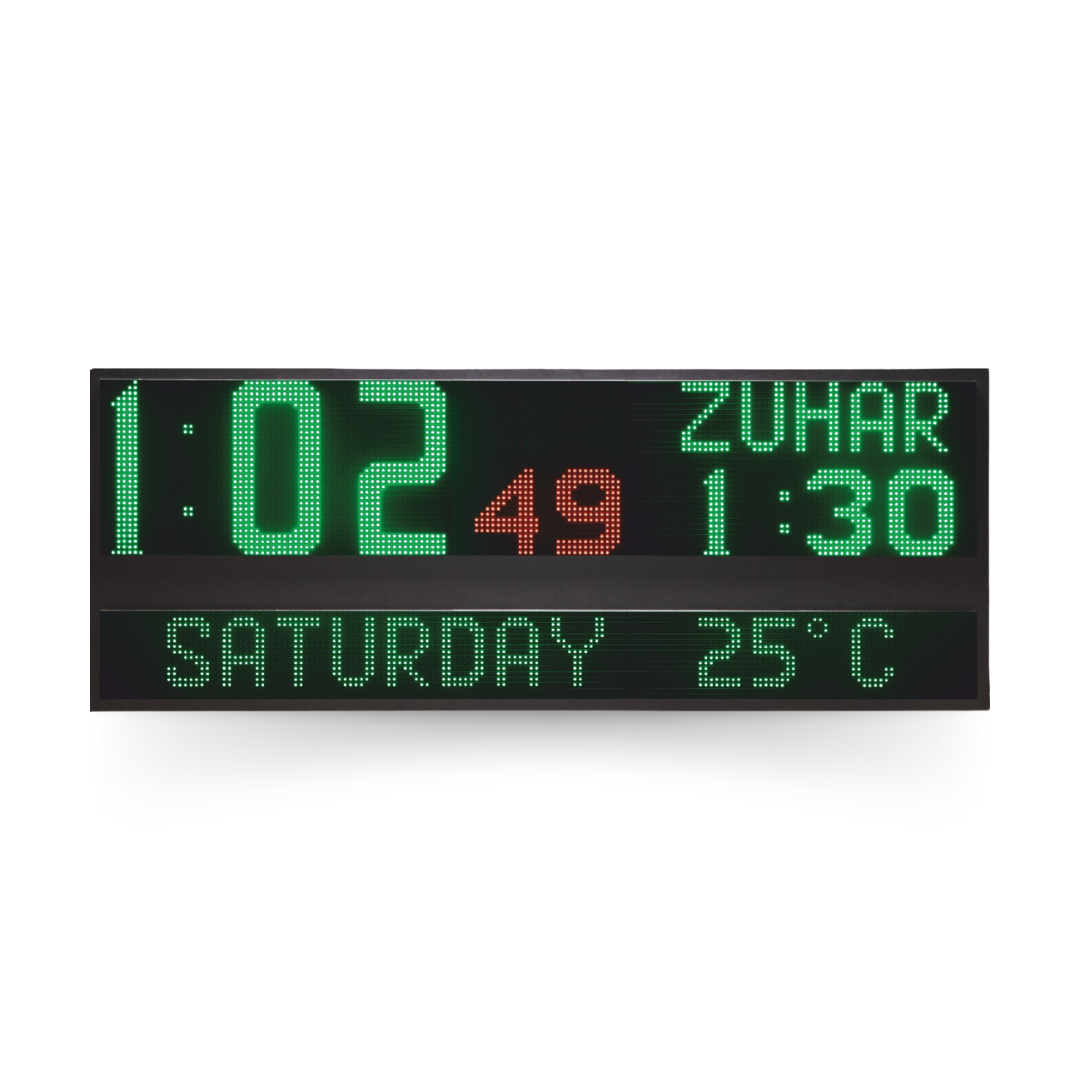
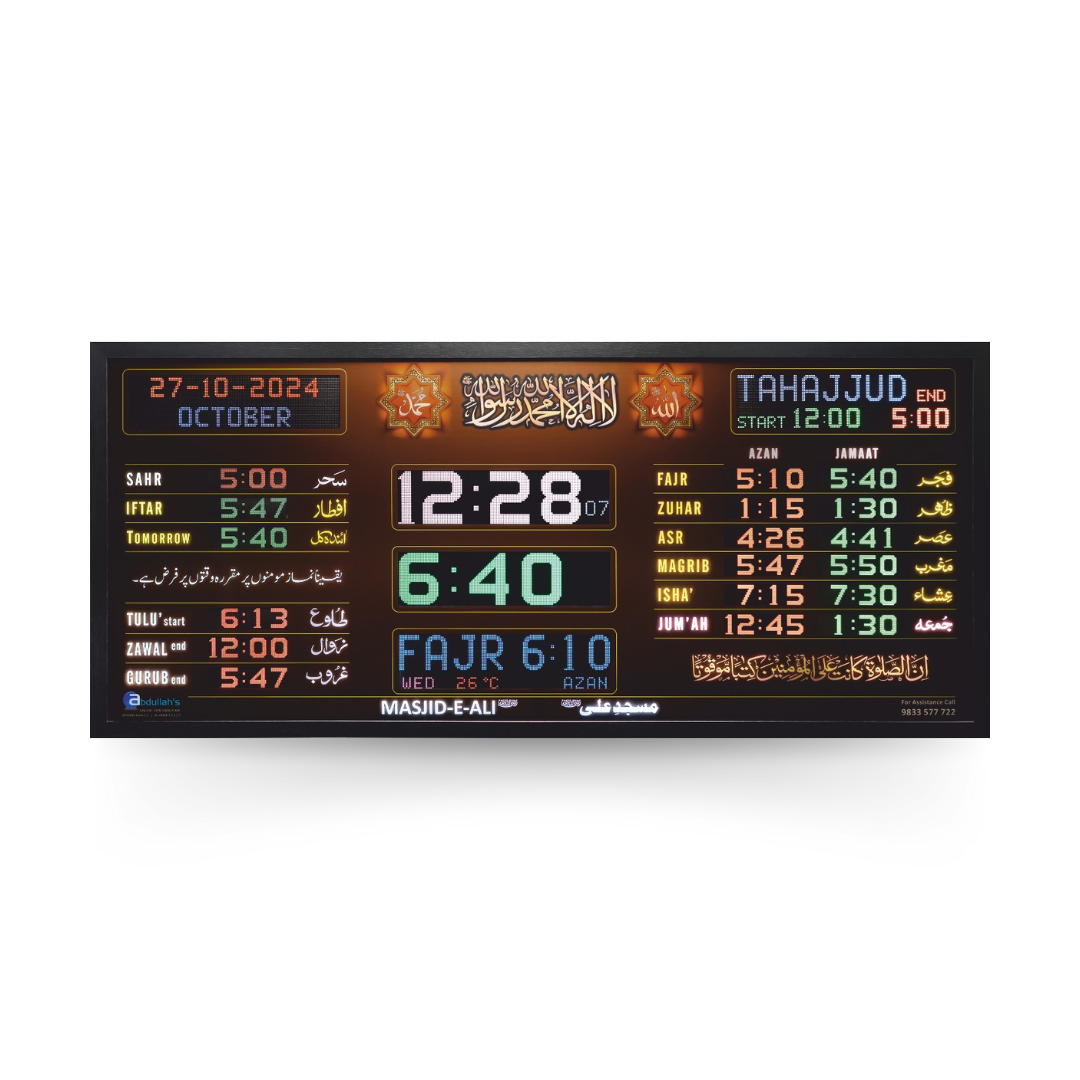
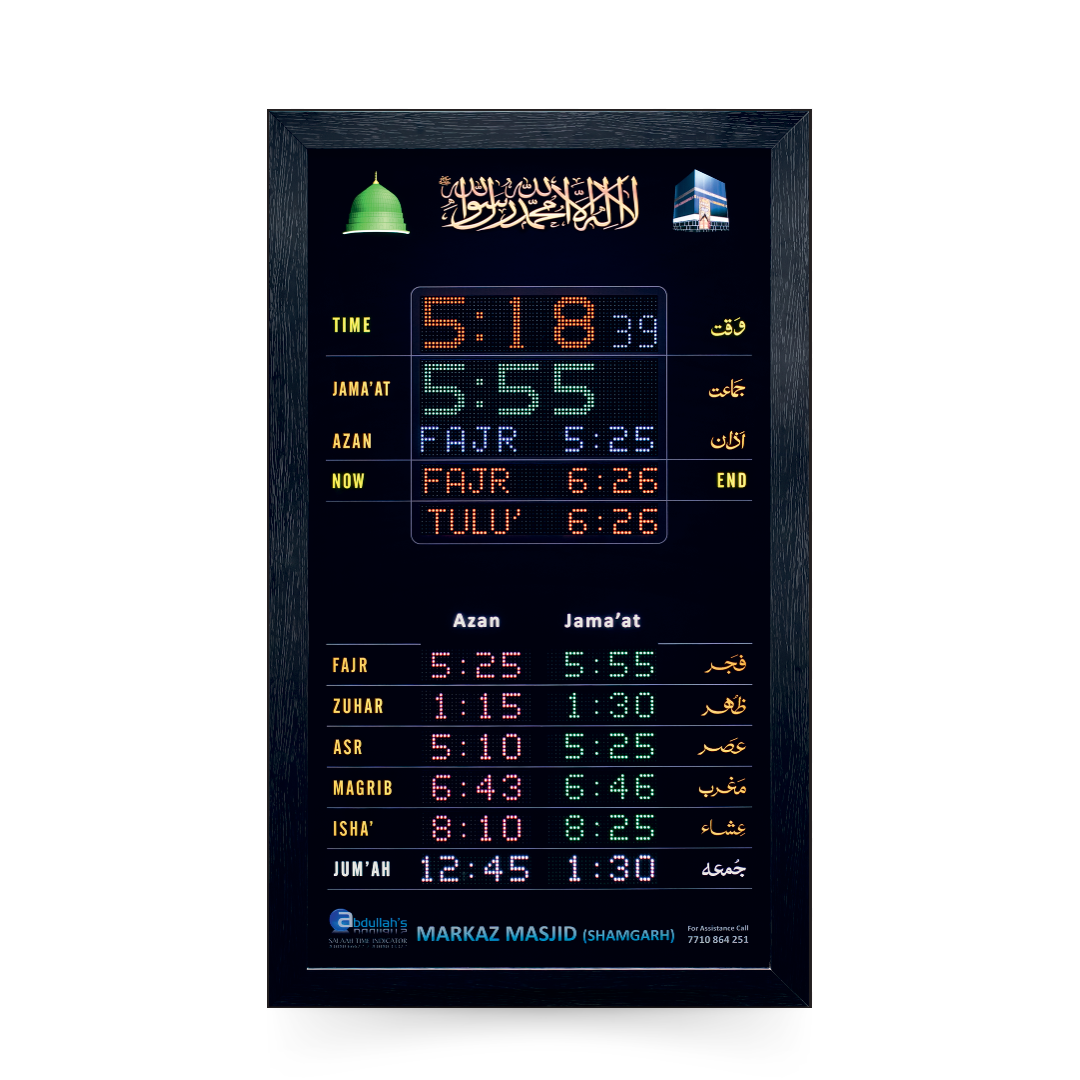
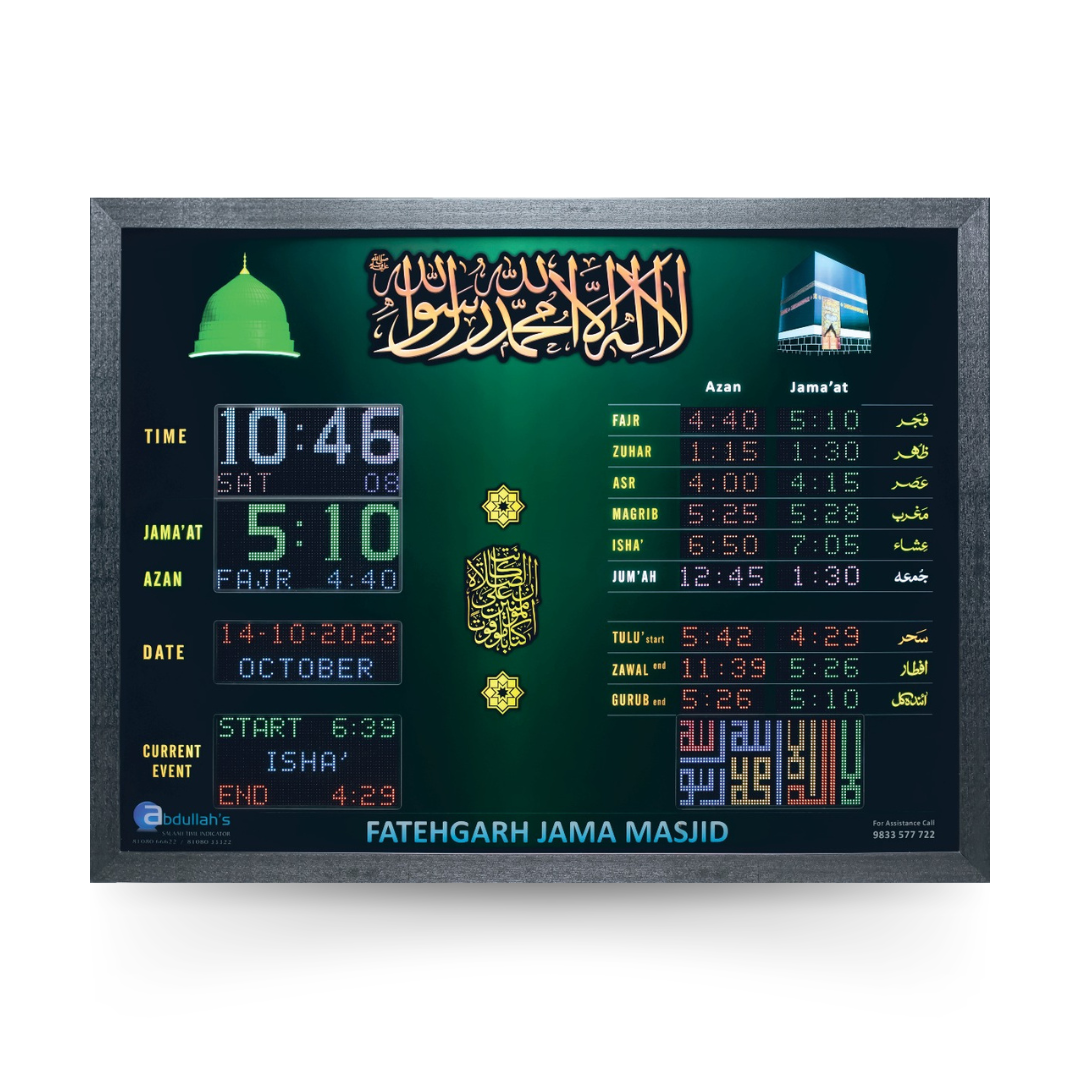
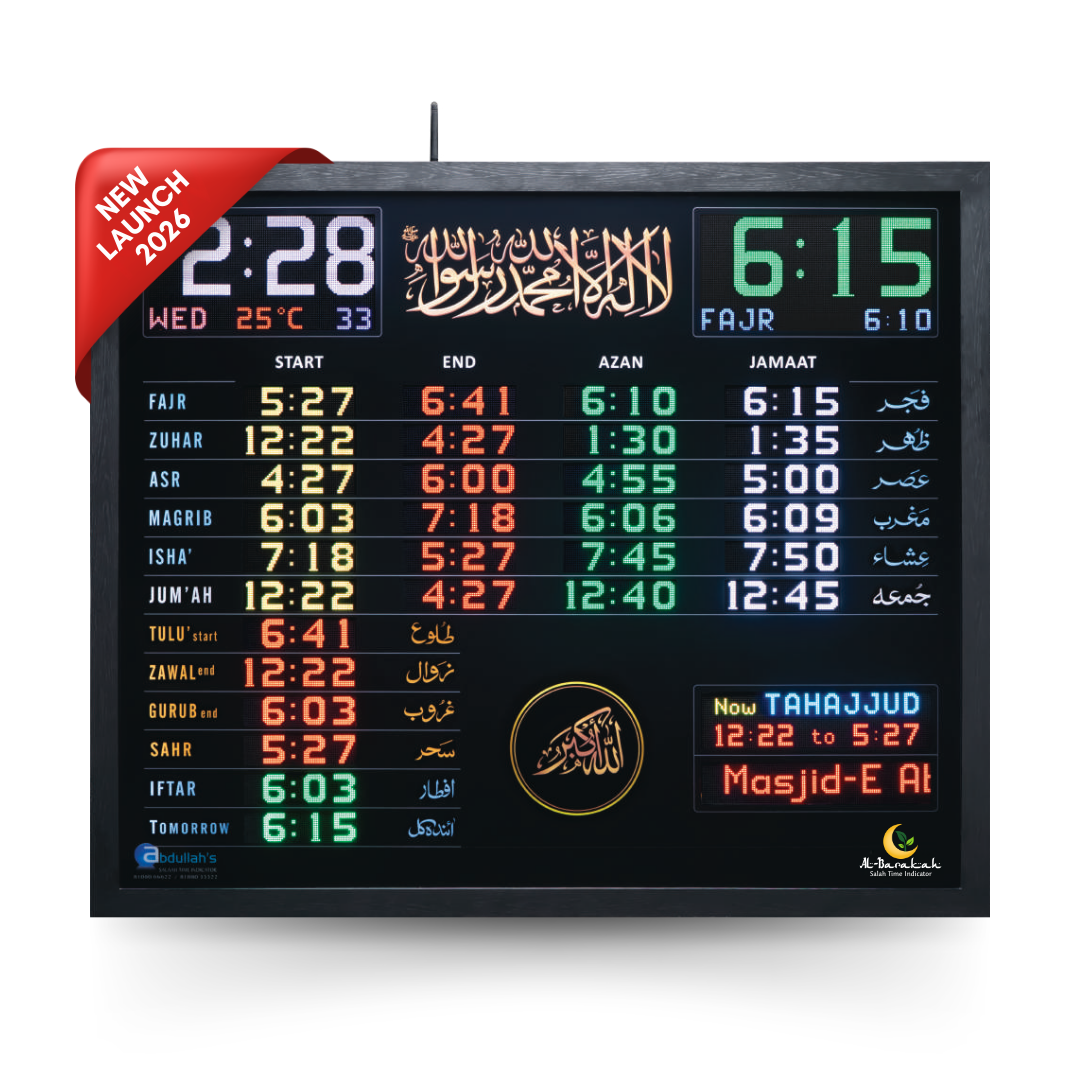
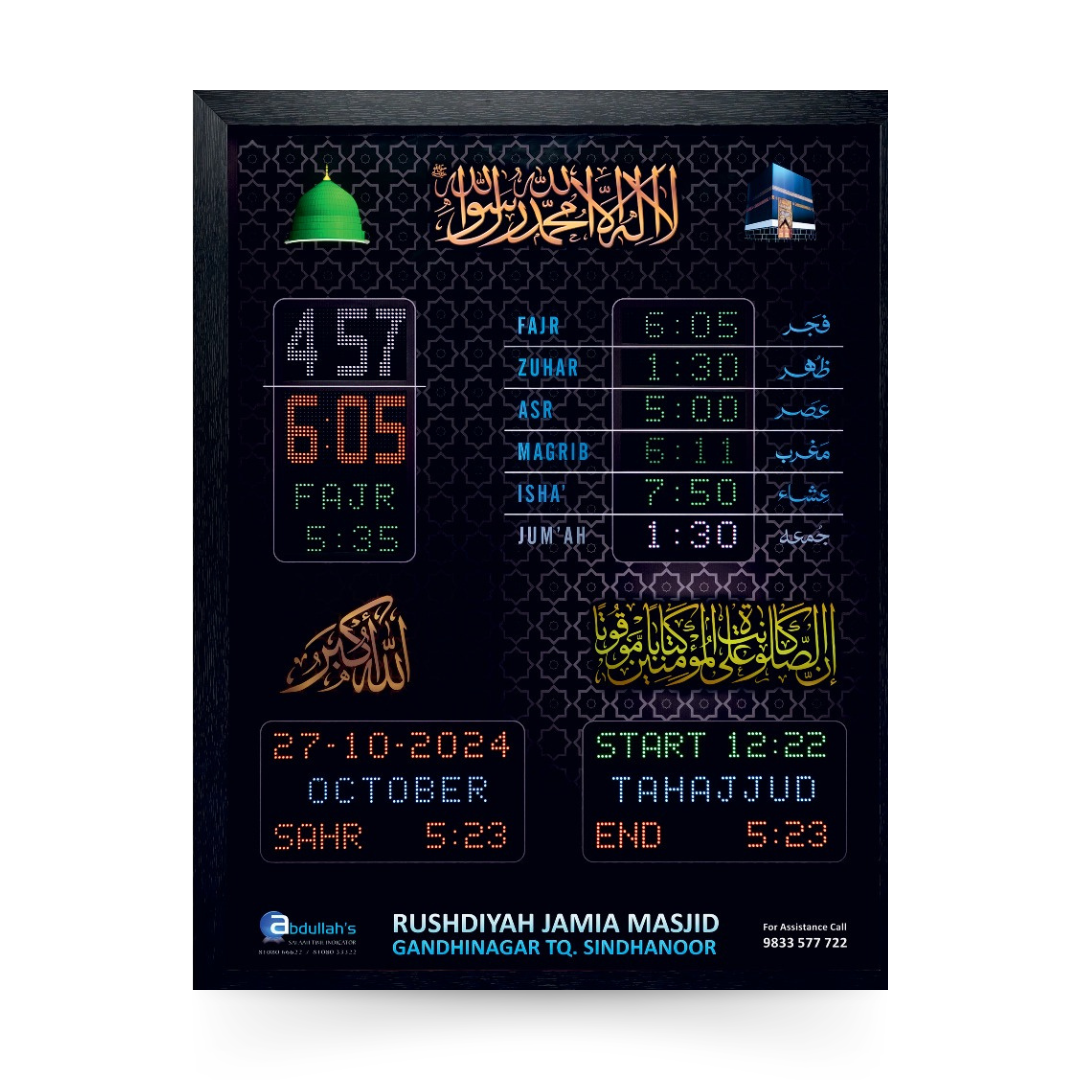
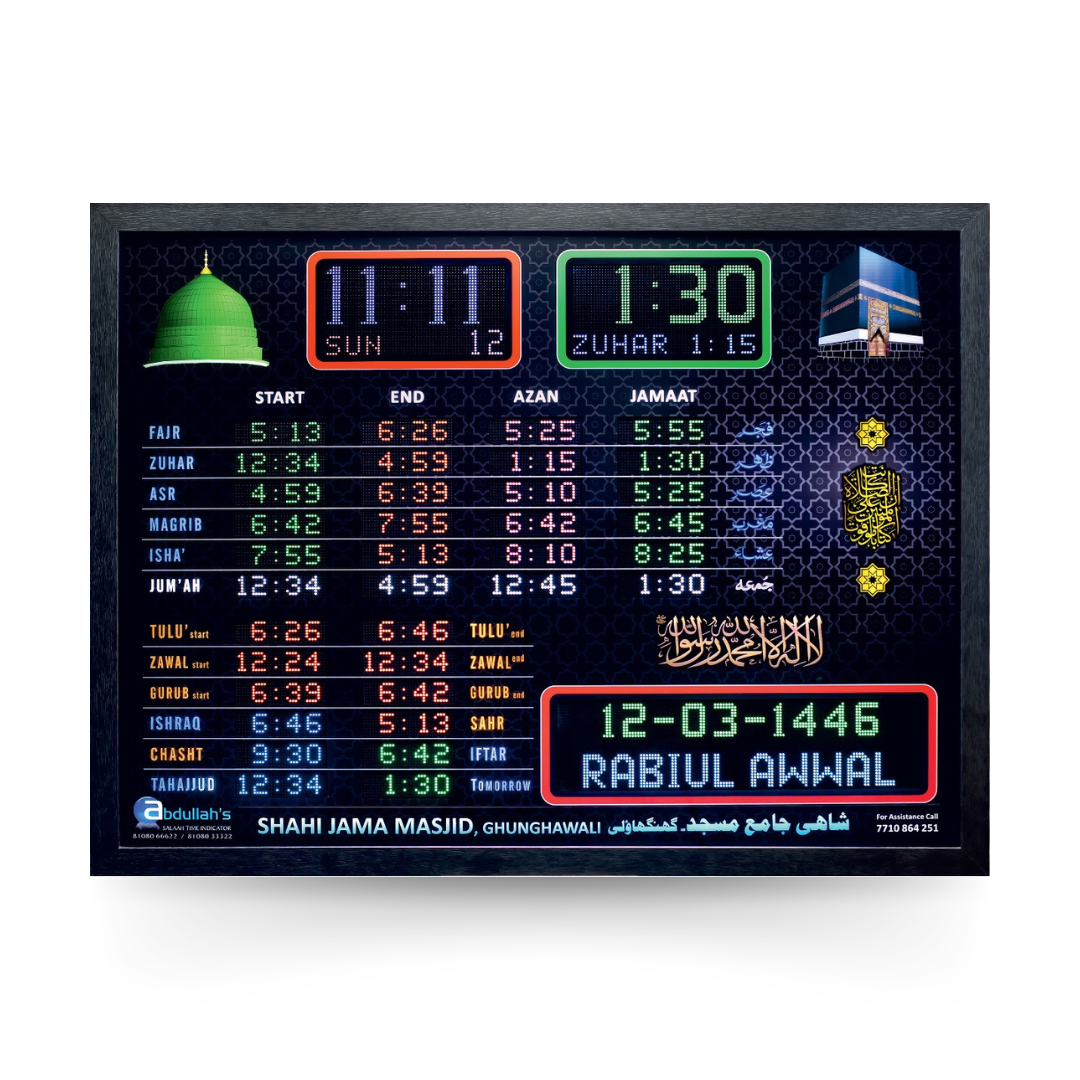
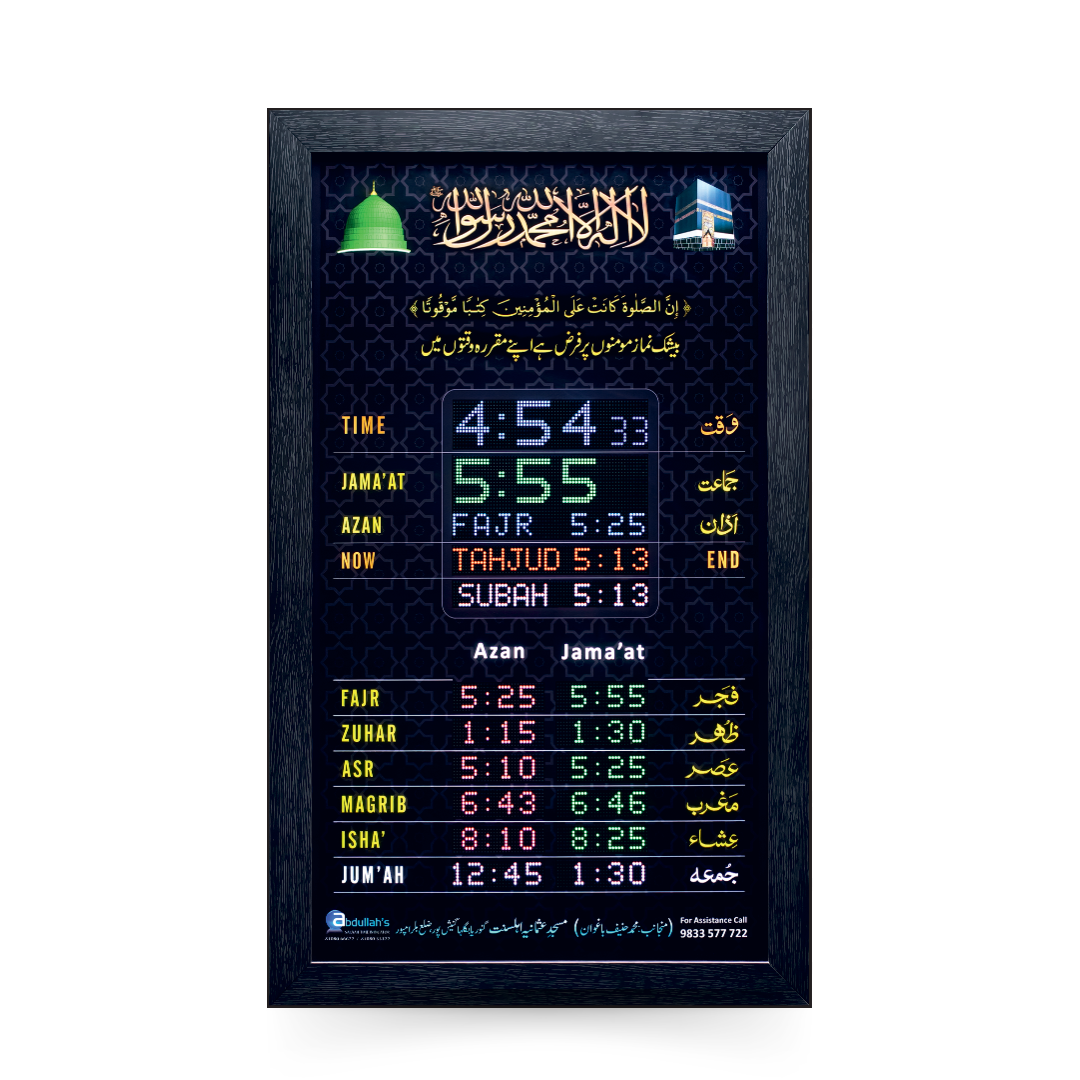
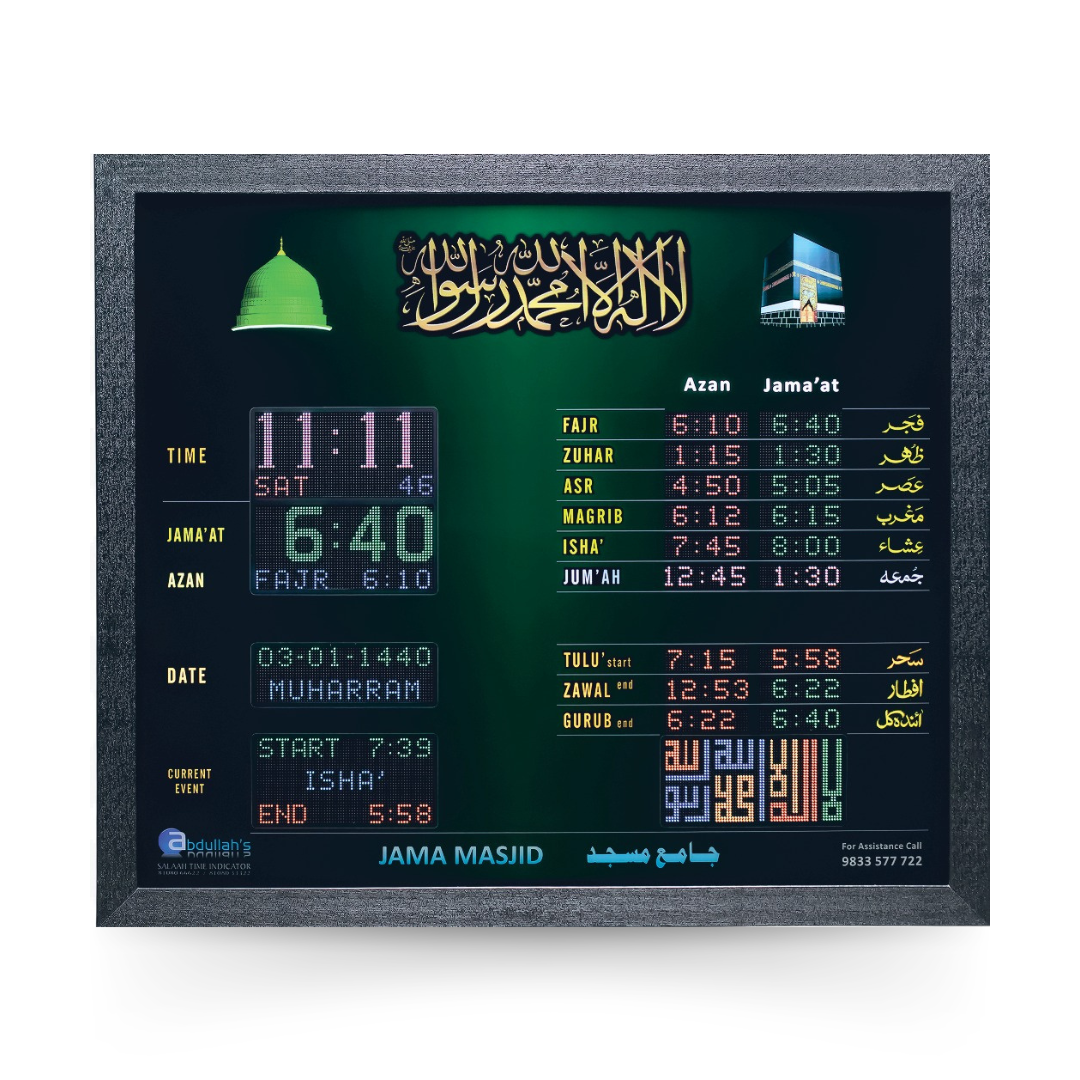
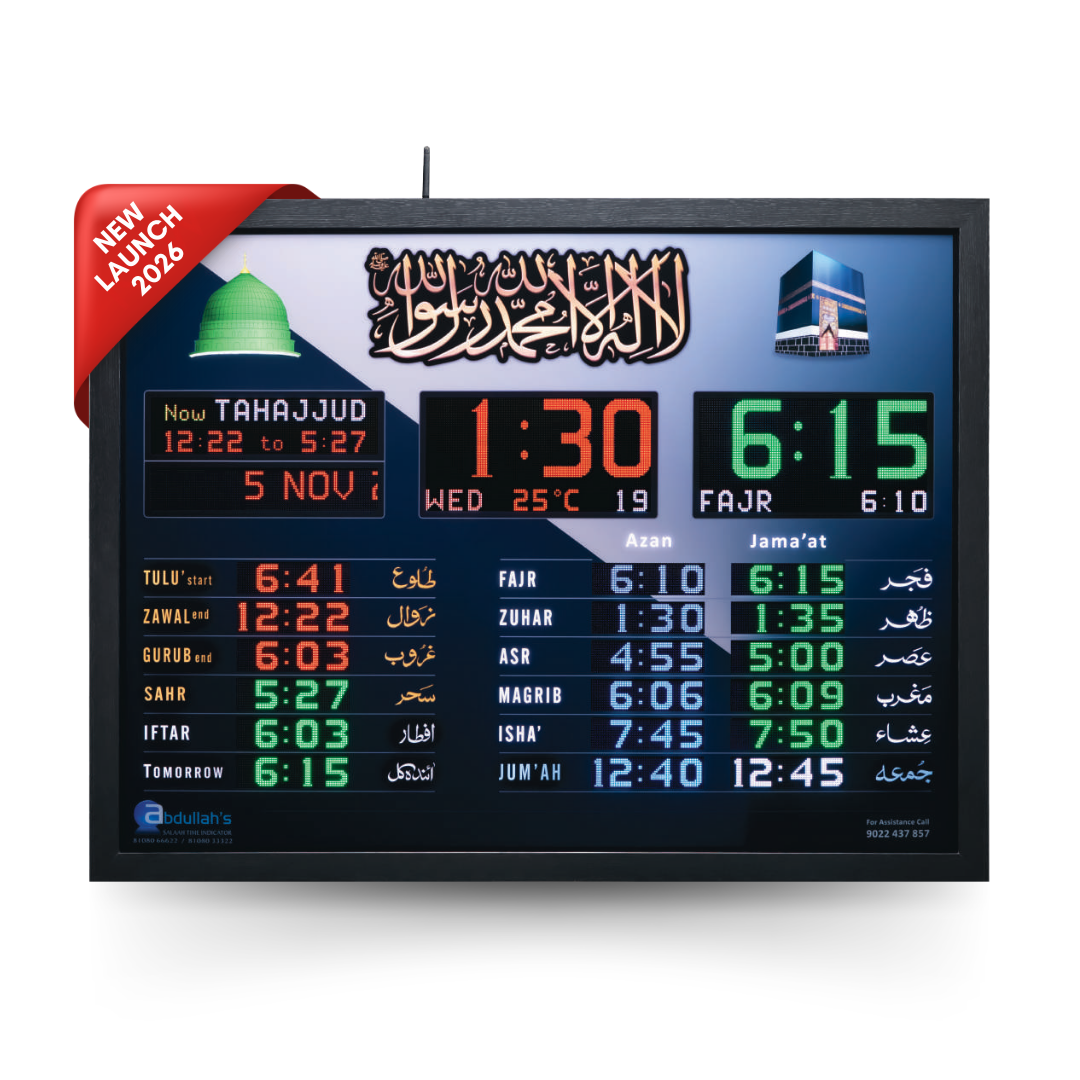
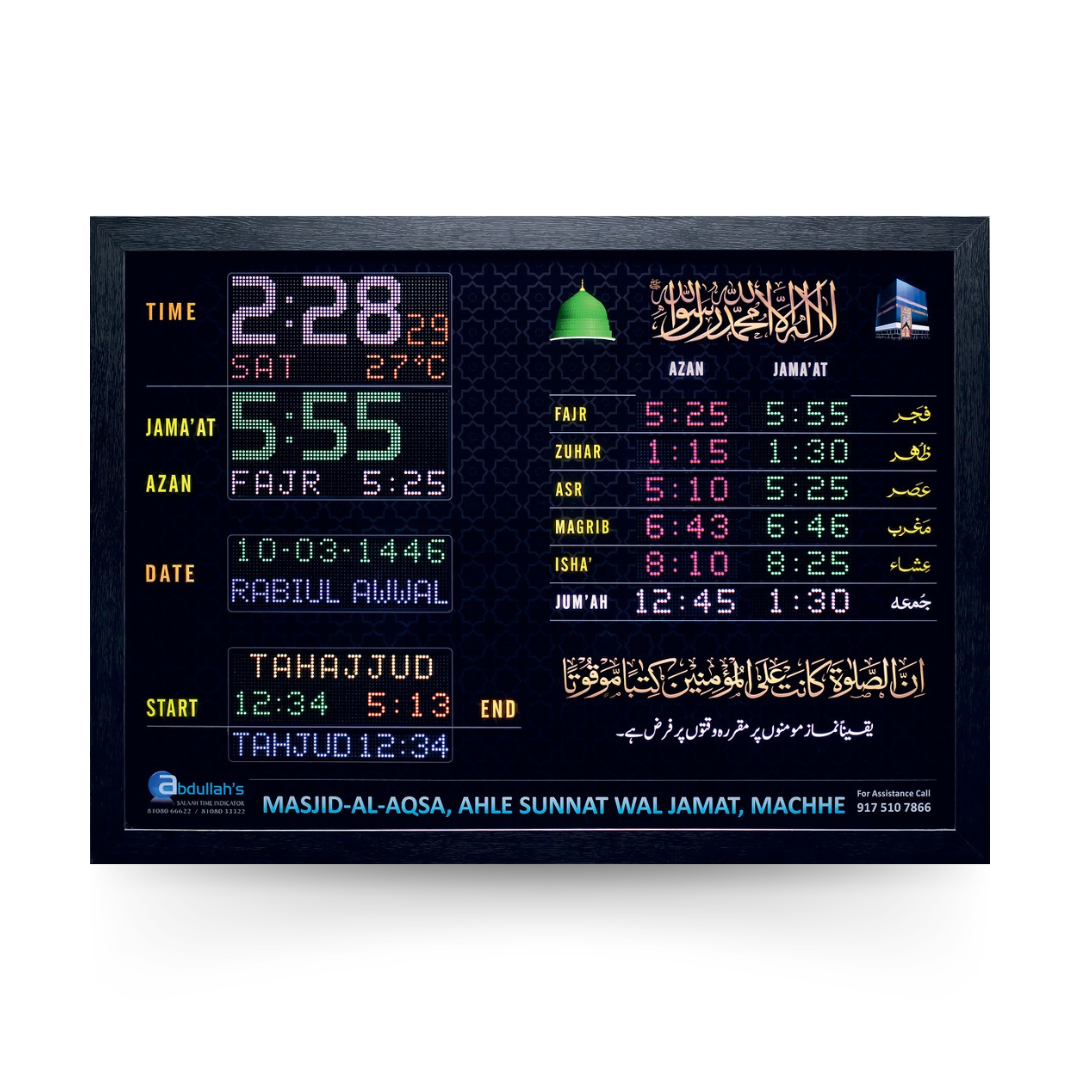
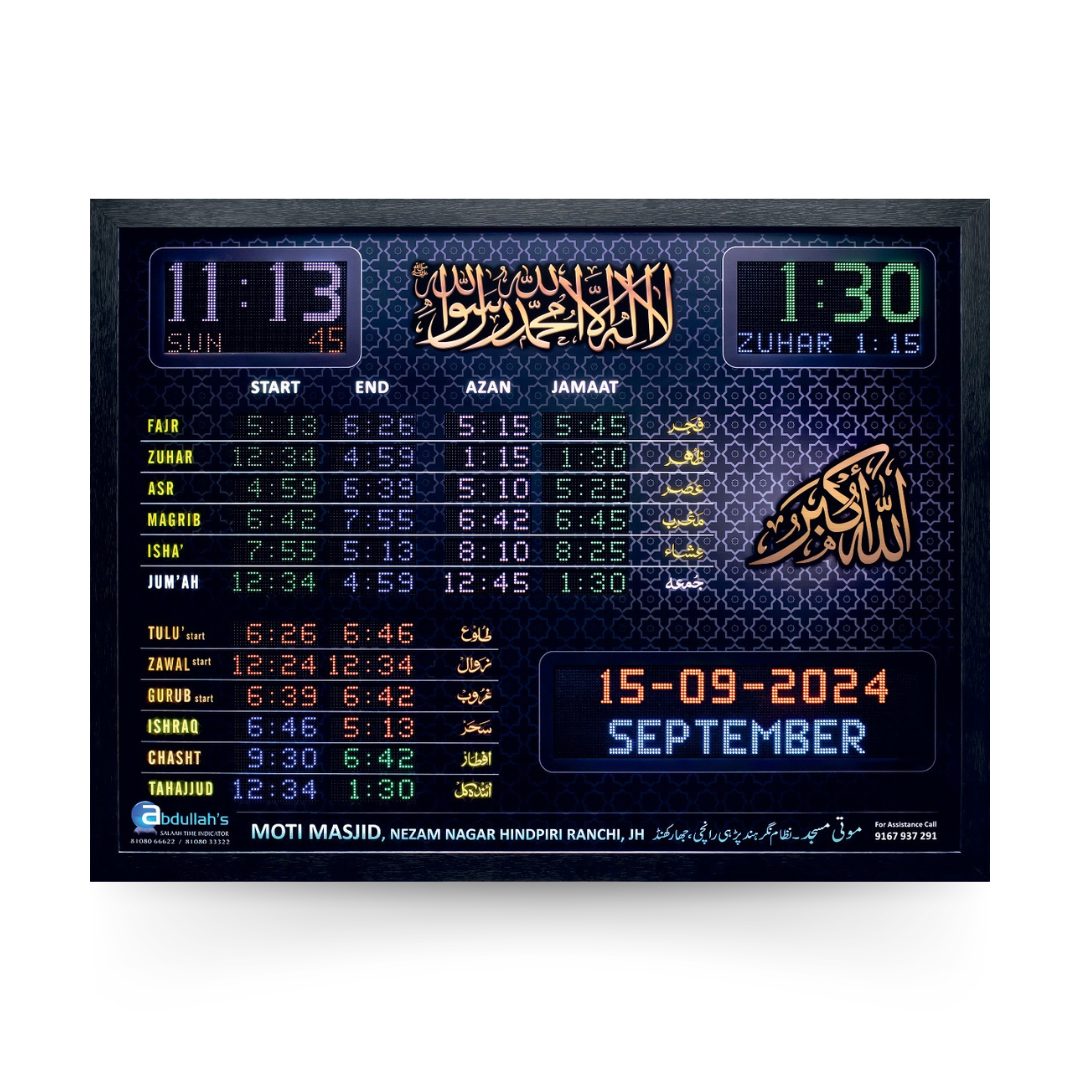
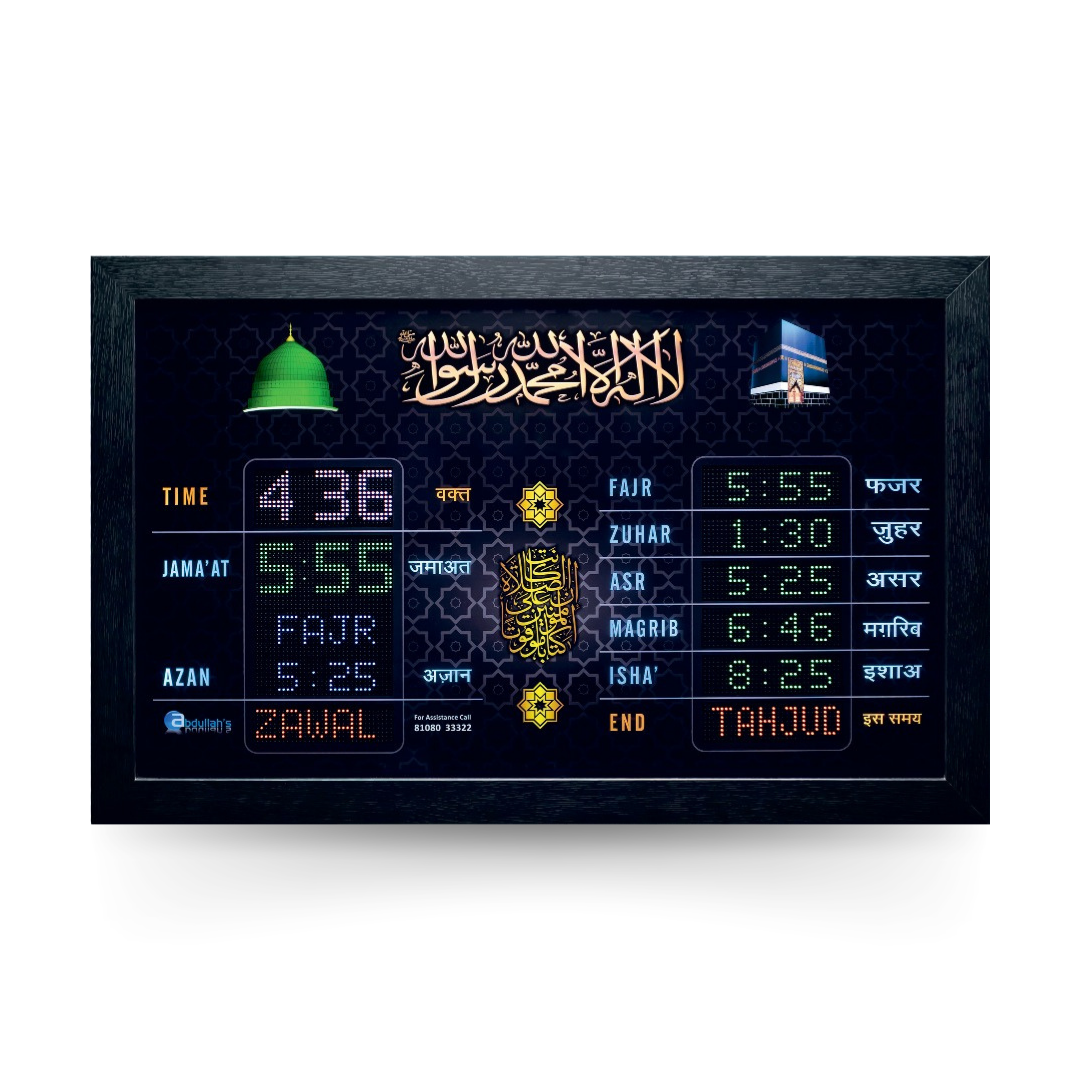
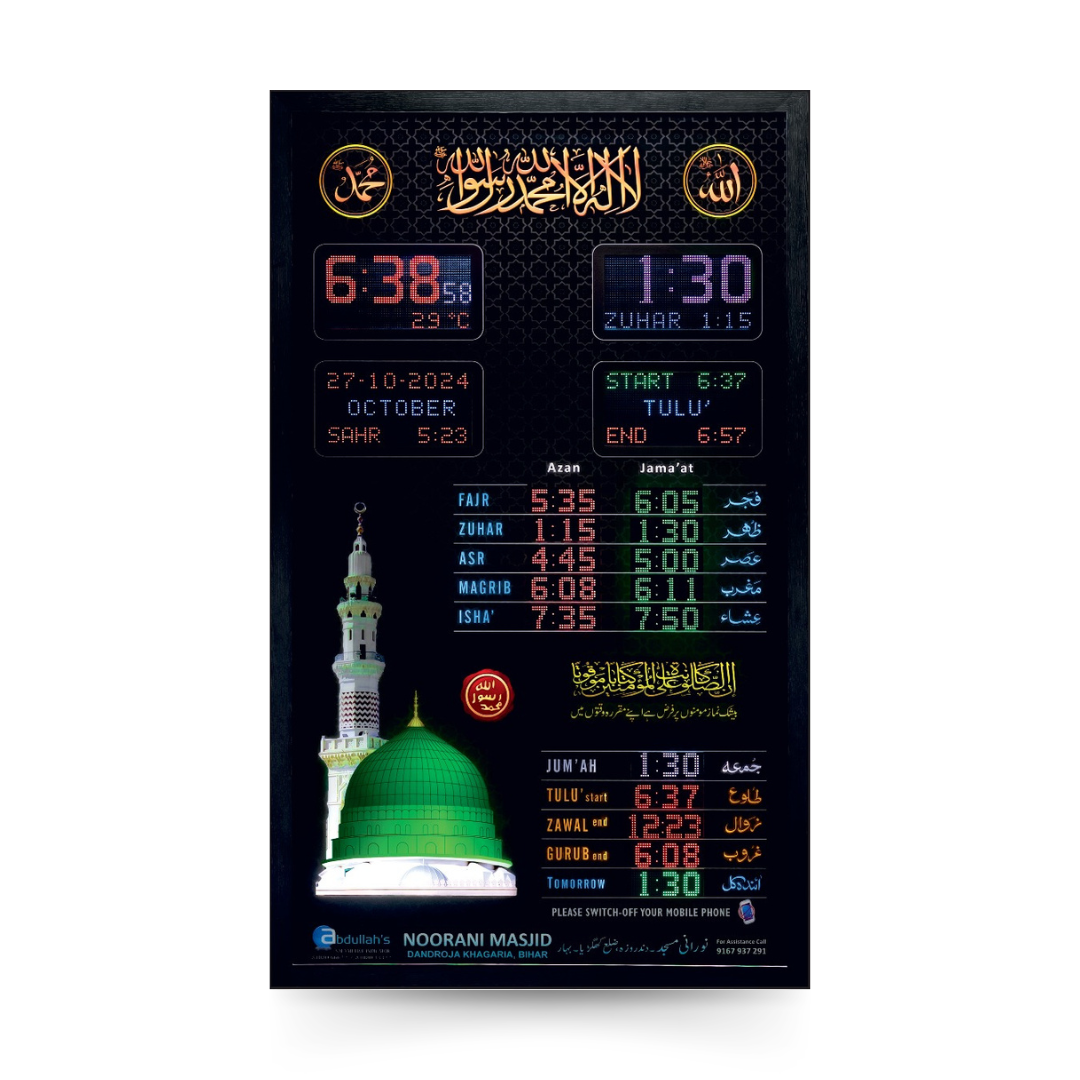
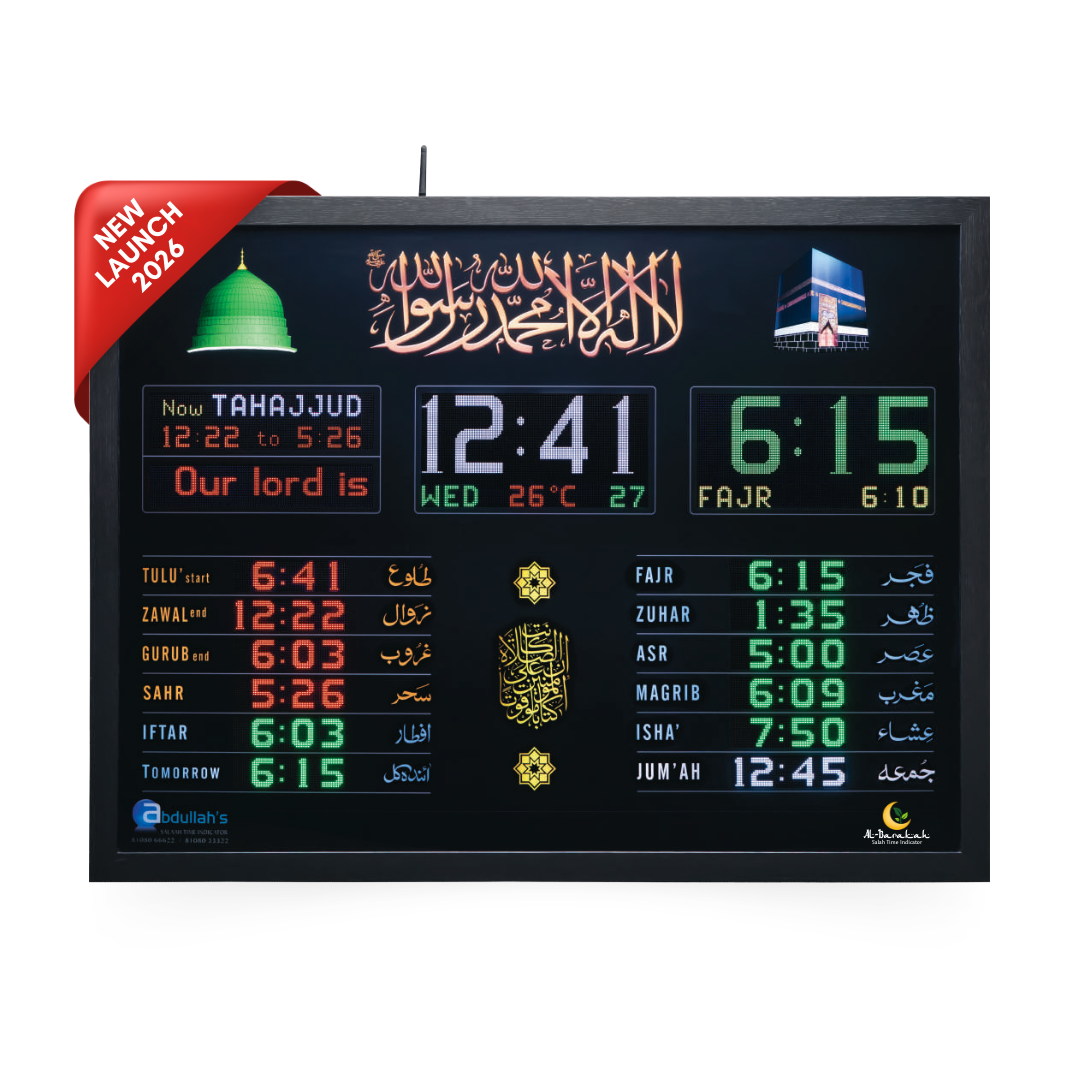
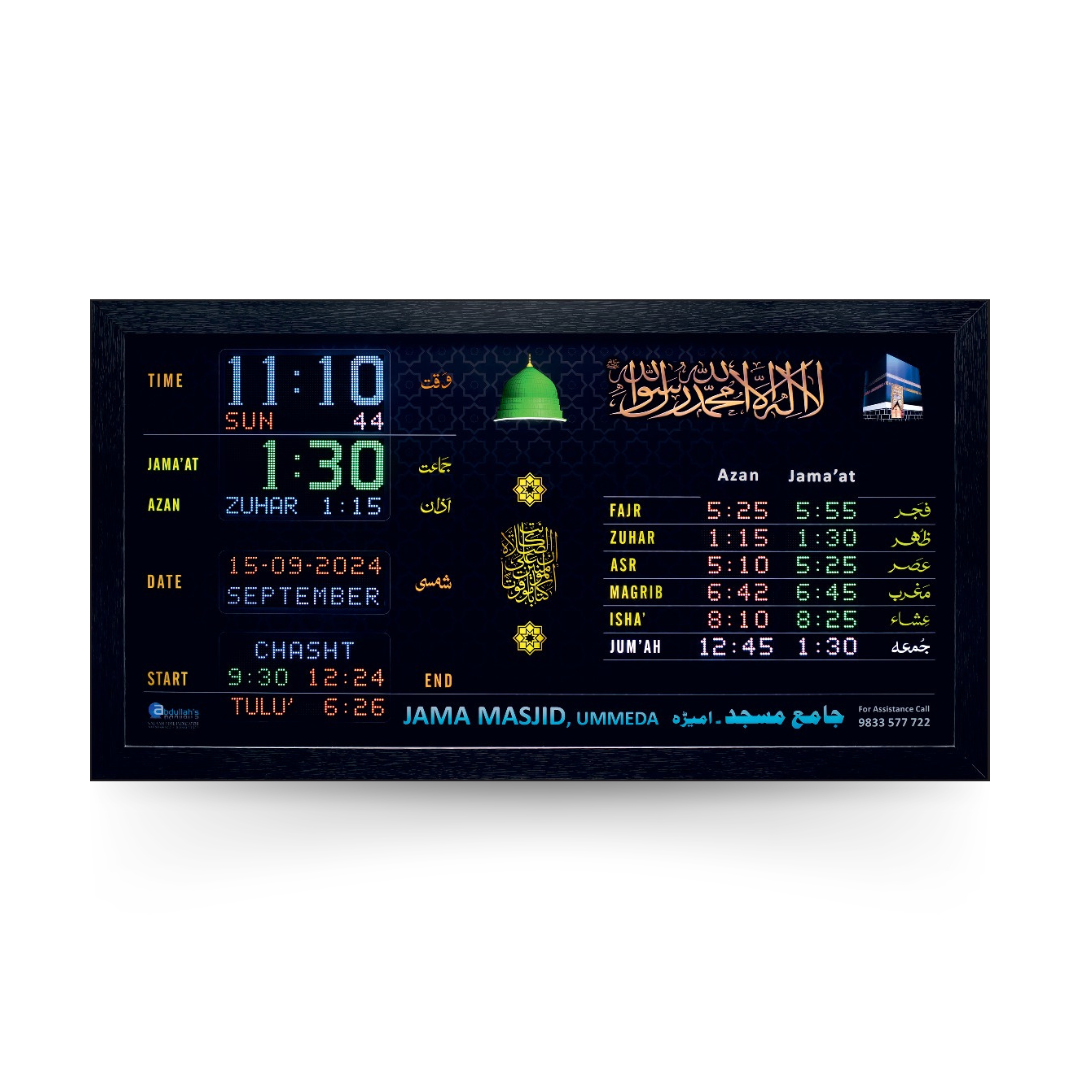
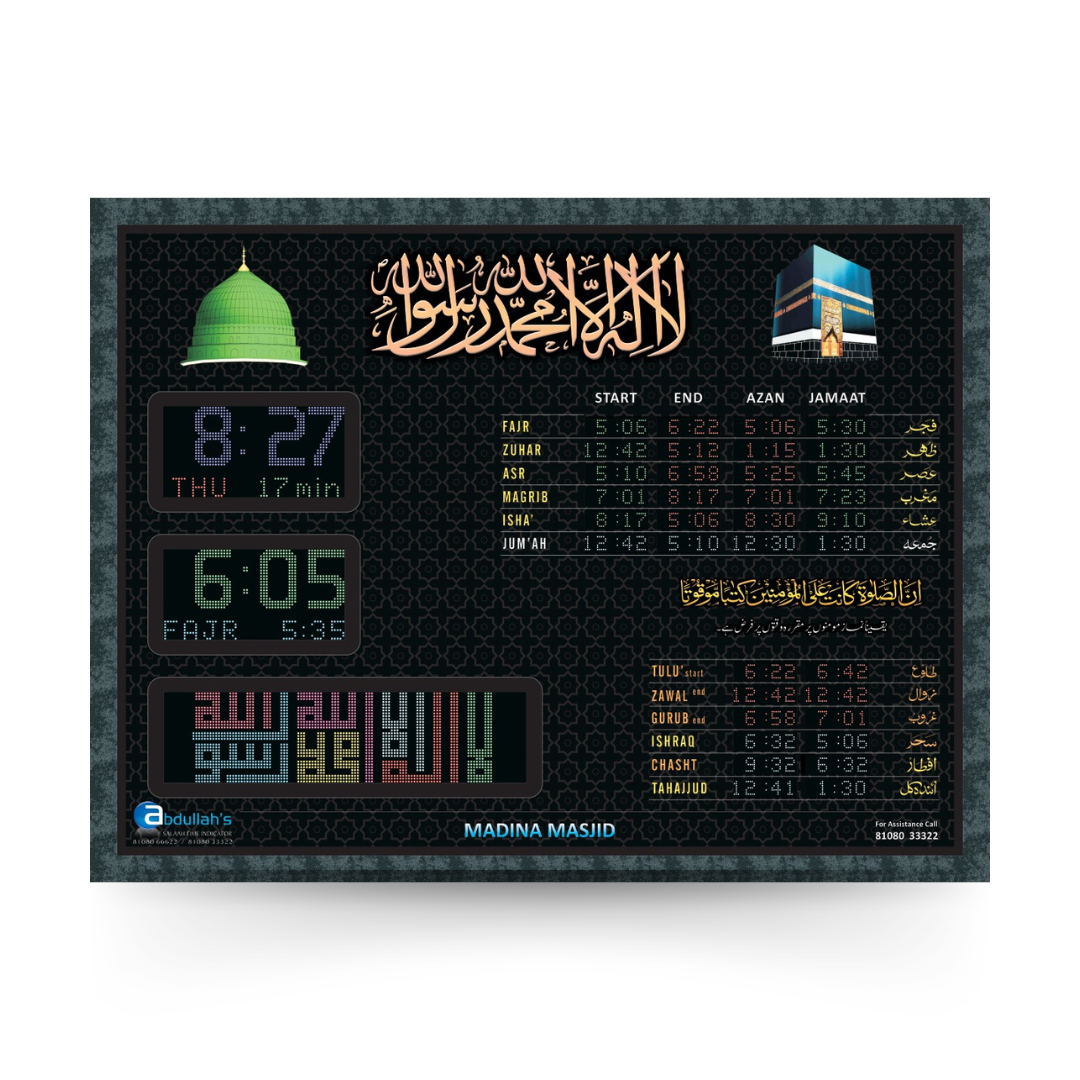
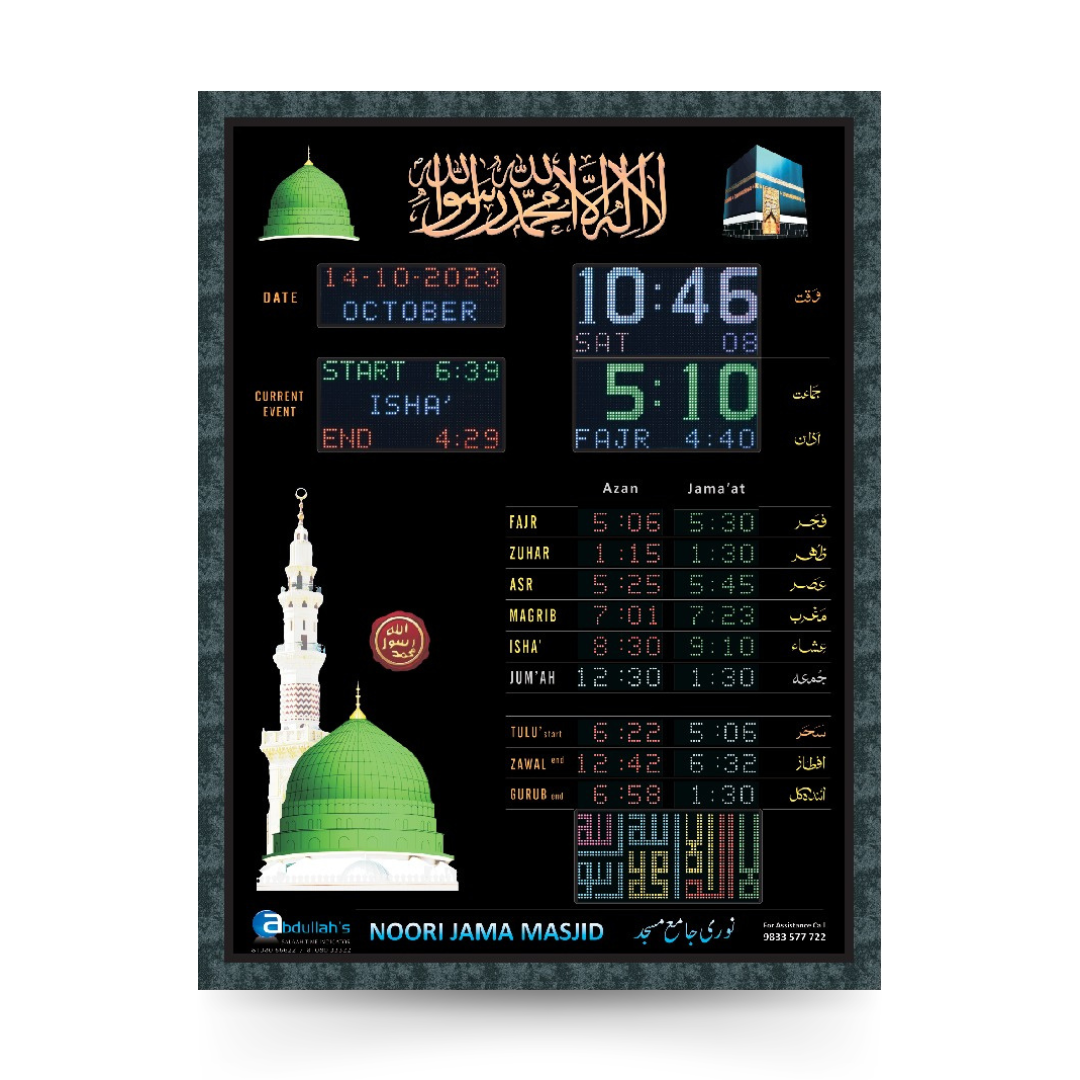
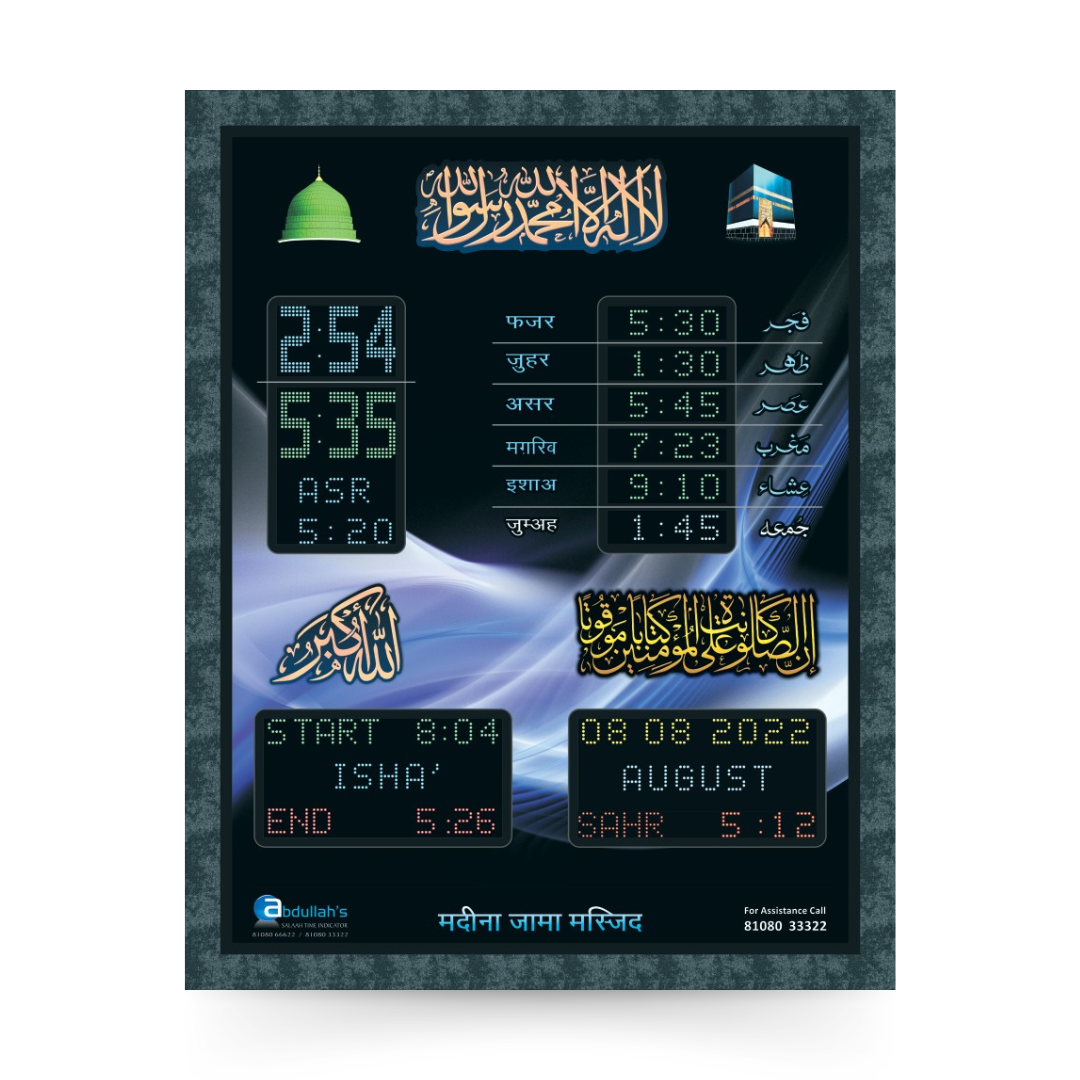
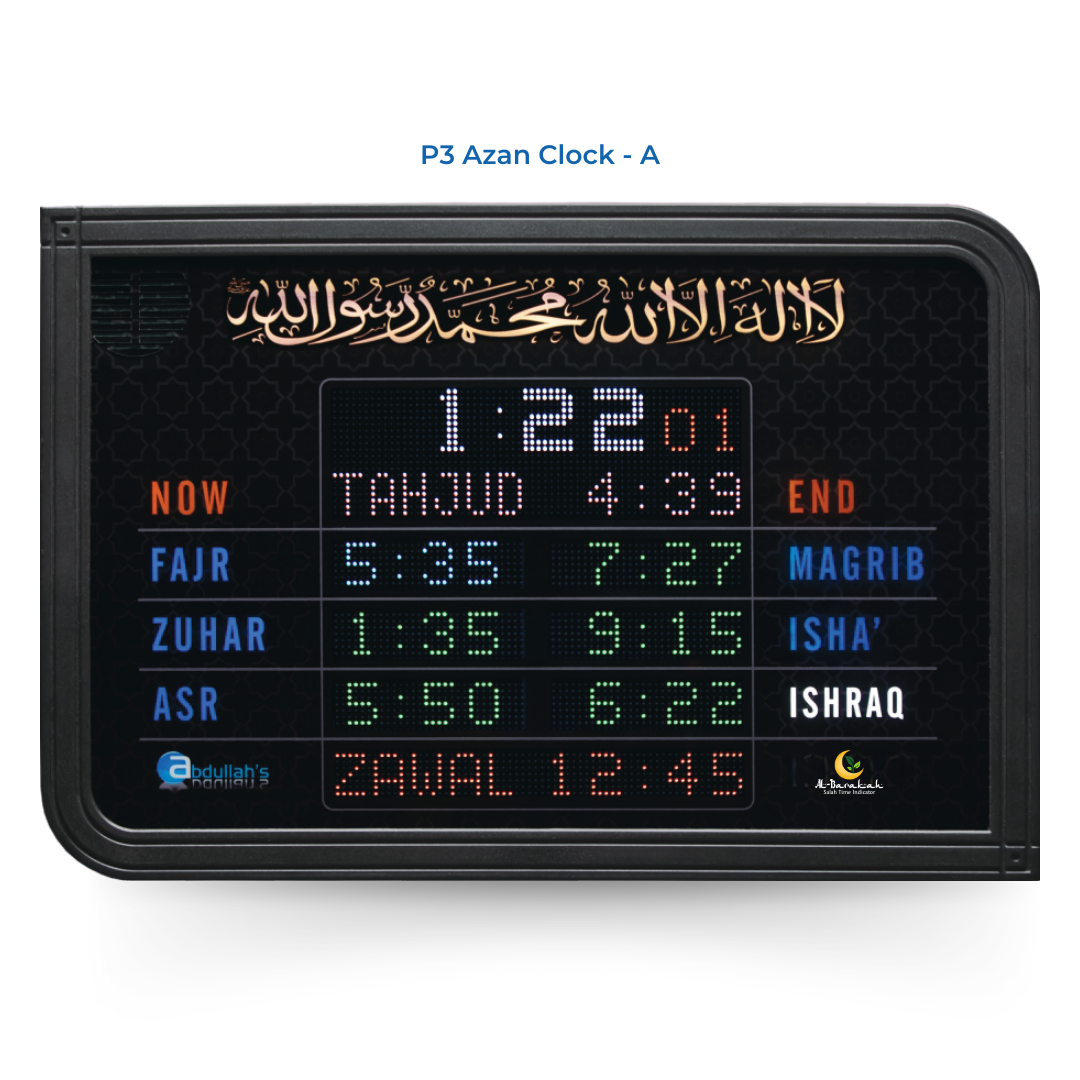
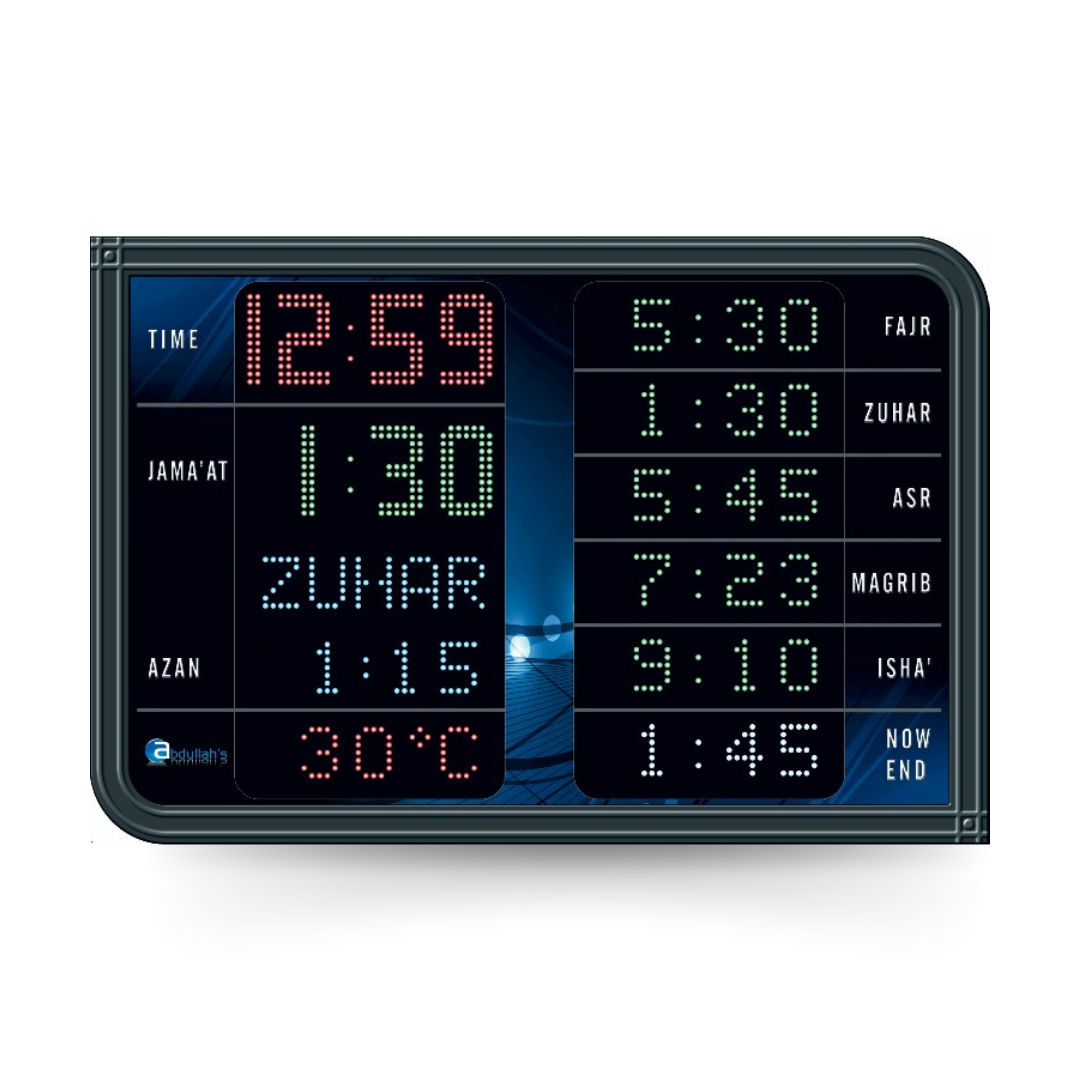
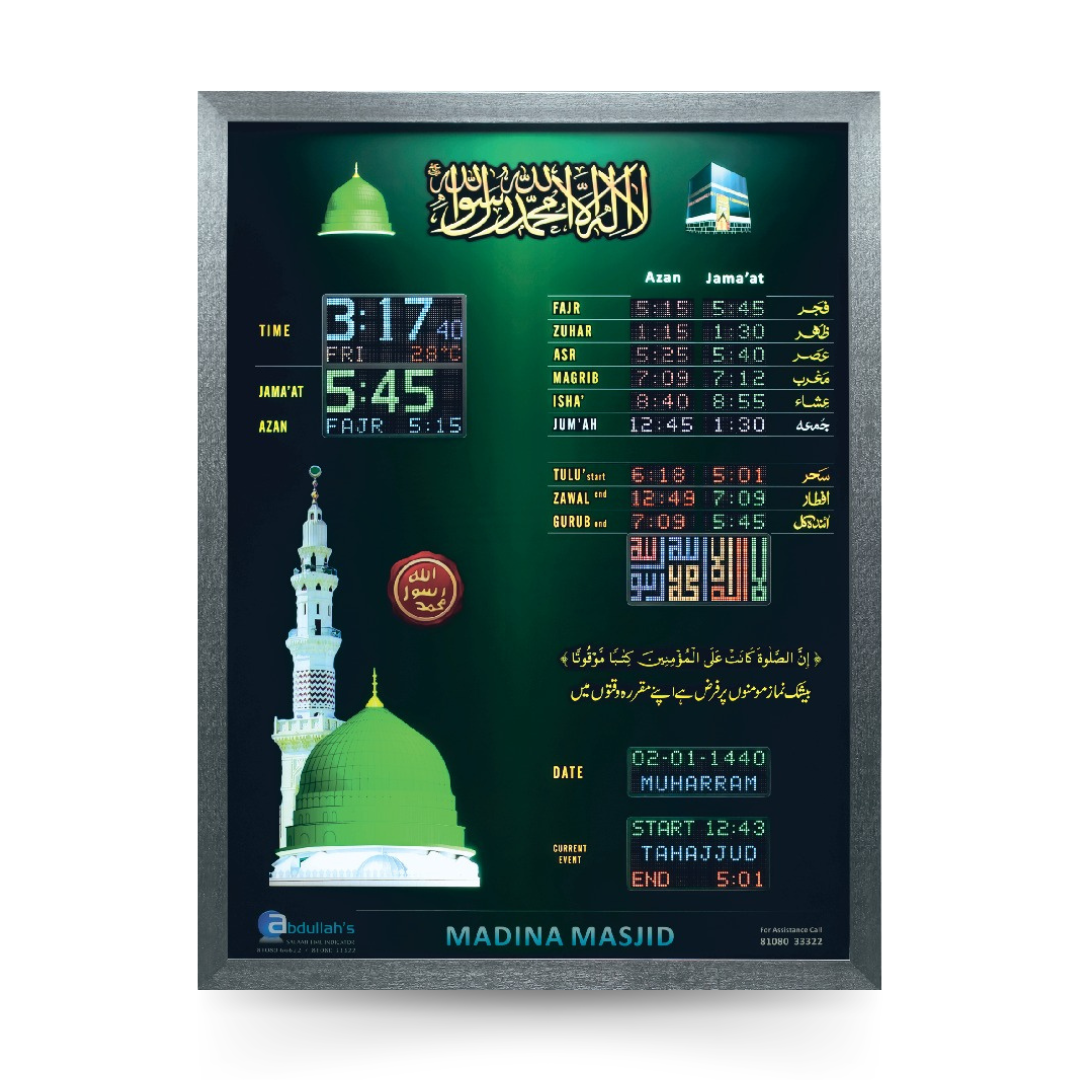
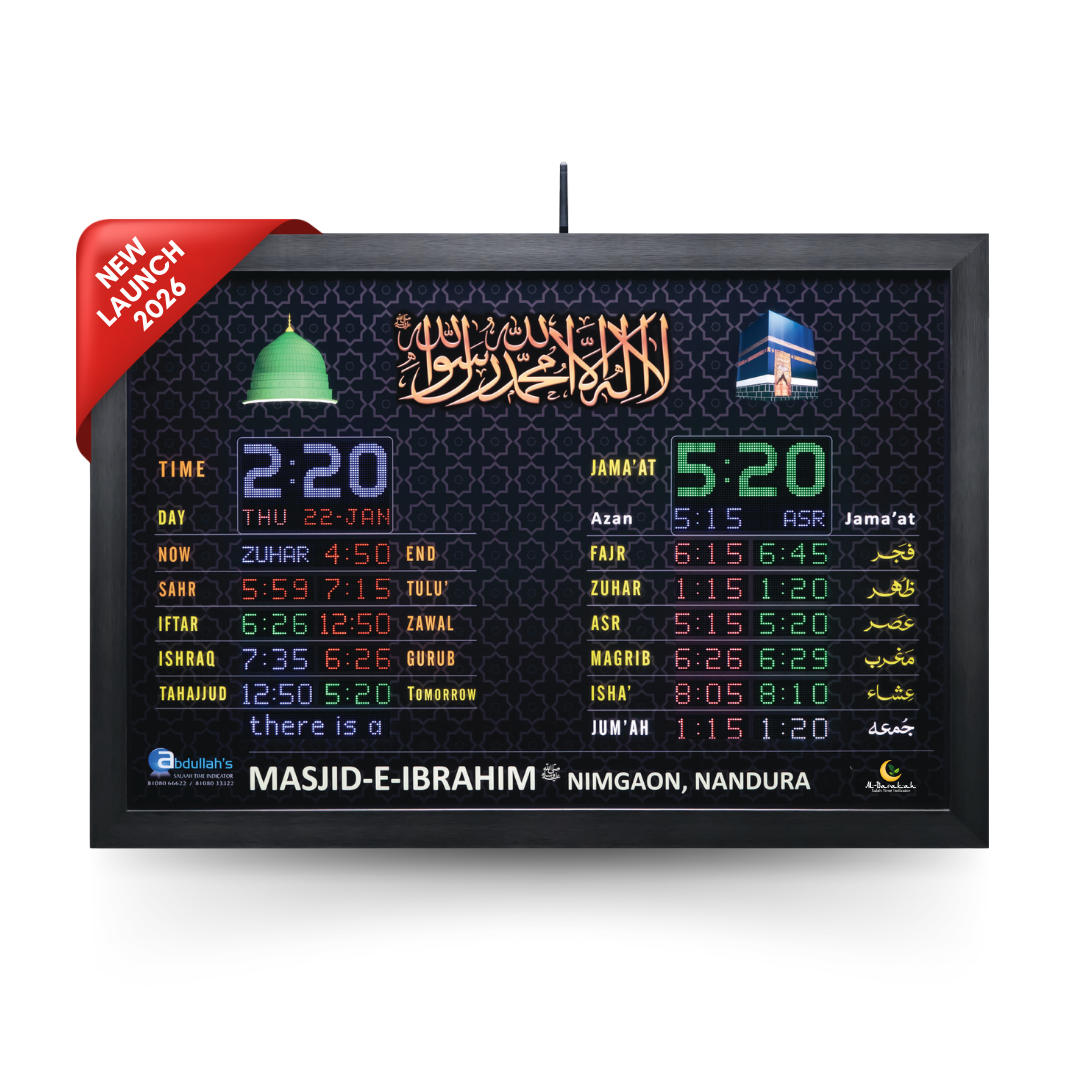
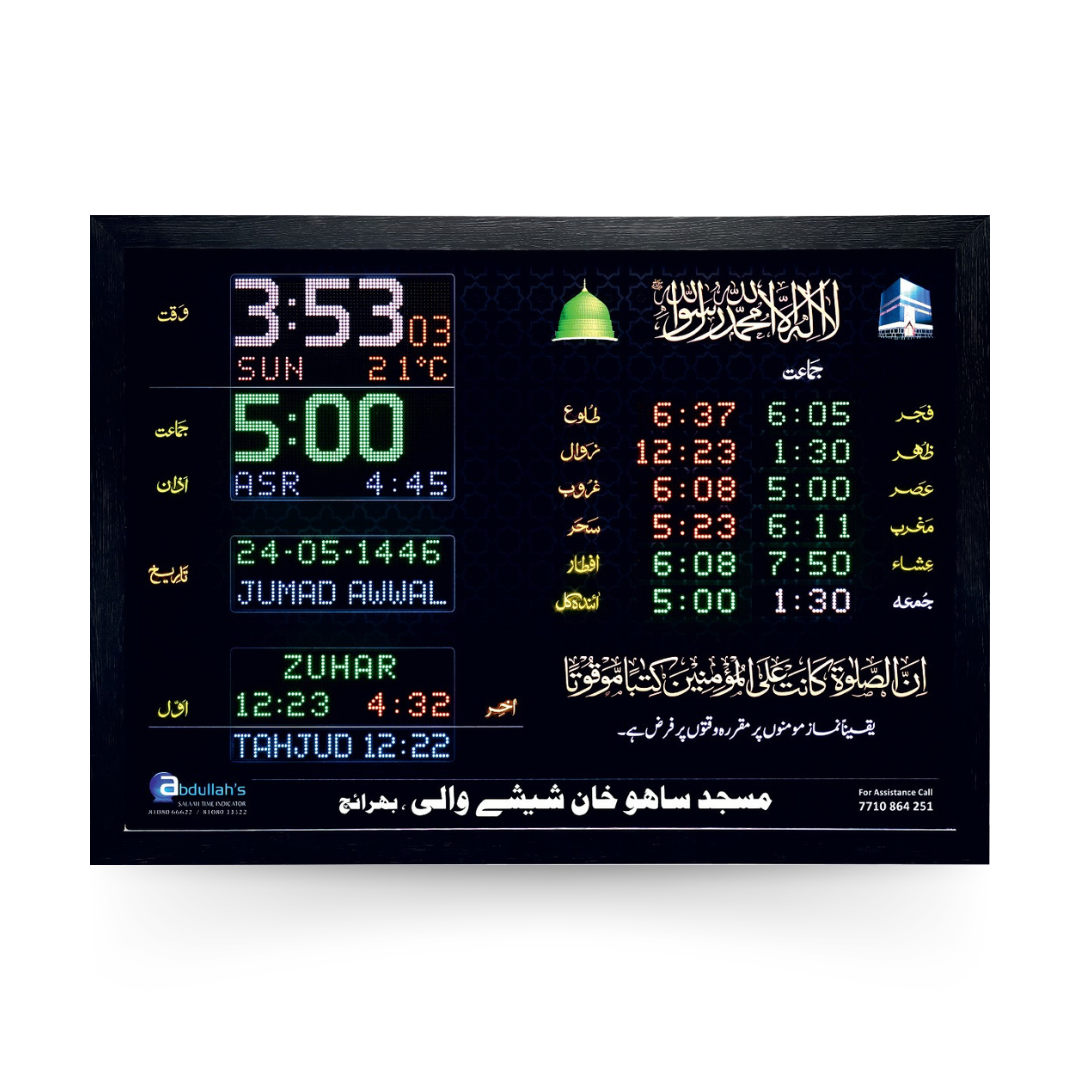
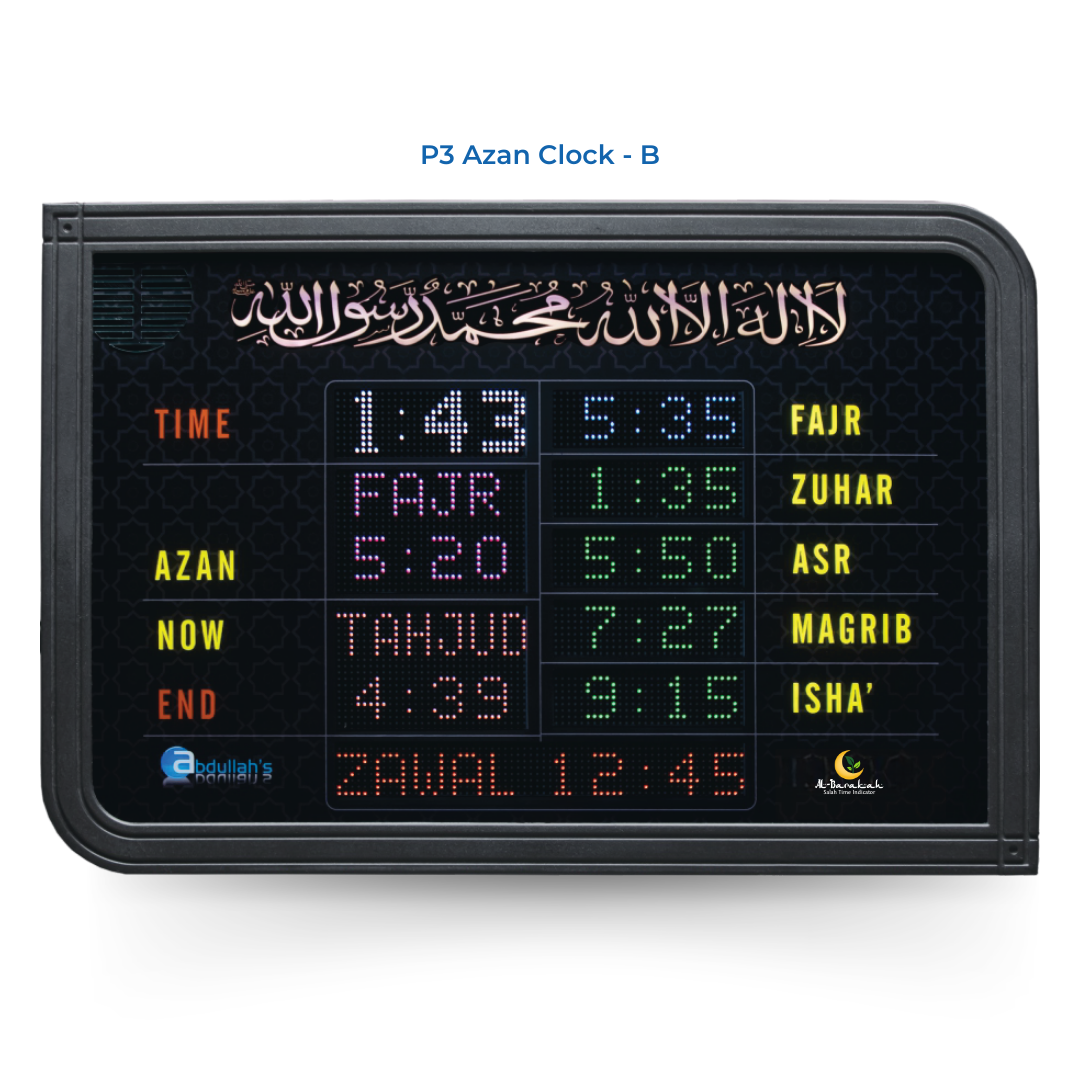
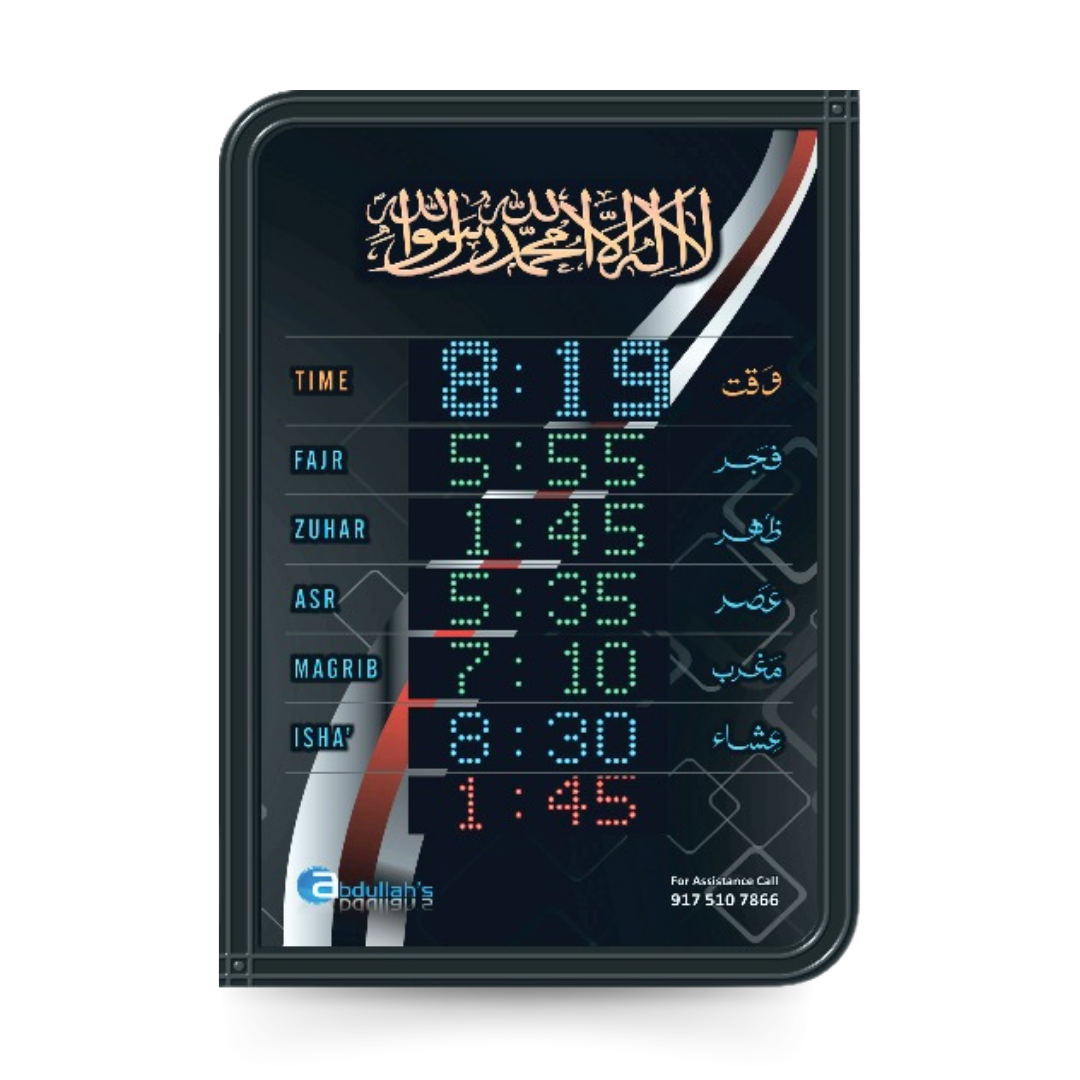
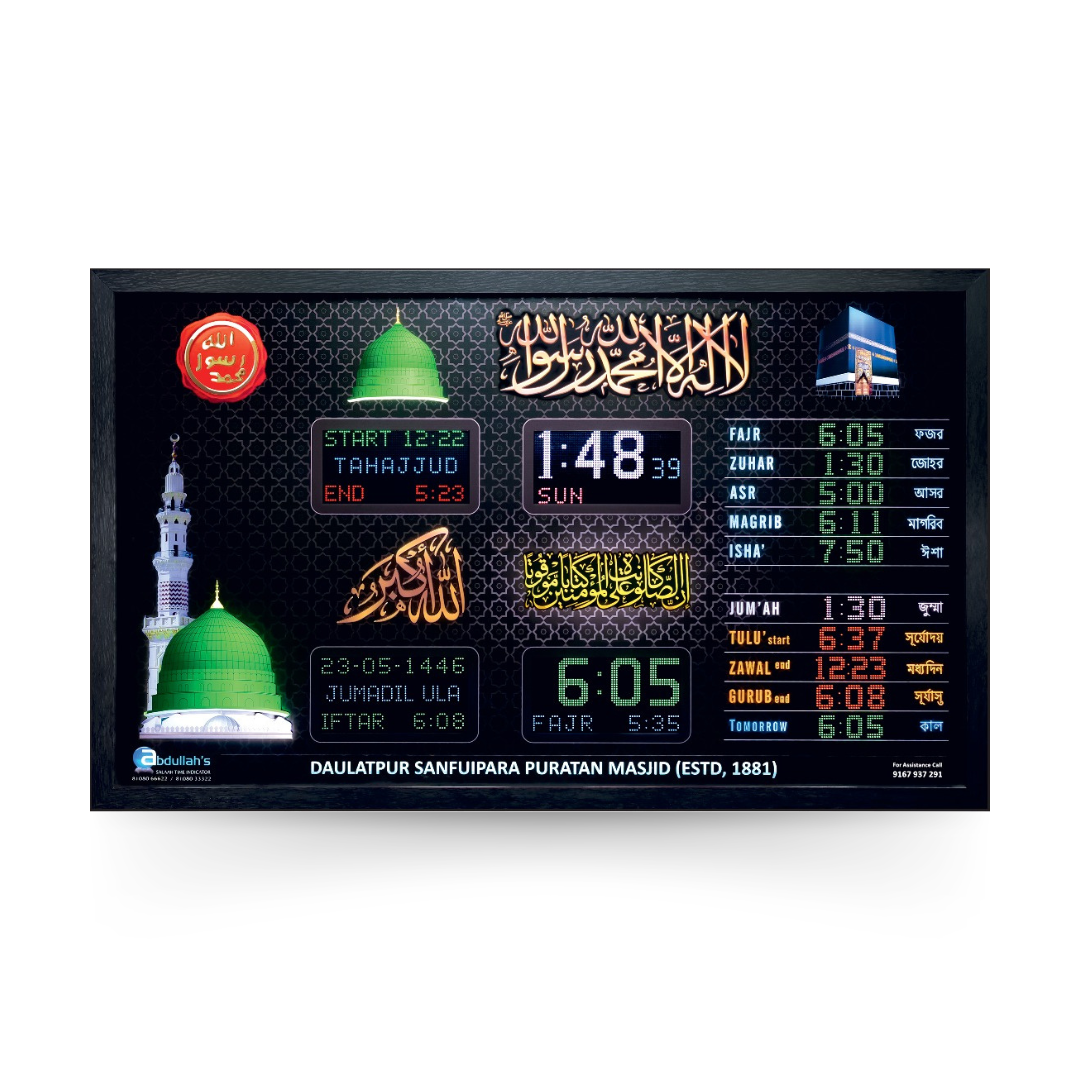
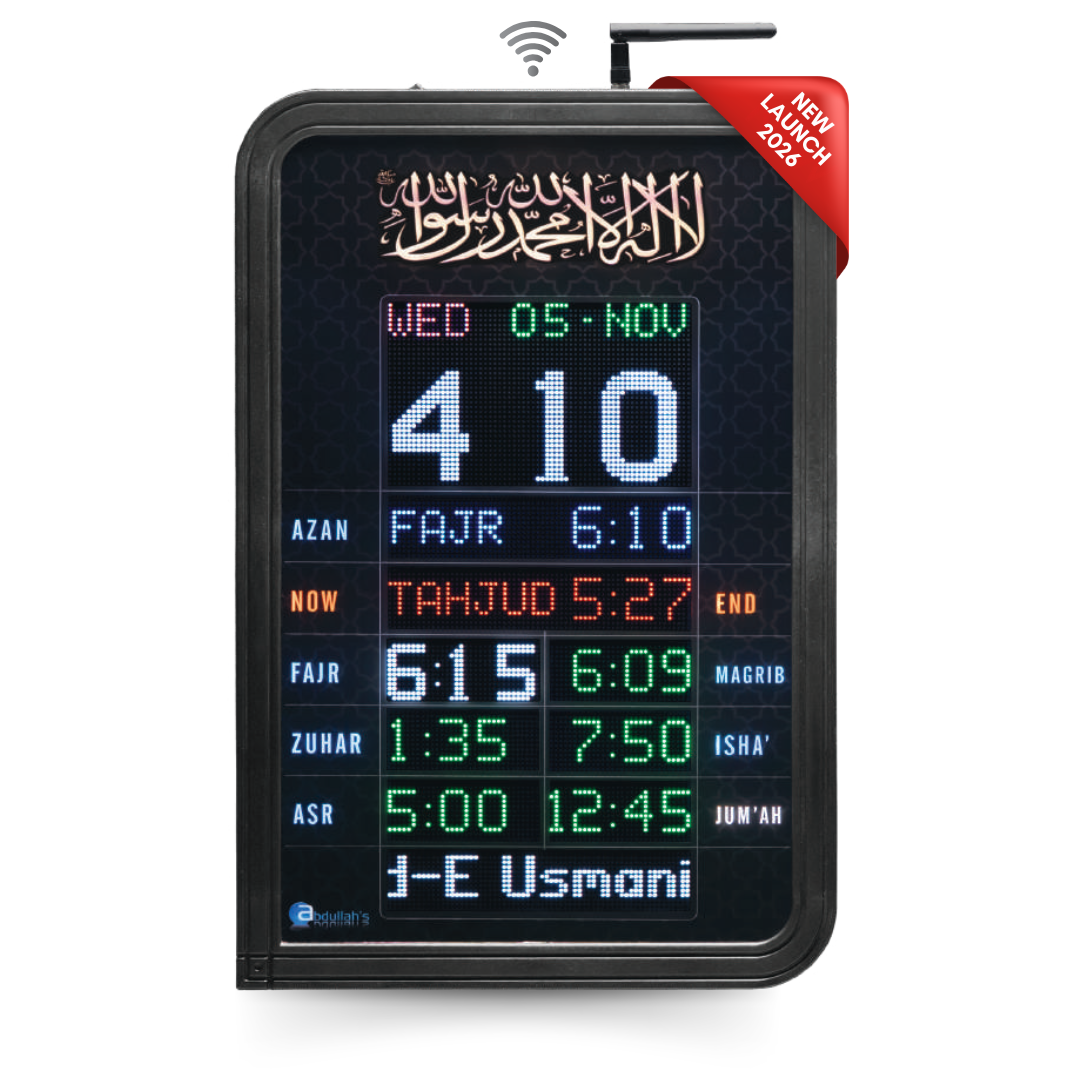
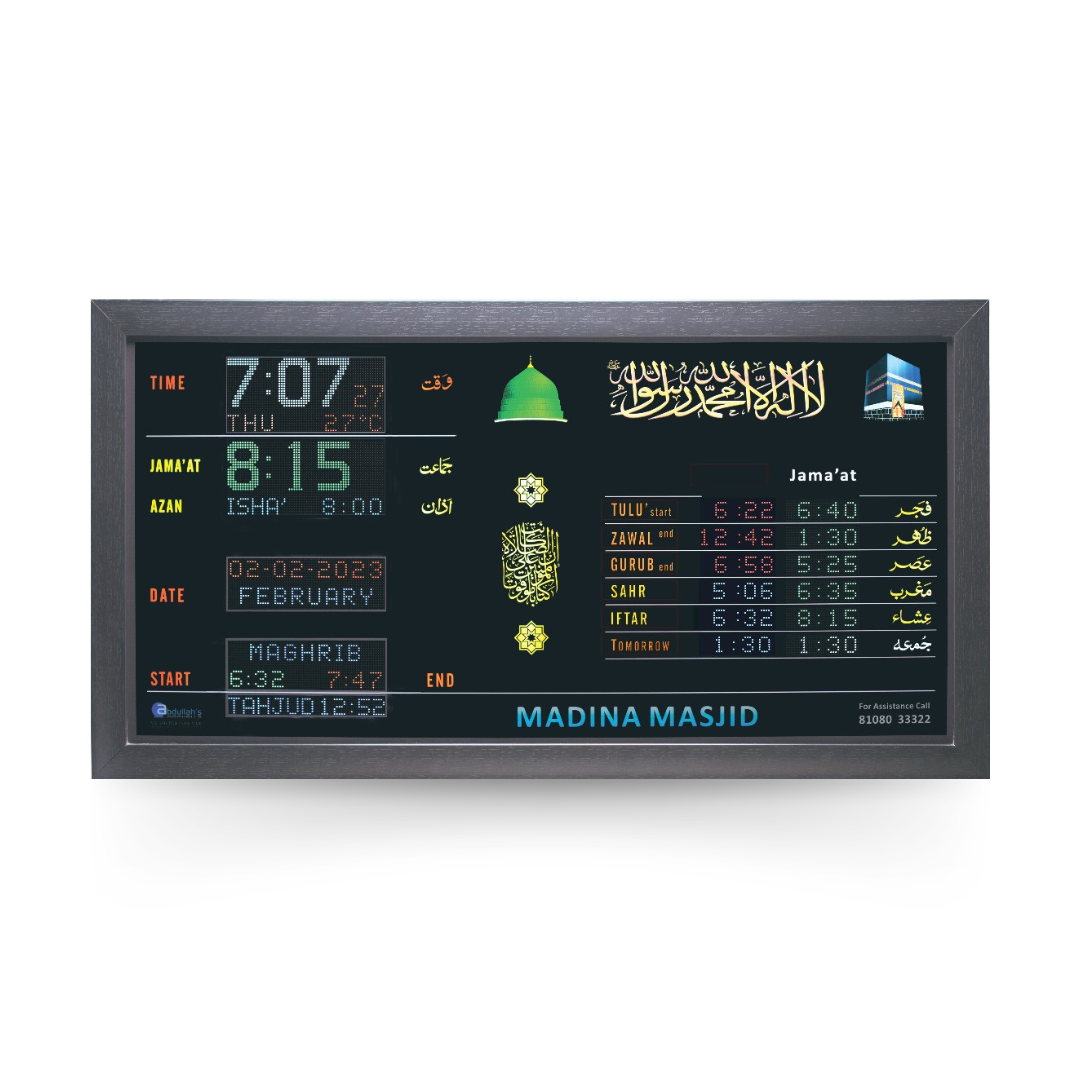
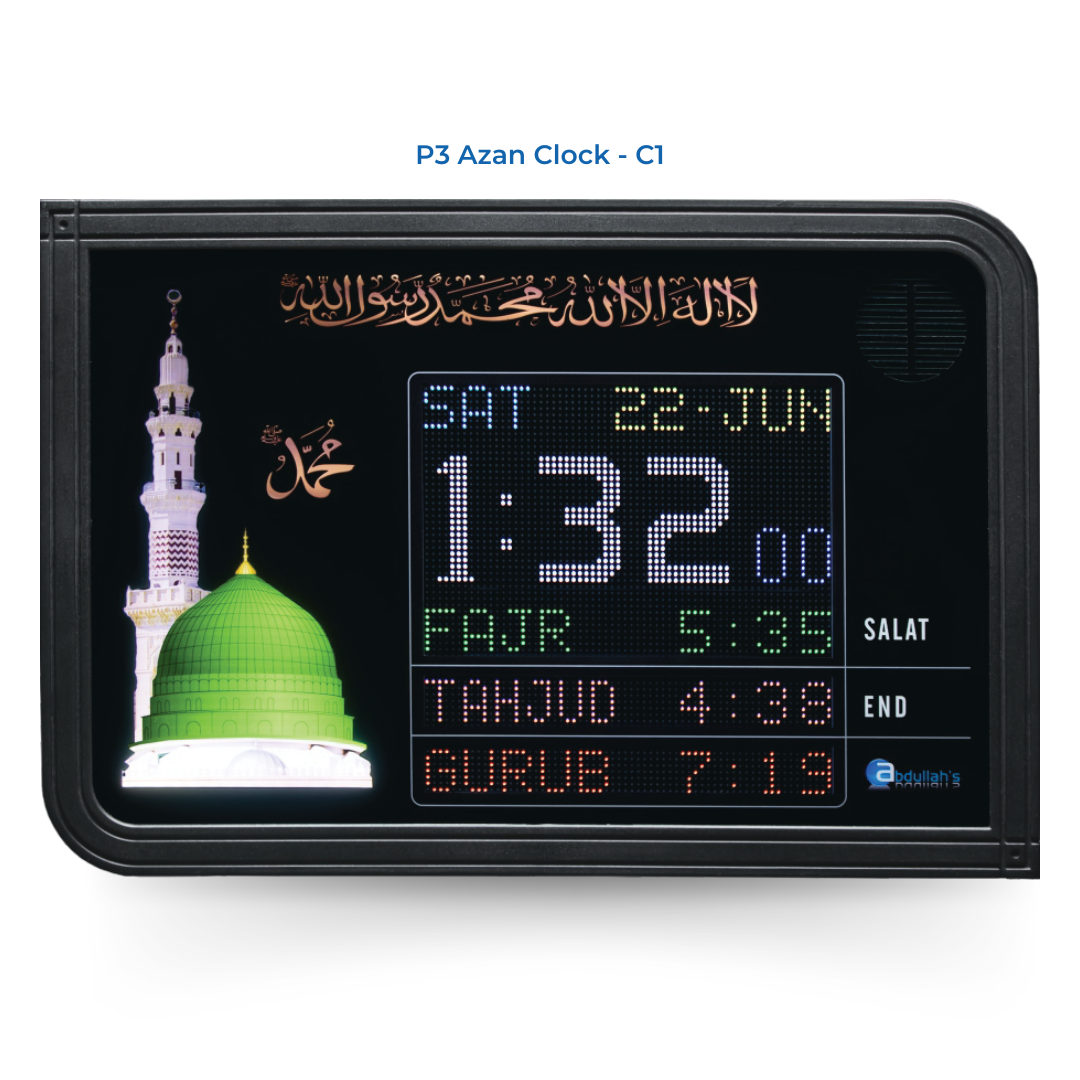
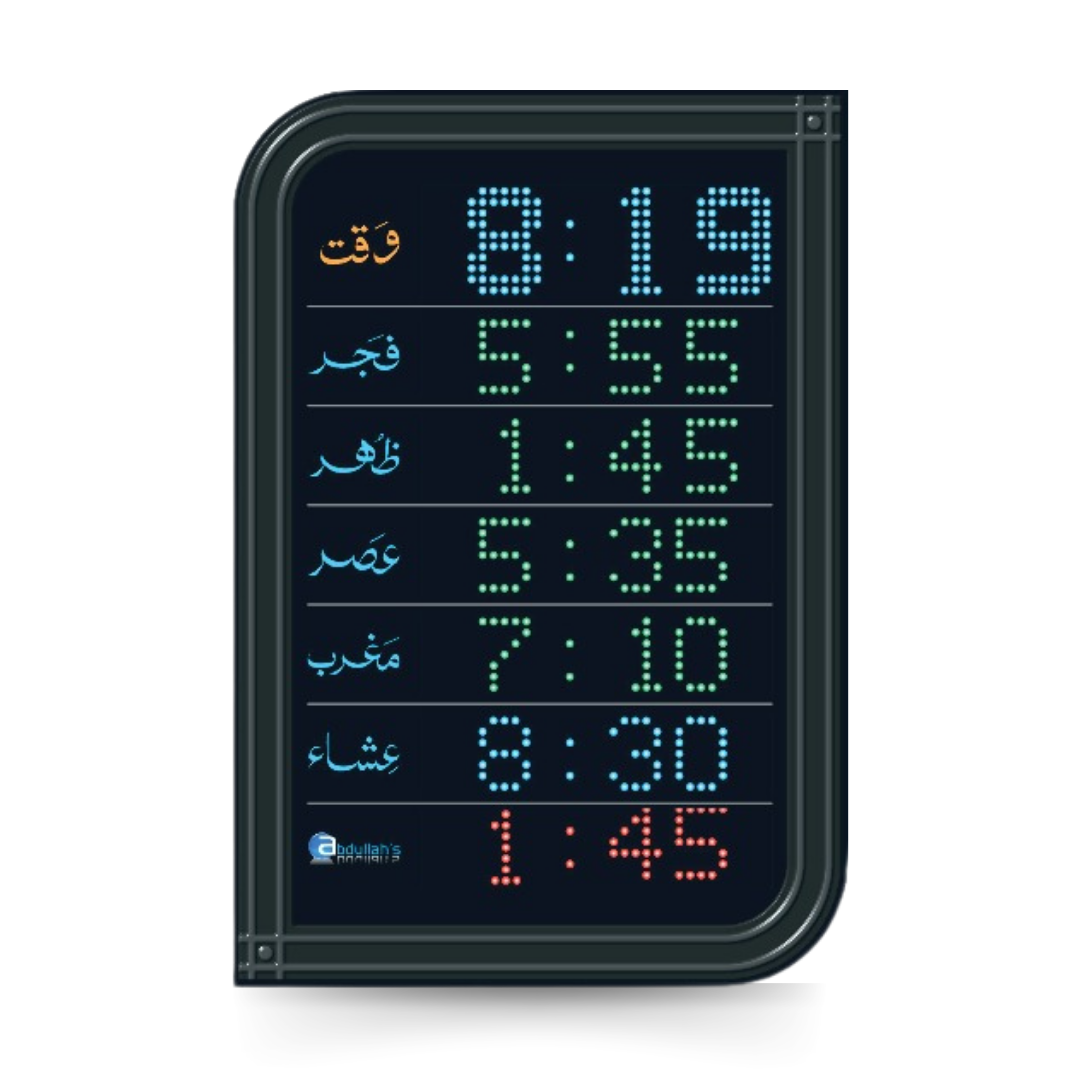
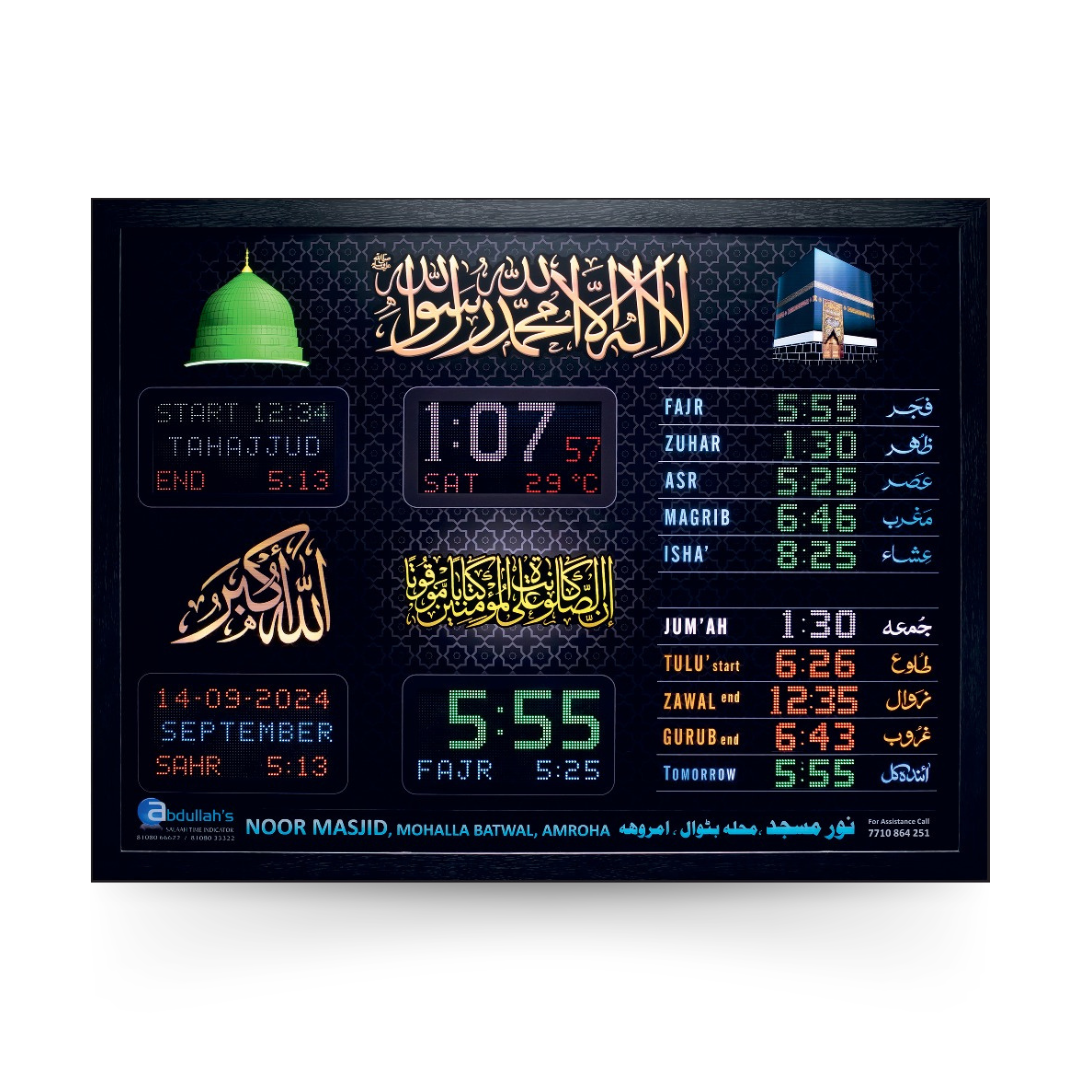
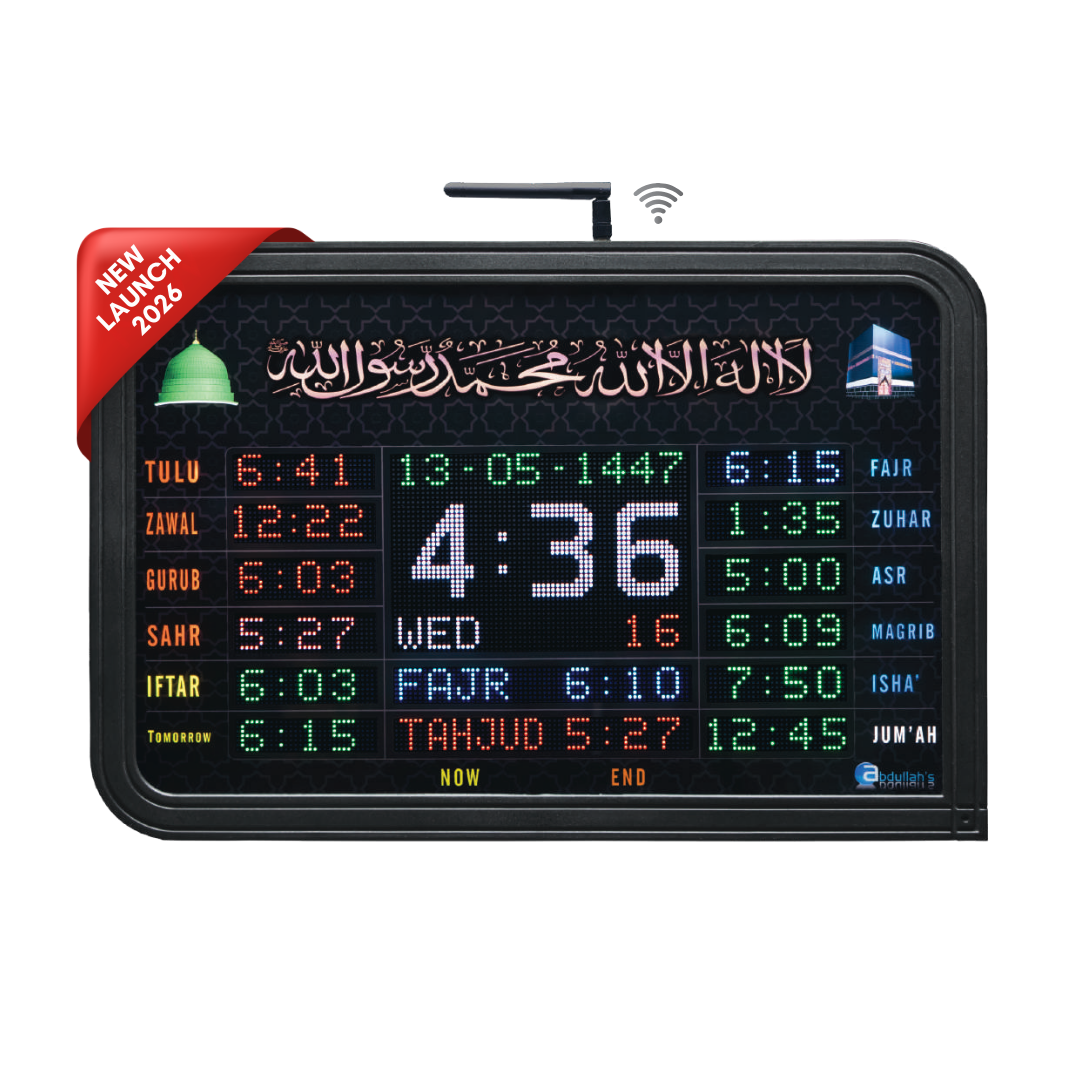
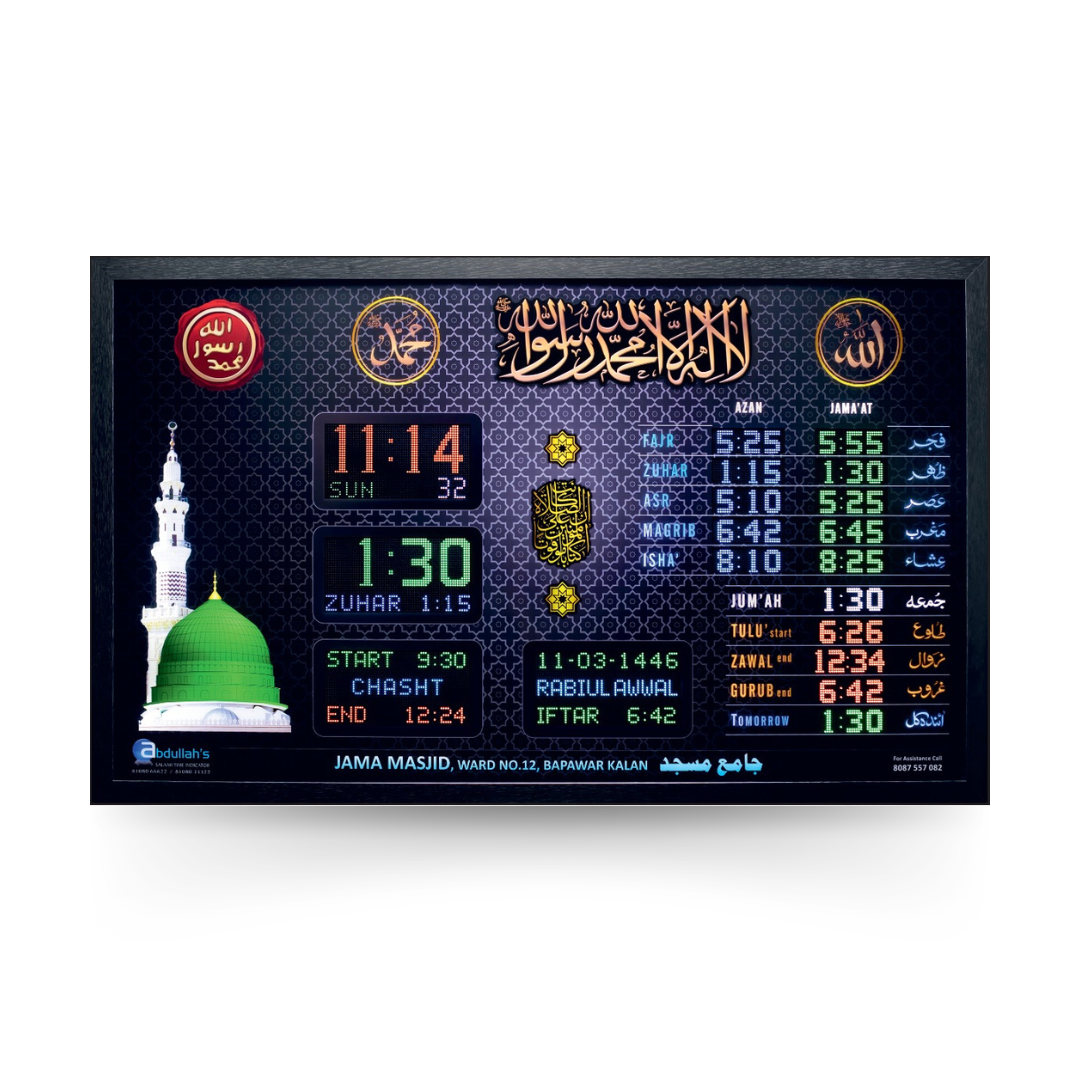
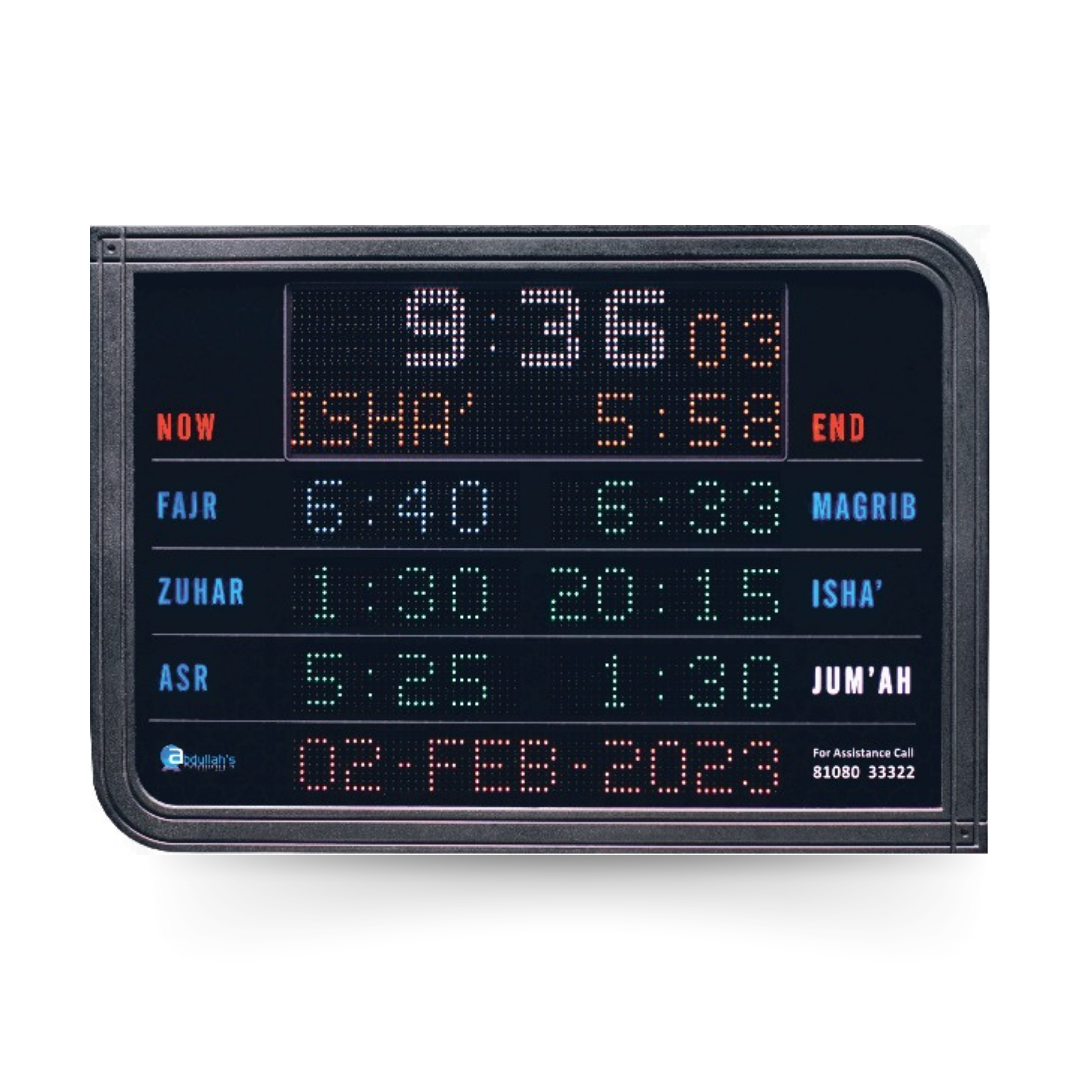
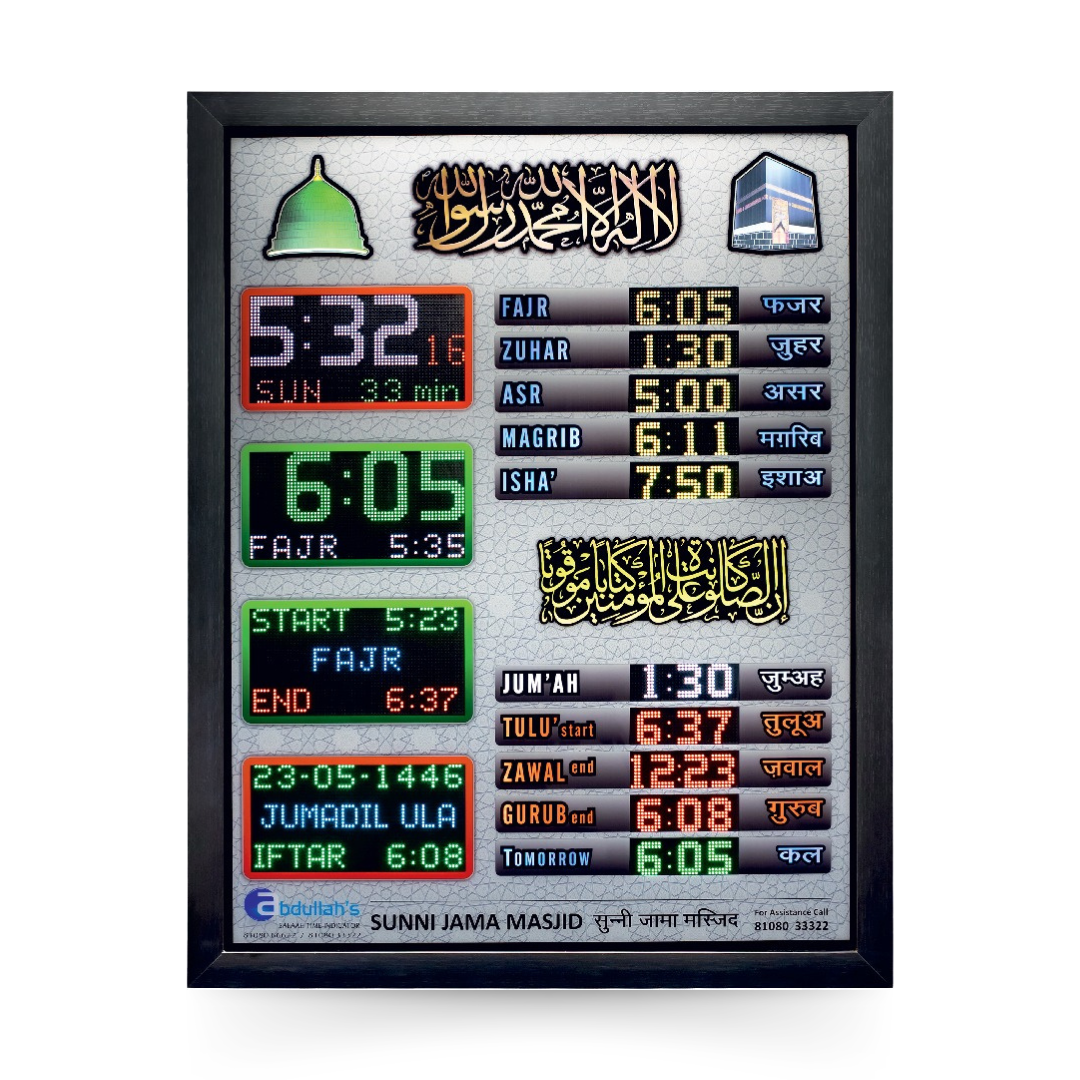
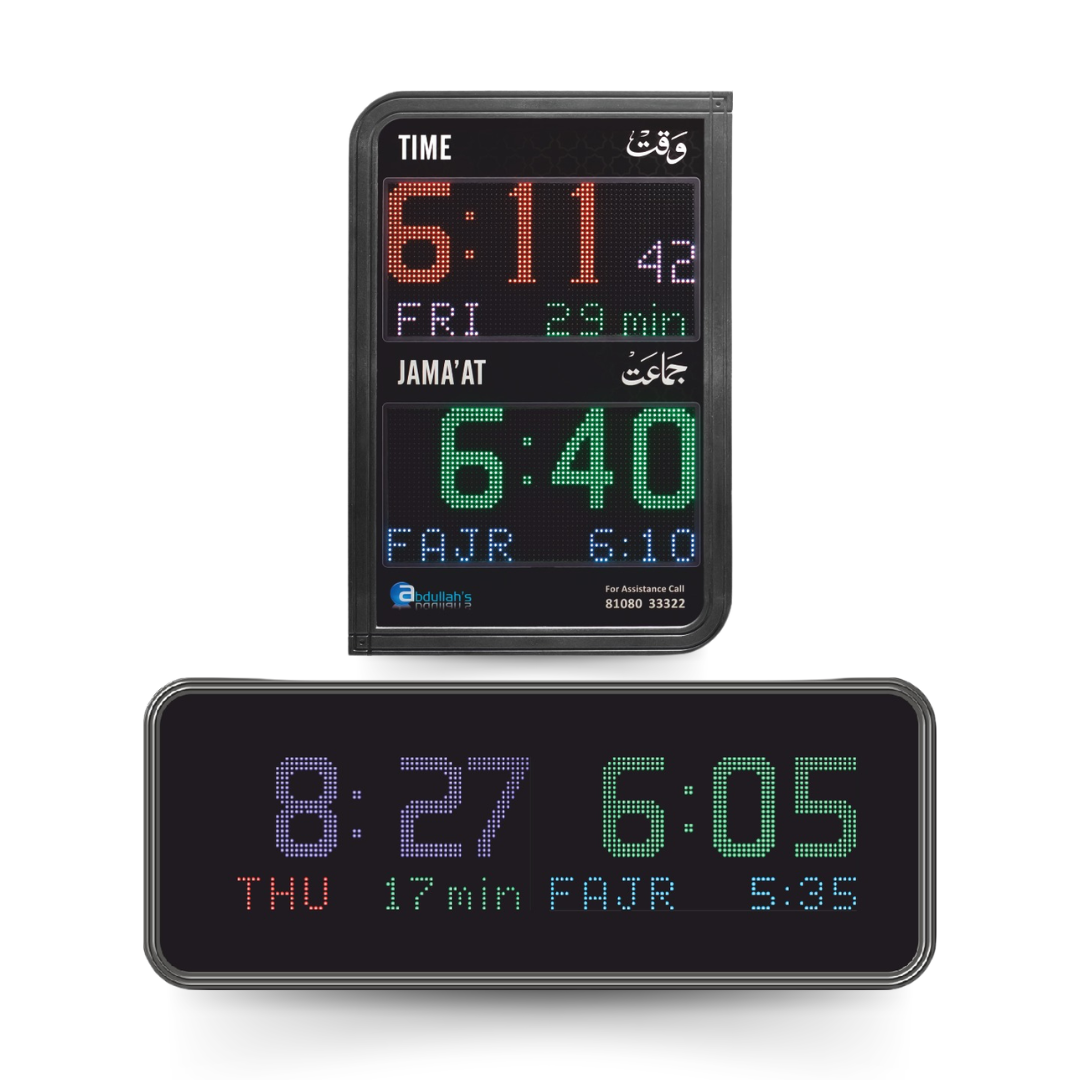
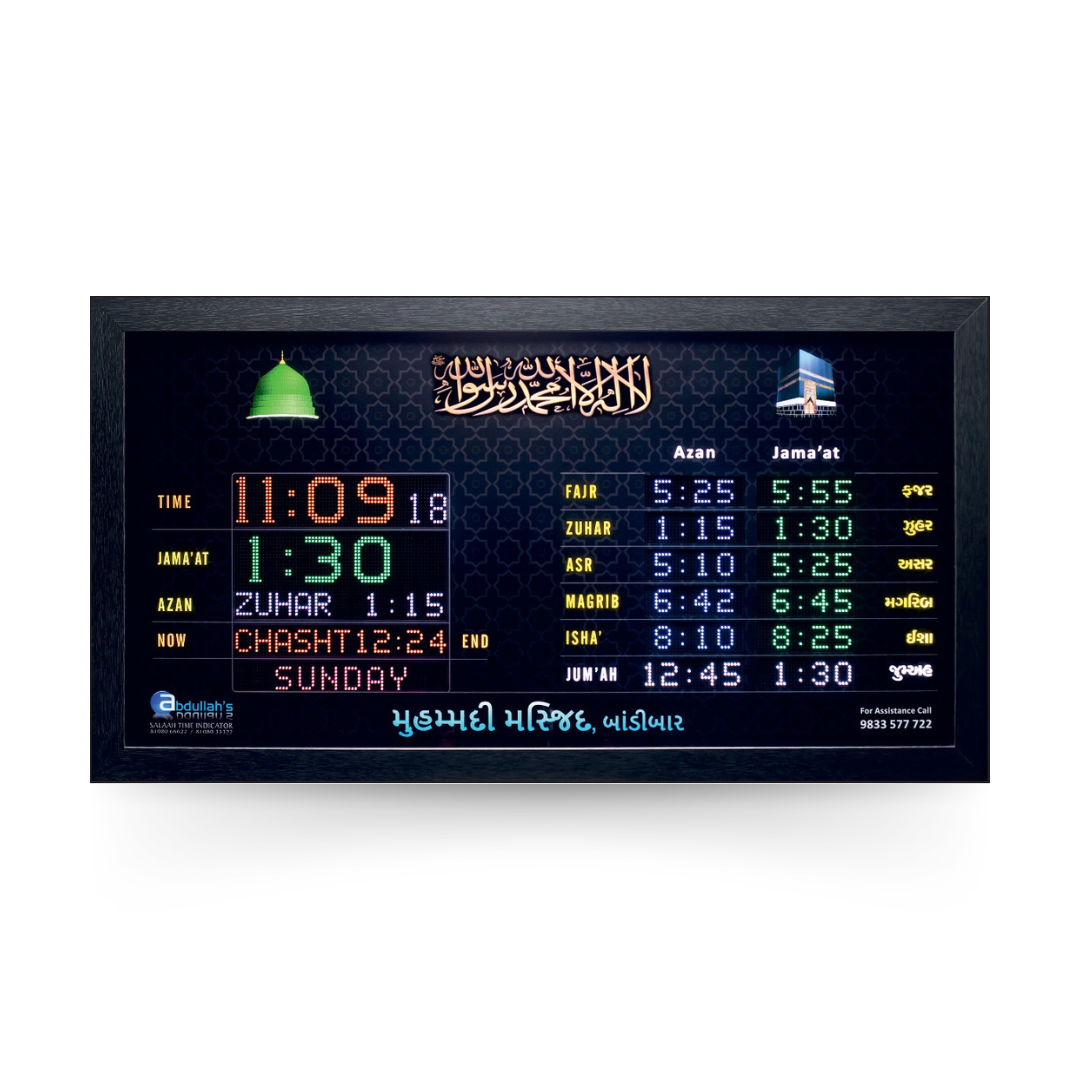
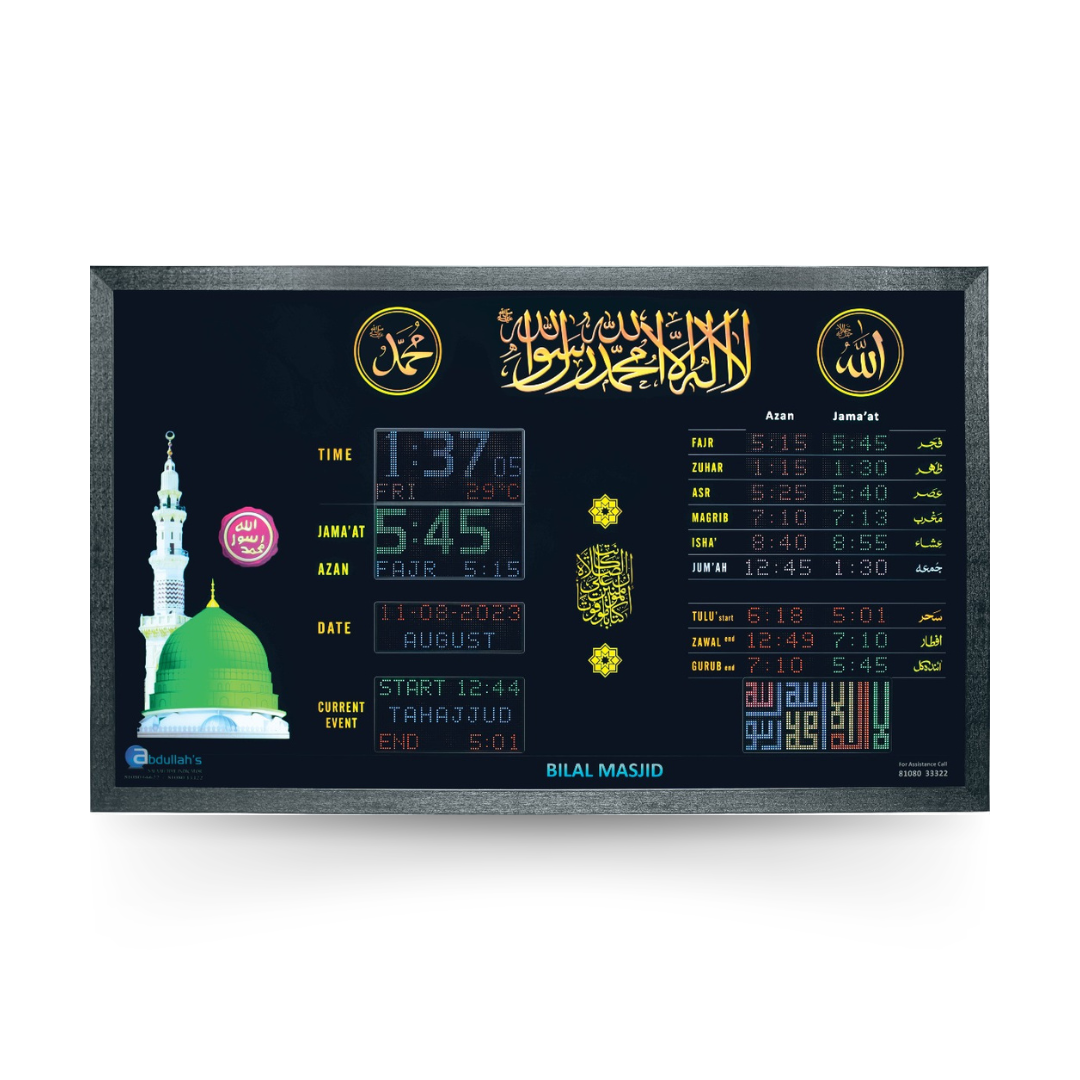
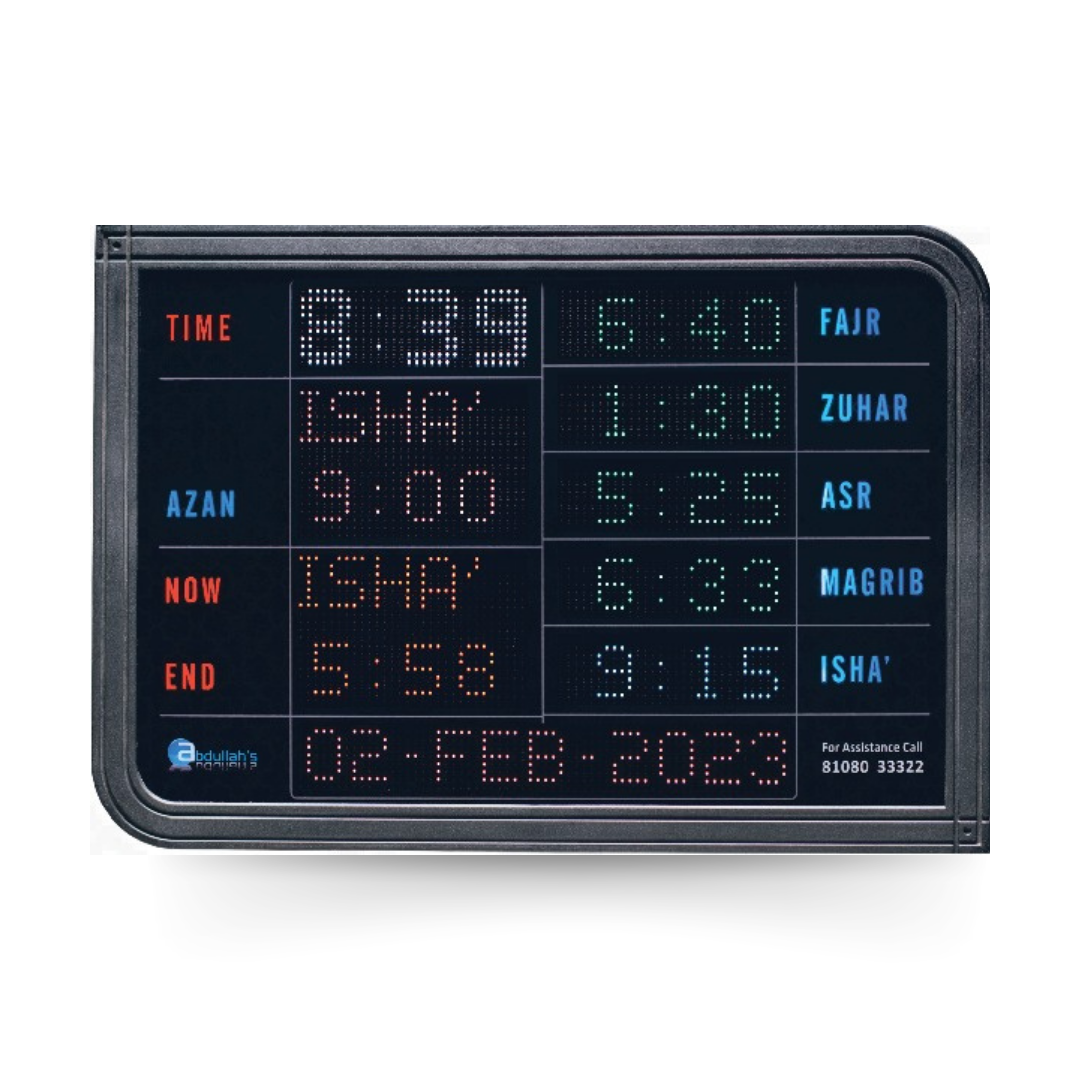
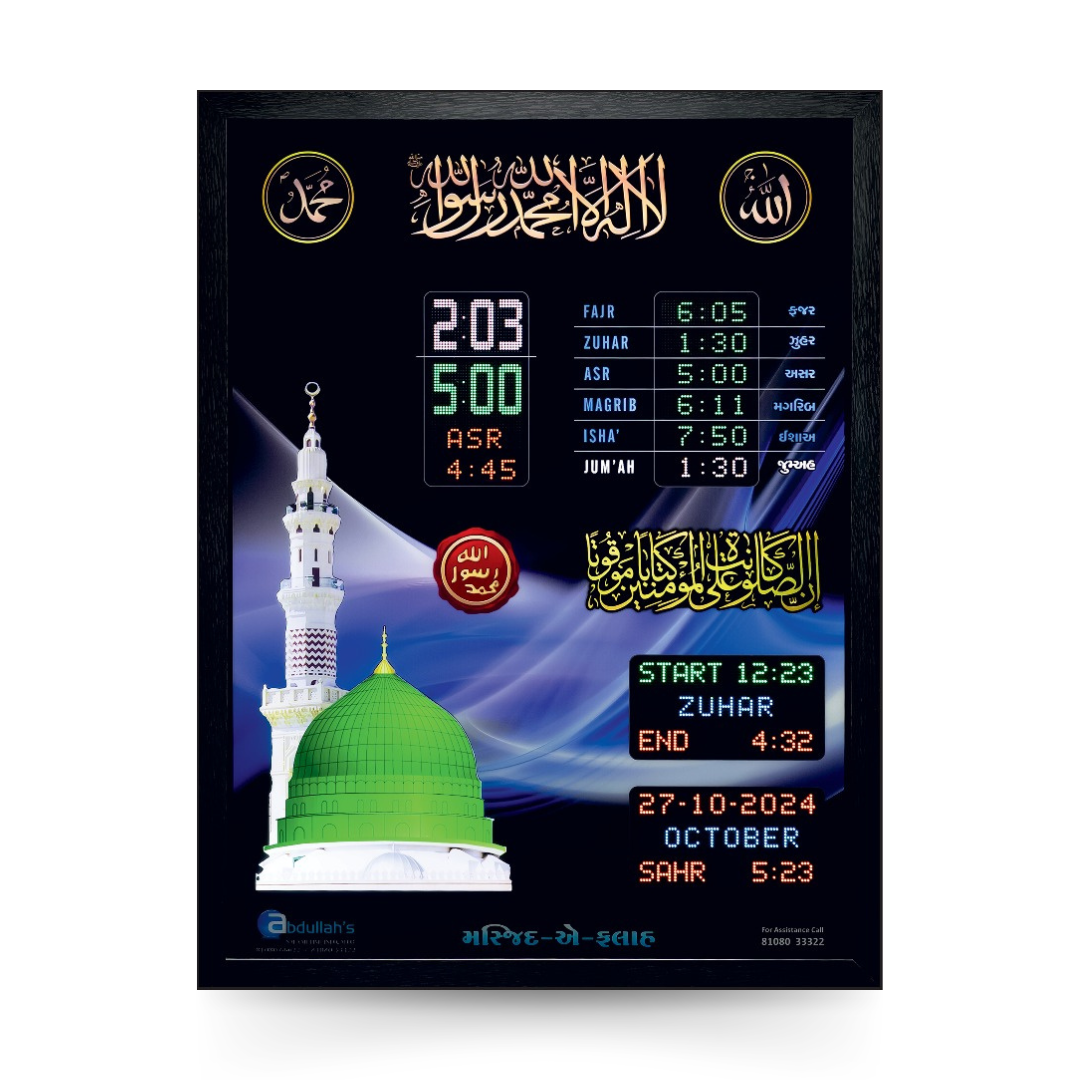
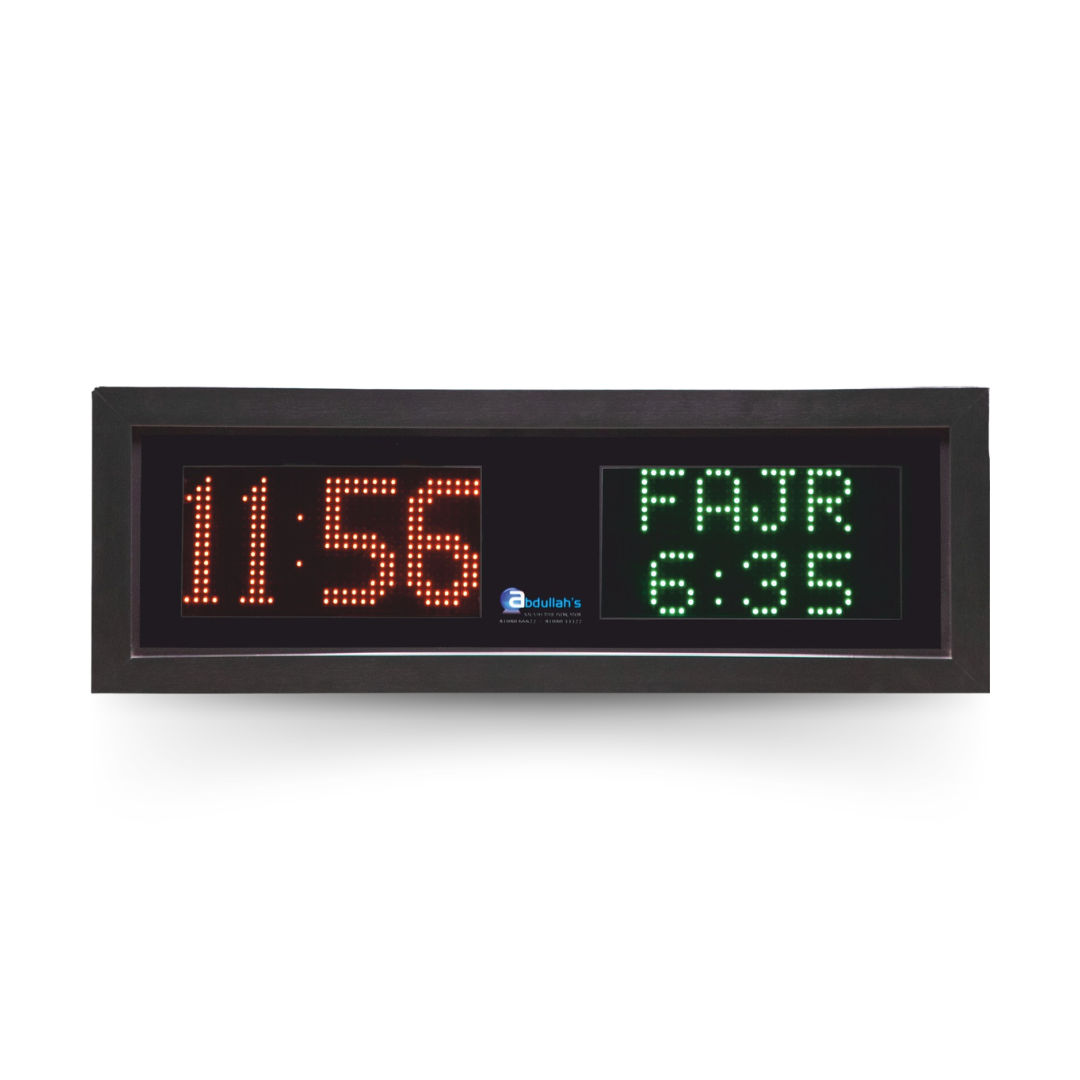
Unlike an ordinary wall clock, a Salah Time Indicator is designed specifically around the daily prayer schedule of a masjid. Depending on the model, it may display current time, individual Salah timings, Jama’at timings, next Jama’at, Makrooh timings, Hijri date, Gregorian date, announcements, and other useful information.
For masjids, this type of digital display can make prayer information easier to see and understand, particularly in larger prayer halls where a small printed timetable or ordinary wall clock may not be sufficient.
In this guide, we explain what a Salah Time Indicator is, how it works, what information it can display, the different types available, why masjids use them, and what to consider before choosing one.
What Is a Salah Time Indicator?
A Salah Time Indicator is a specialized digital display system used in mosques and prayer spaces to show prayer-related timings in a clear, visible format.
The term is often used interchangeably with:
- Salah Time Display
- Digital Salah Time Display
- Masjid Prayer Time Display
- Digital Prayer Time Display
- Masjid Digital Clock
- Namaz Time Display
- Prayer Timing Display
- Azan Display
- Jama’at Time Display
However, these terms can describe products with different features and display layouts.
The basic purpose remains the same: to provide clear, easily visible prayer timing information to people inside a masjid.
A modern Salah Time Indicator can combine a clock and prayer timetable into one dedicated display. Instead of looking at a printed timetable, checking a phone, or asking someone about the next Jama’at, musalleen can look at the display installed inside the masjid.
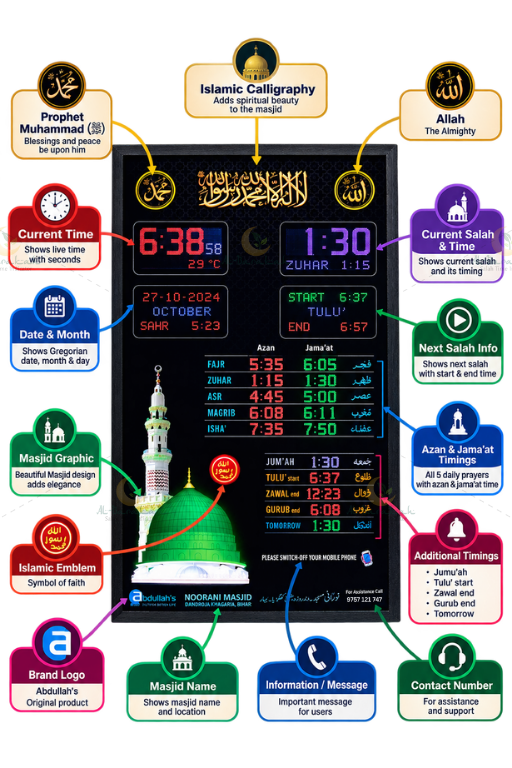
What Does a Salah Time Indicator Display?
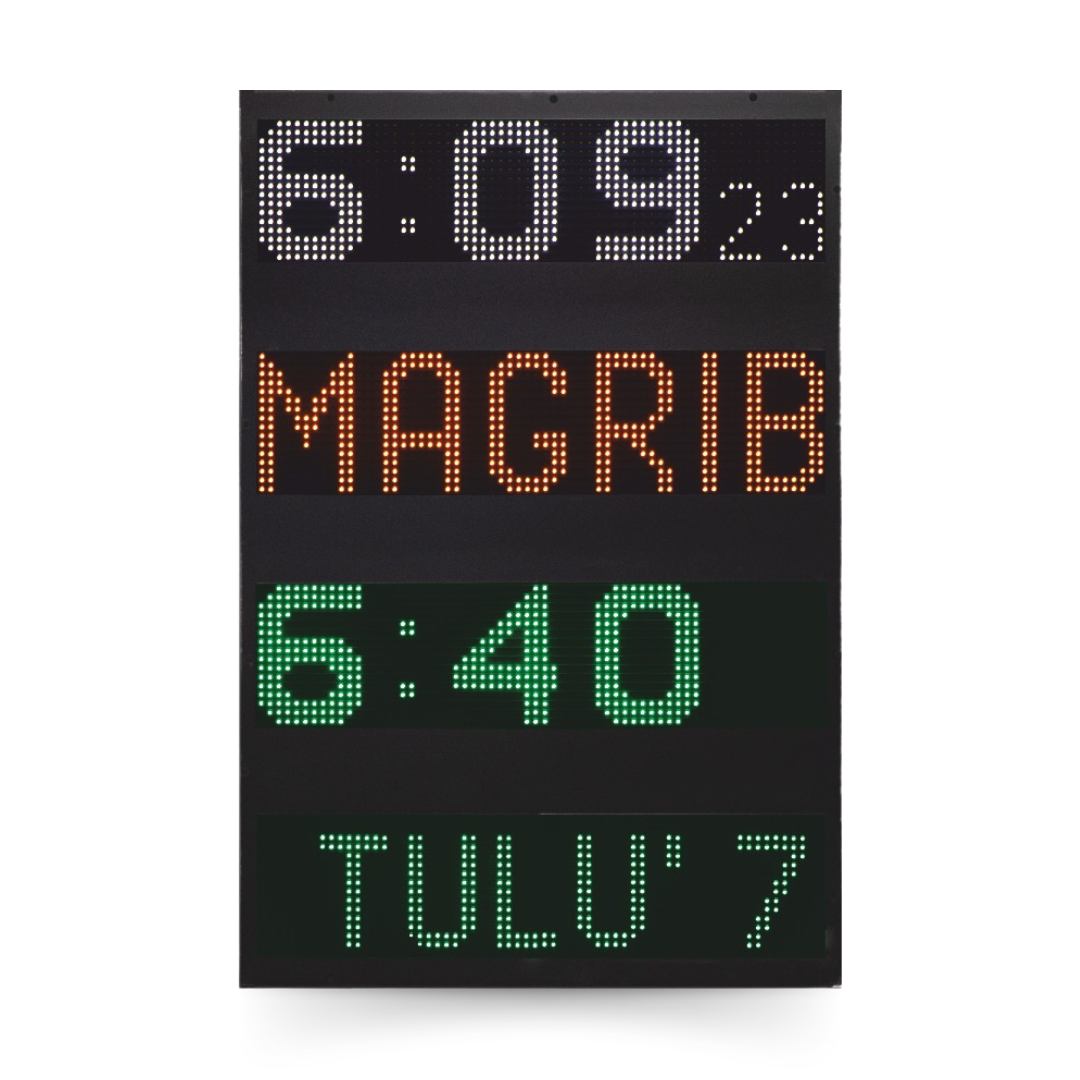
The exact information depends on the model and configuration, but a digital Salah Time Indicator may display several types of information.
-

Current Time
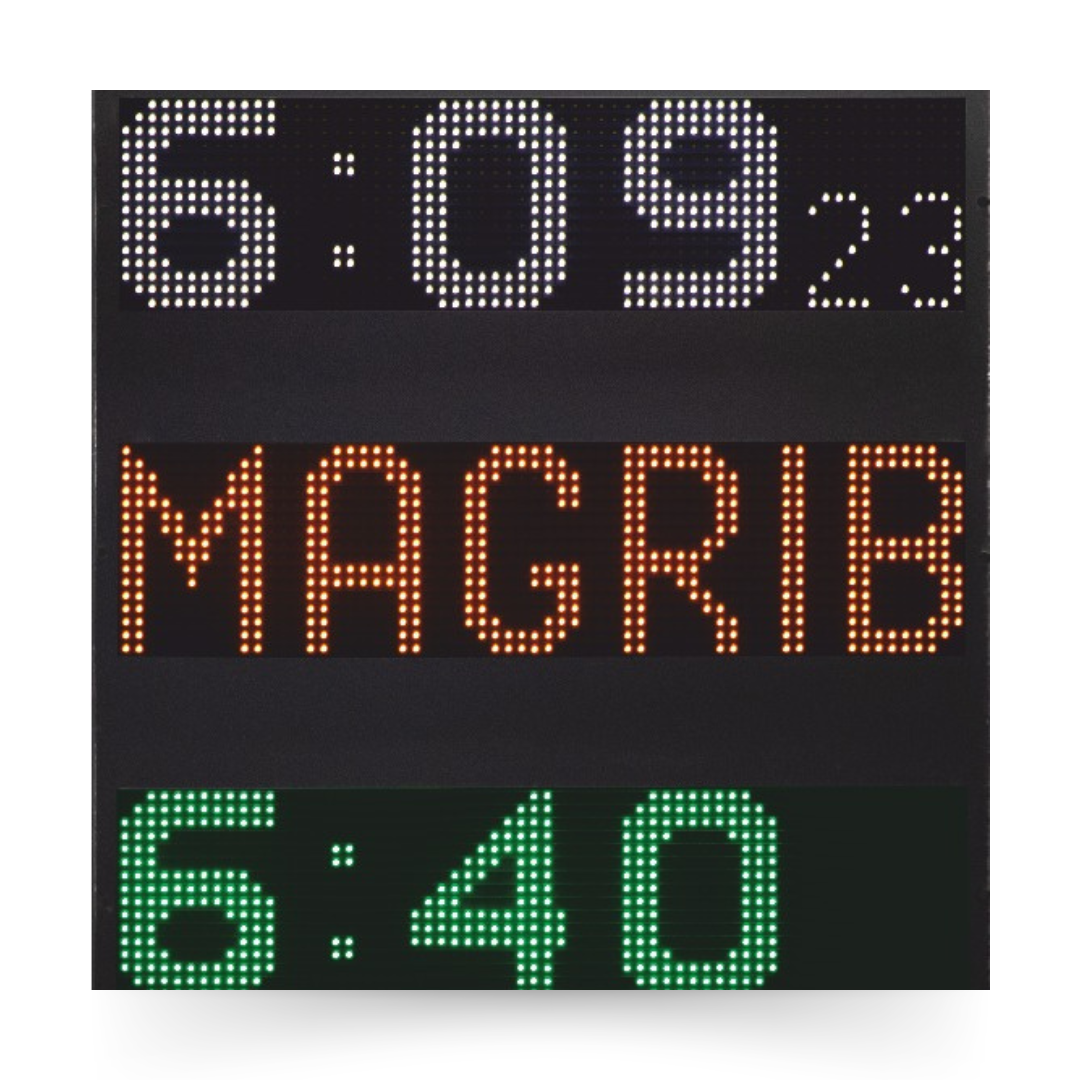
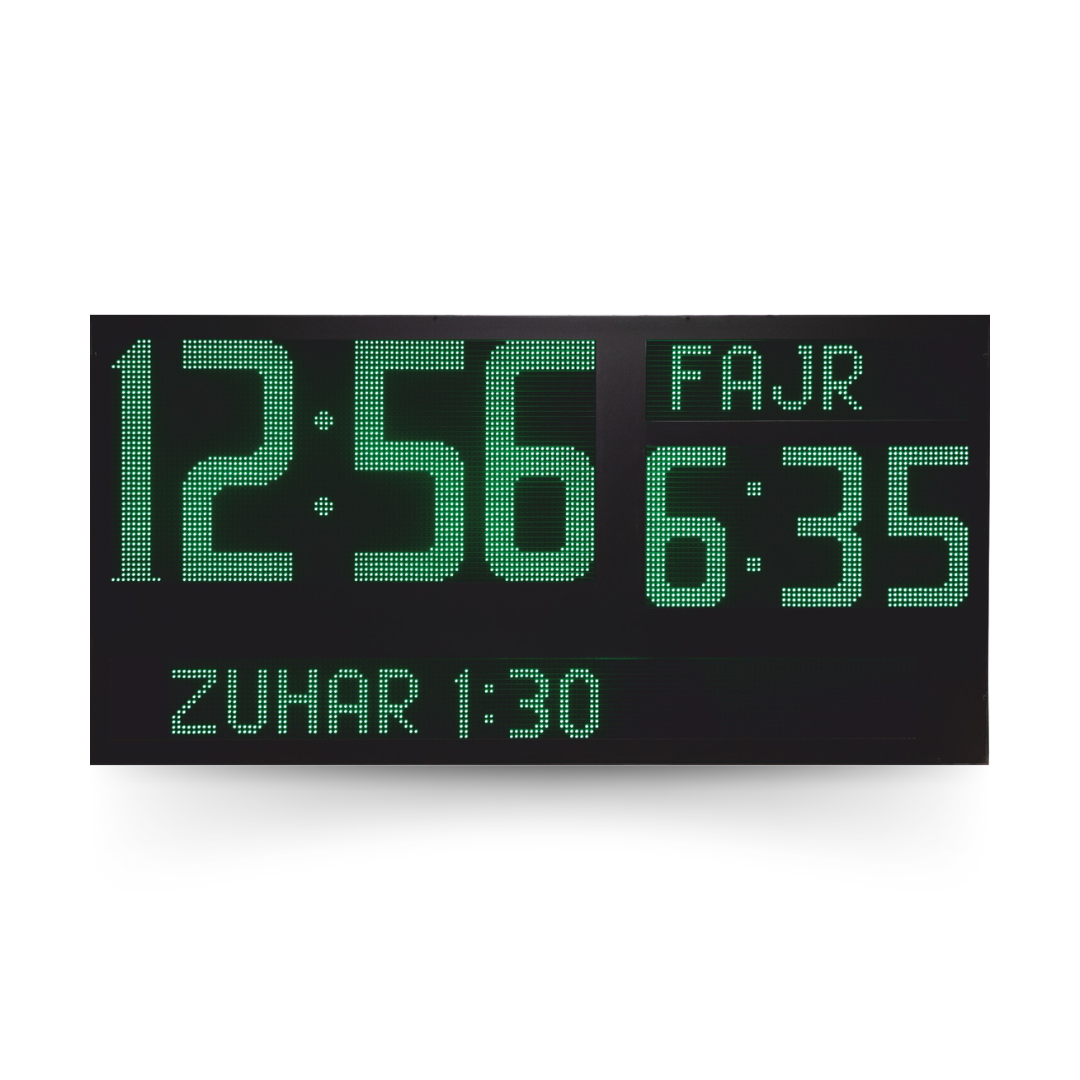
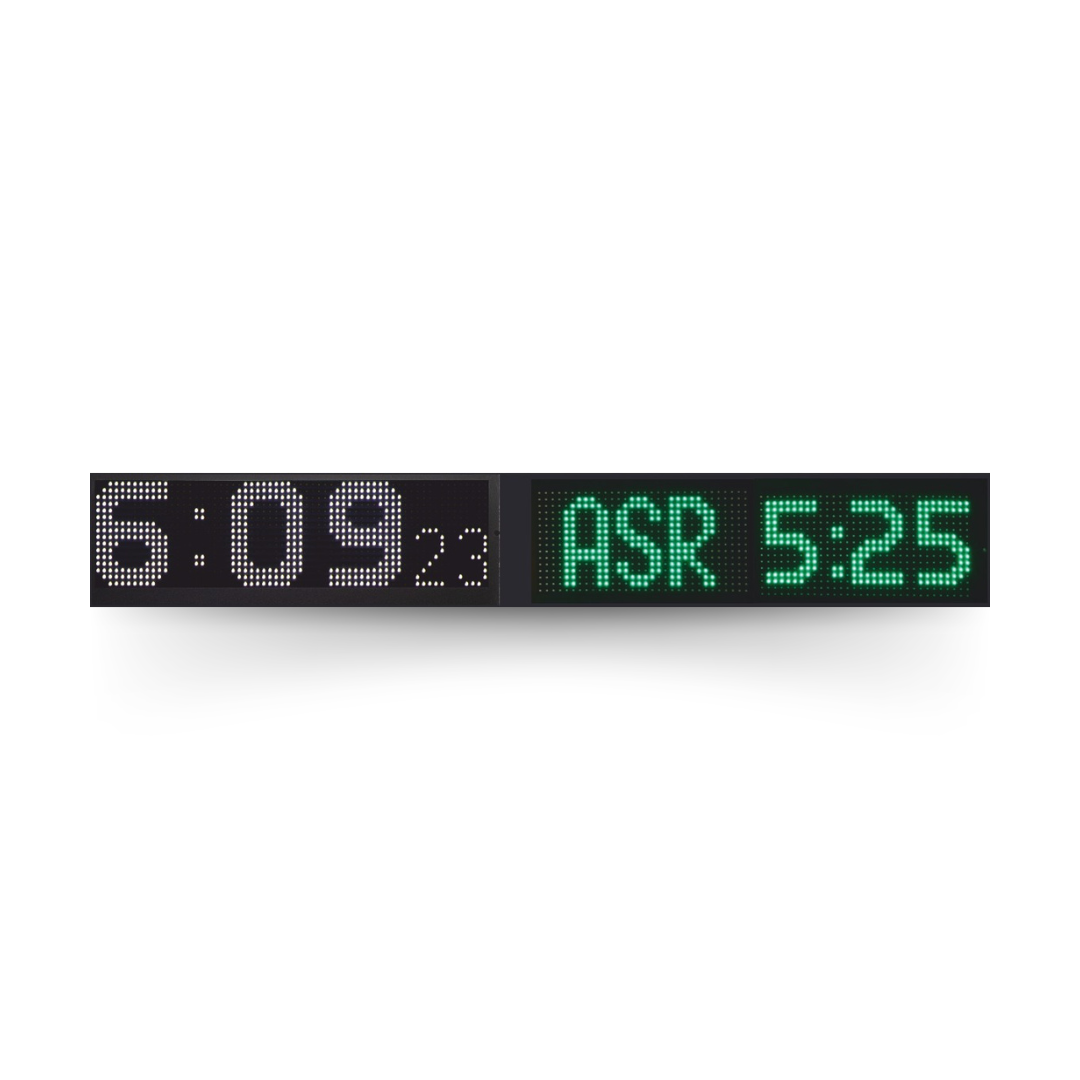
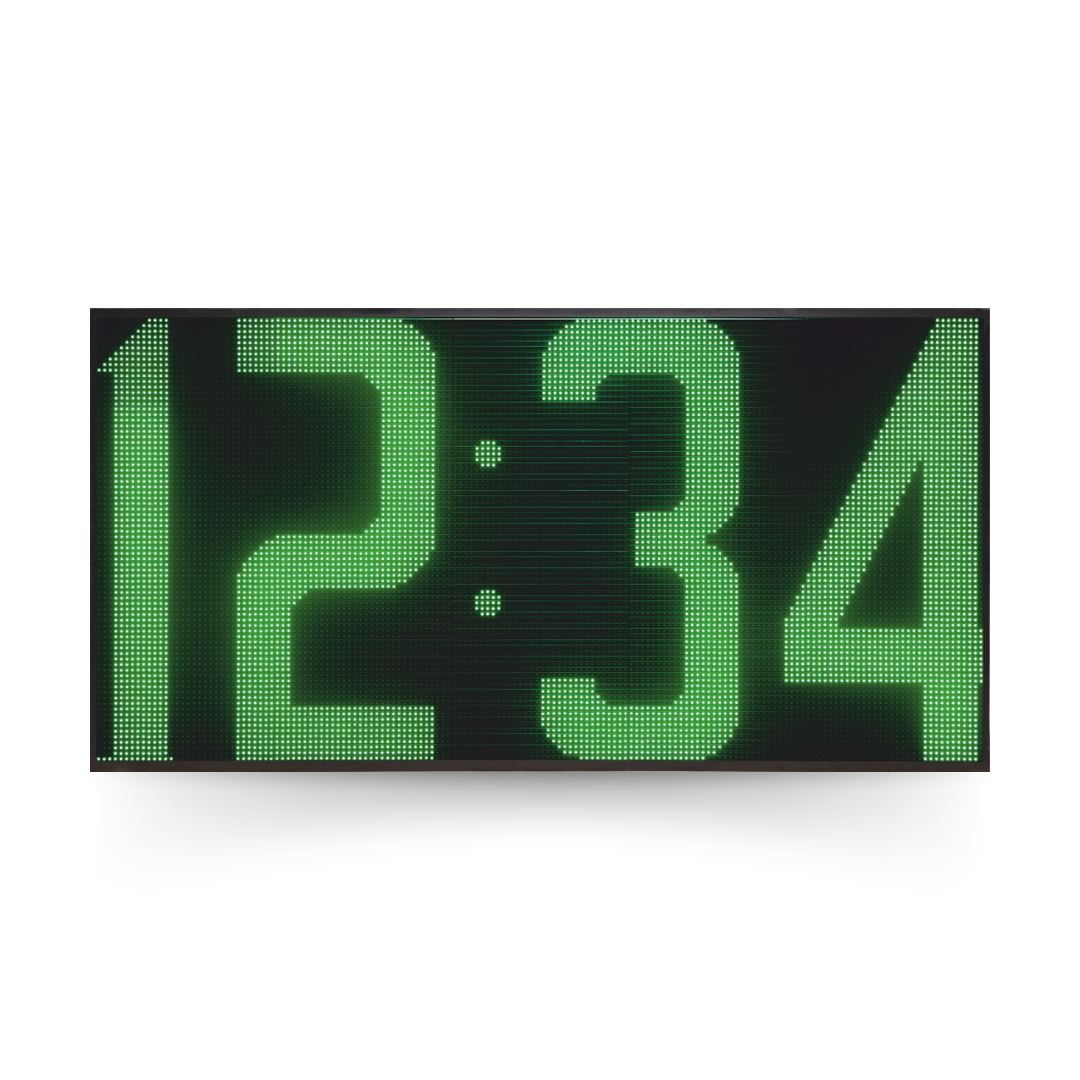
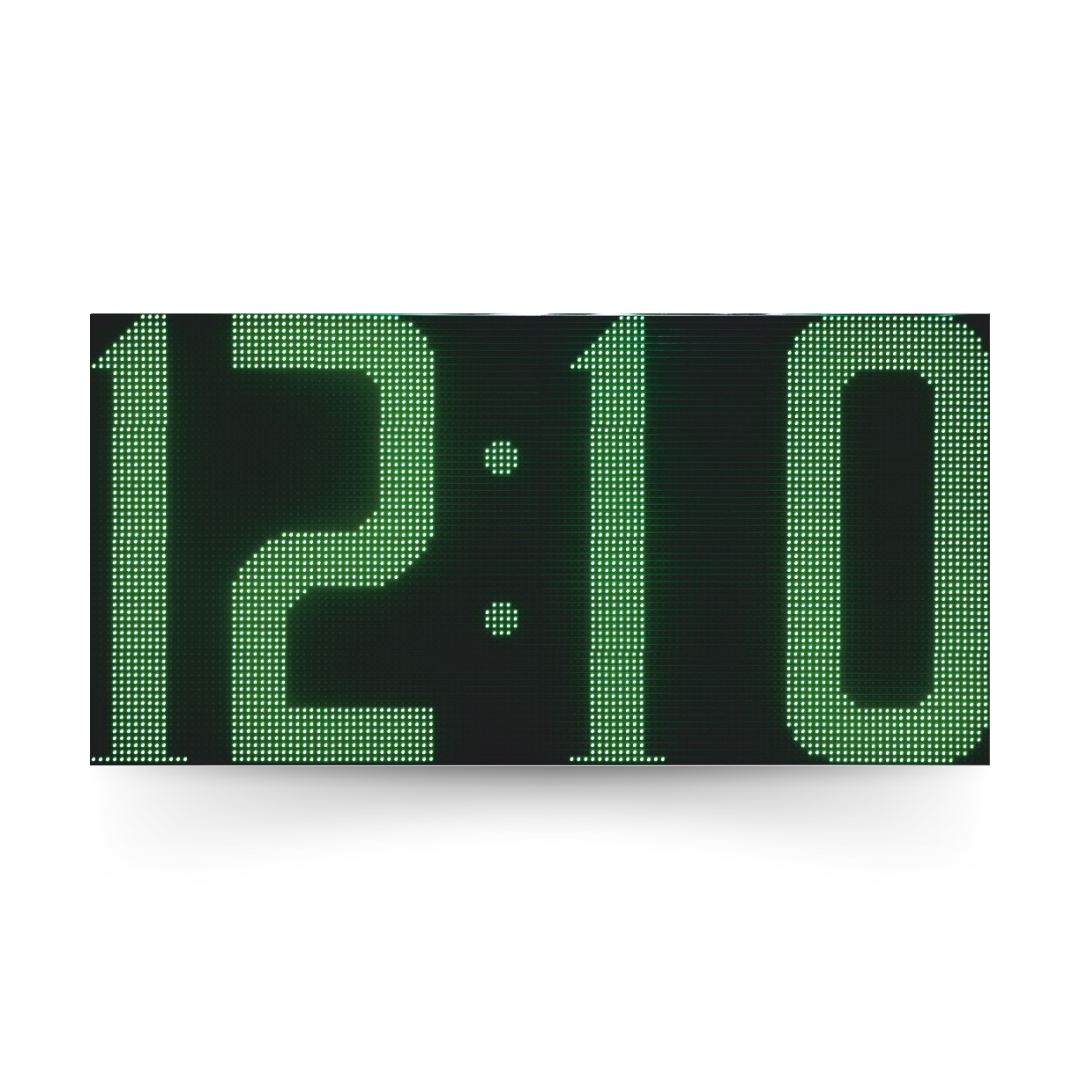
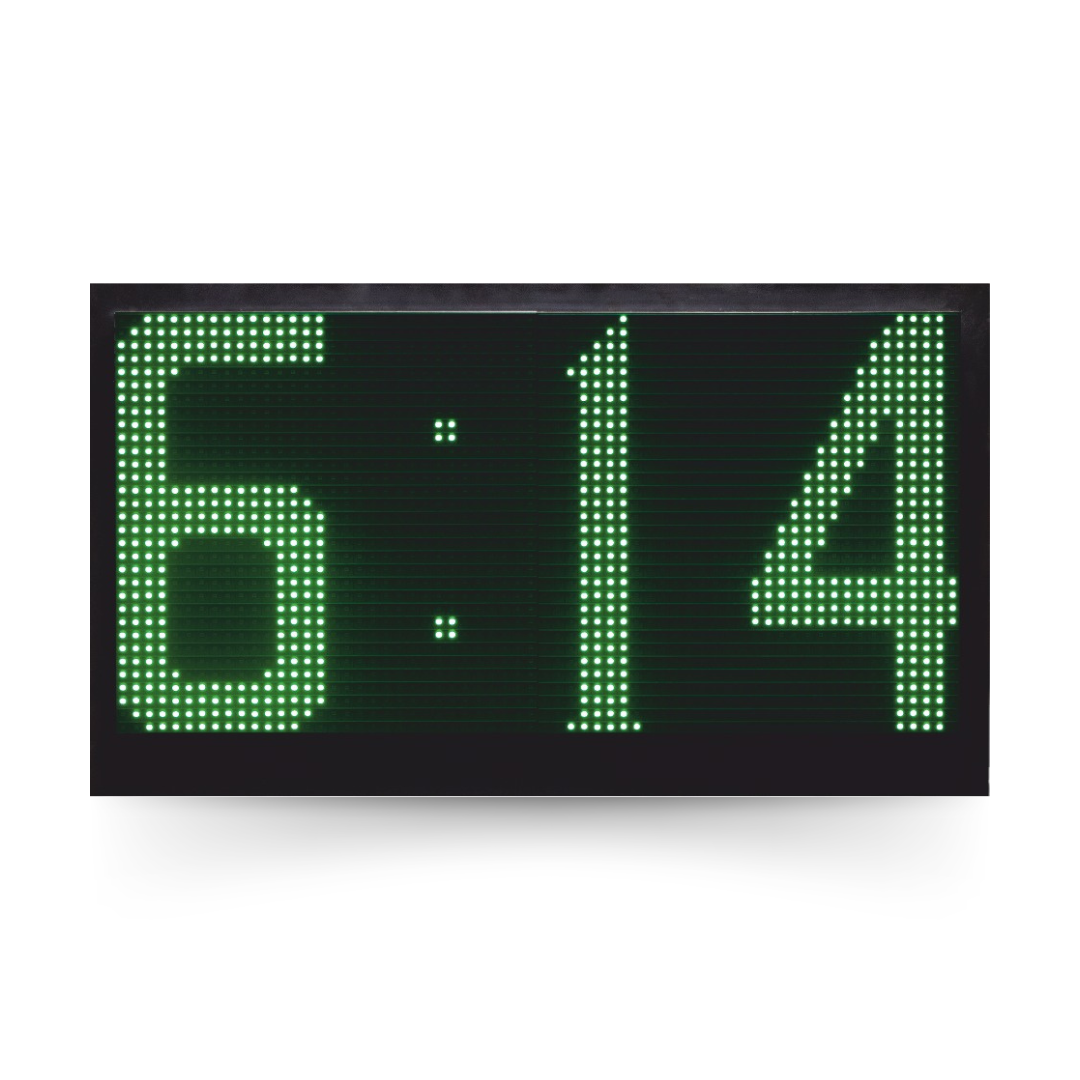
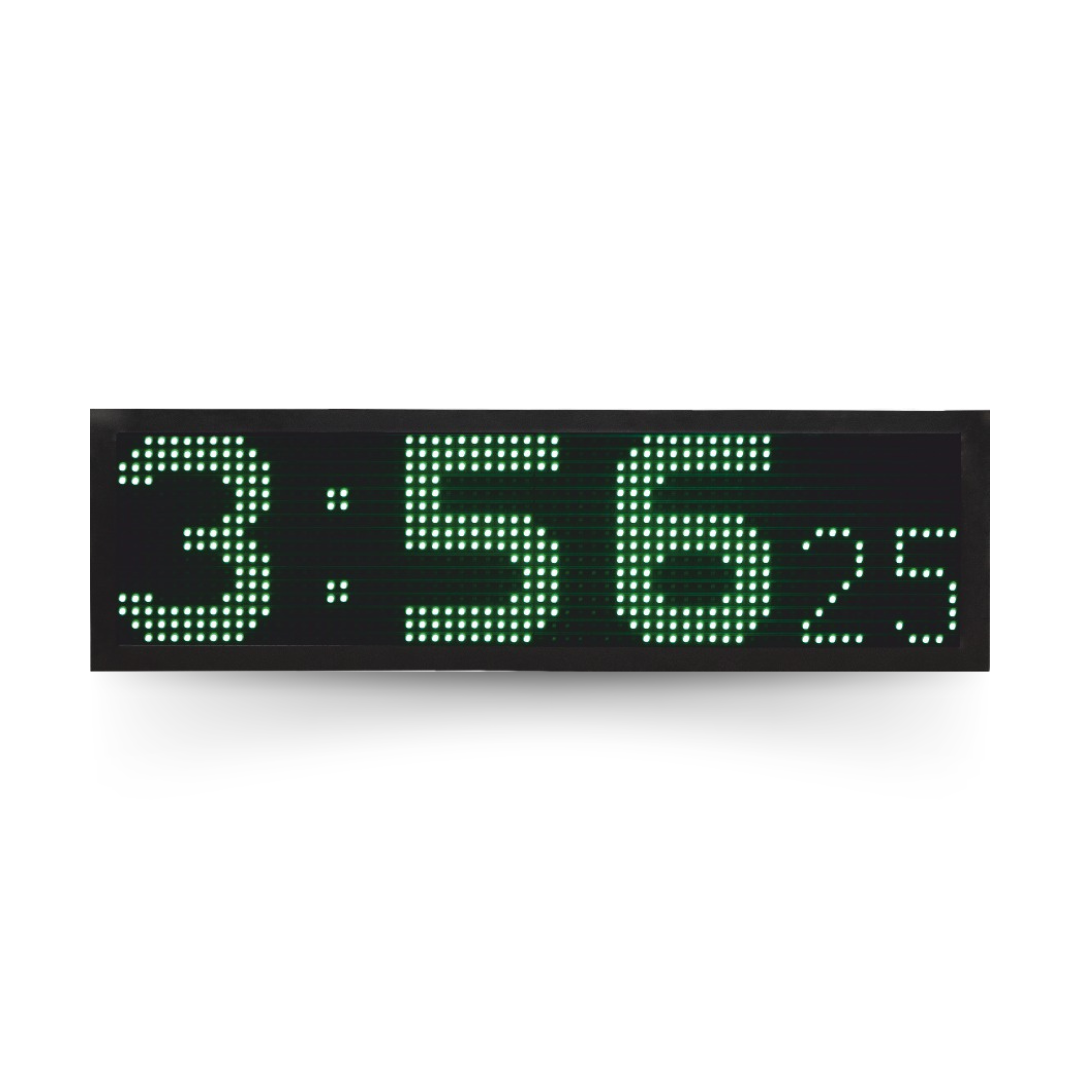
The current local time is generally one of the most important elements on the display. A clearly visible digital clock helps musalleen understand how much time remains before the next important prayer or Jama’at.
-

Salah or Azan Timings
The display may show the daily prayer timings for Fajr, Sunrise, Dhuhr, Asr, Maghrib, Isha. The exact display format depends on the system and the timetable configured for the masjid. It is important to distinguish between calculated Salah timings and the Jama’at schedule of an individual masjid. The prayer time indicates when the relevant prayer time begins according to the timetable being followed, while Jama’at time refers to the Jama’at schedule established by the masjid.
-

Jama’at Timings
For a masjid, knowing the Jama’at time is particularly useful. A Salah Time Indicator can show the scheduled Jama’at timing for different prayers, allowing musalleen to quickly understand when Jama’at is expected to begin.
-

Next Jama’at
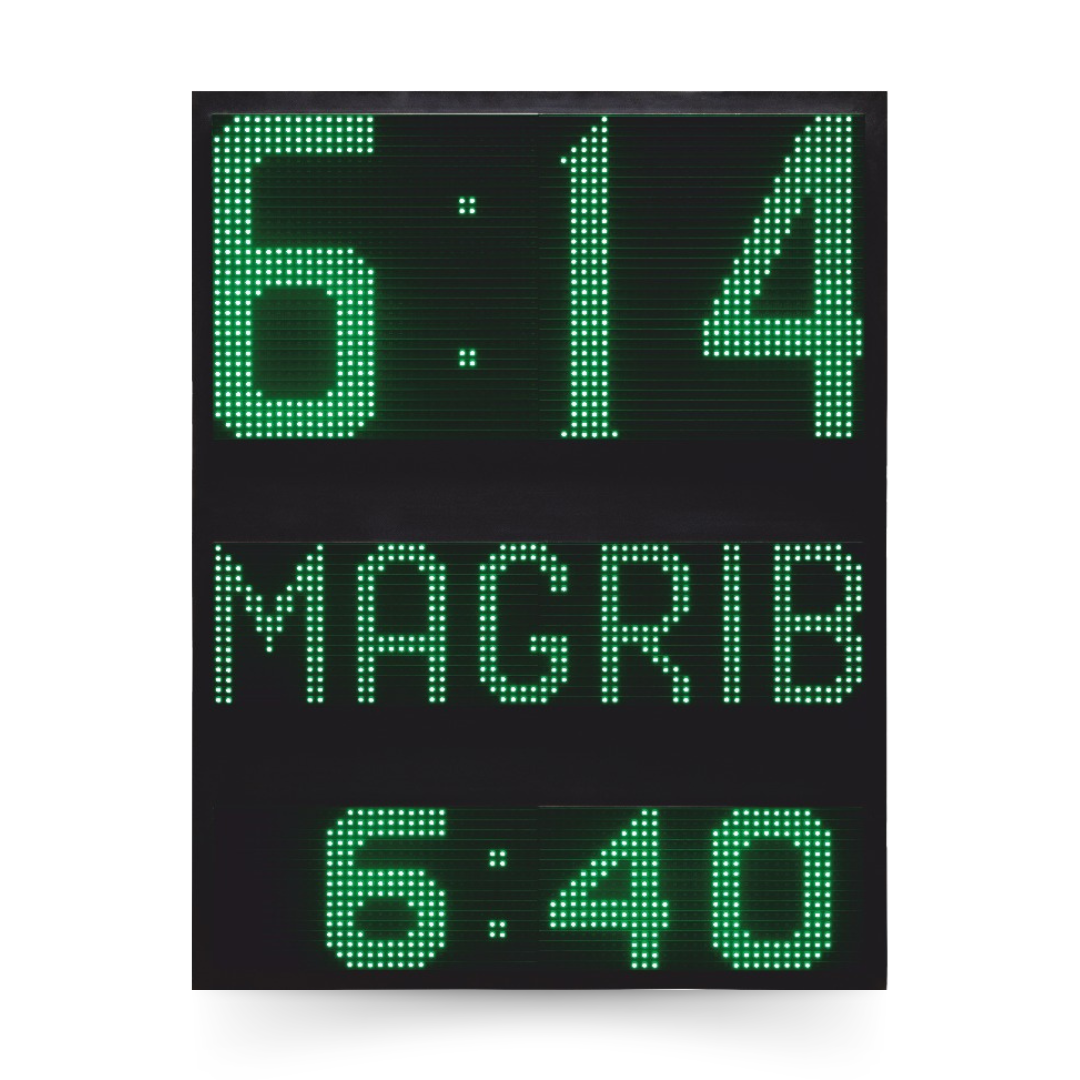
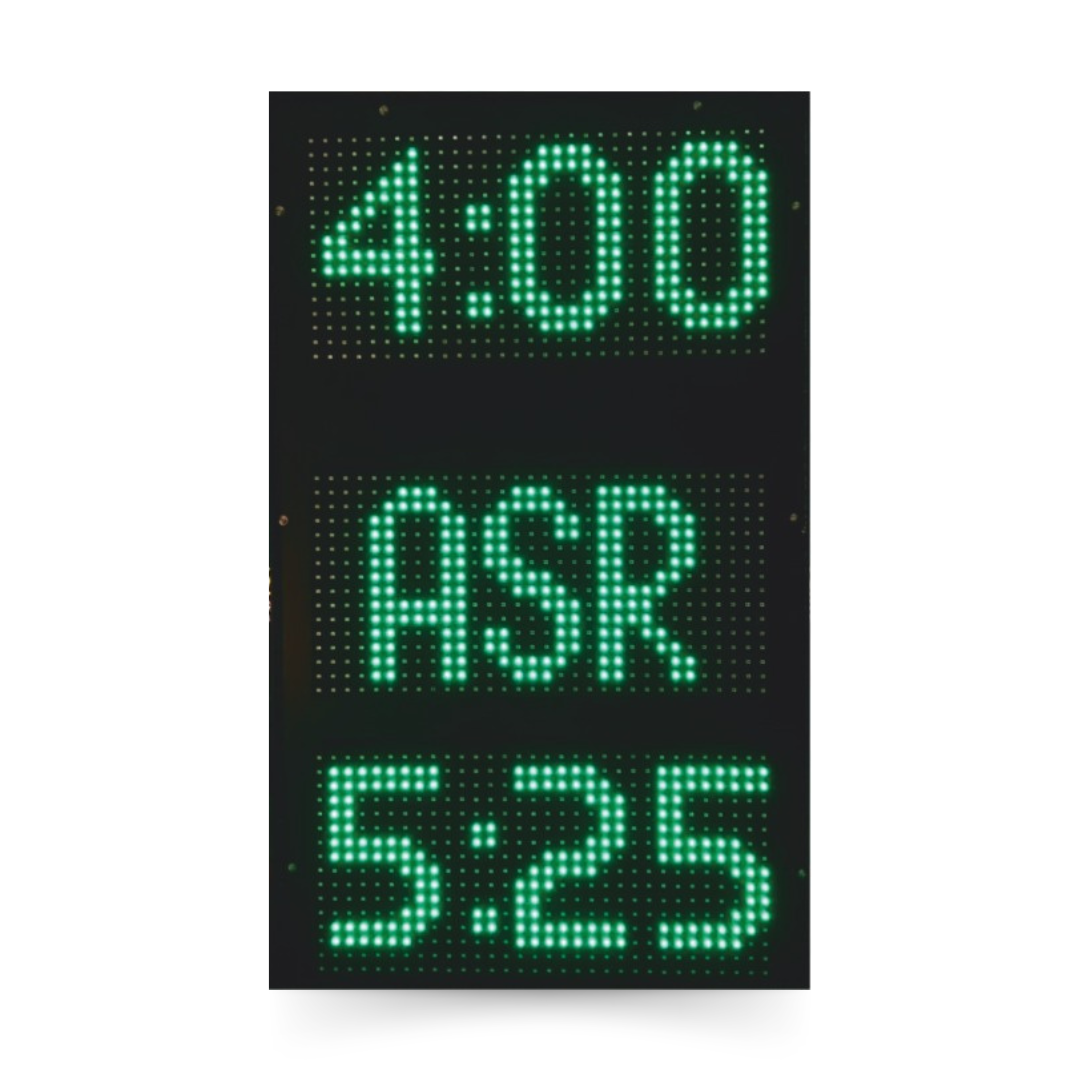
Some advanced displays include a dedicated Next Jama’at indication. This can be especially useful when people enter the masjid between prayer times and want to know when the next Jama’at will take place.
-

Makrooh Timings
Depending on the model and the timetable configuration, a display may also provide information related to Makrooh timings. This can give musalleen additional timing information without requiring a separate printed timetable.
-

Date Information
Some digital Salah displays can also show Gregorian date, Hijri date, Day of the week. This makes the display useful beyond simply showing the current clock time.
-

Announcements and Messages
More advanced Salah Time Indicators may include scrolling or message-display functionality. A masjid can use such a display to communicate useful information such as: Jummah announcements, Islamic program reminders, Community announcements, Donation information, General masjid notices. The exact functionality depends on the particular display model.
How Does a Salah Time Indicator Work?
At a basic level, a Salah Time Indicator combines a digital clock, prayer timetable, display system, and control mechanism into one unit.
The system is configured according to the prayer timings and schedule followed by the masjid.
Once configured, the display presents the relevant information automatically throughout the day.
A simplified workflow looks like this:
-
Prayer schedule
-
System configuration
-
Digital display
-
Automatic timing updates
-
Information visible to musalleen
The exact method of setting and updating timings varies between products.
Some systems are configured manually, while others may provide additional control or synchronization features depending on the model.
This is why masjid committees should look beyond the appearance of the display and consider how easy it is to configure, update, maintain, and operate over the long term.
Why Do Masjids Use Salah Time Indicators?
A masjid has a unique communication requirement: people need access to accurate and visible prayer information throughout the day.
A printed timetable can provide useful information, but it is not always convenient for everyone to read from a distance.
A dedicated digital display solves a different problem: visibility and accessibility of information inside the prayer space.
Here are some of the main benefits.
Clear Visibility
Quick Access to Prayer Information
Better Awareness of Jama’at Timing
Professional and Organized Appearance
Centralized Information
However, appearance should not be the primary reason for choosing one. Visibility, reliability, ease of use, and suitability for the masjid should come first.
Salah Time Indicator vs Manual Azan Clock Board
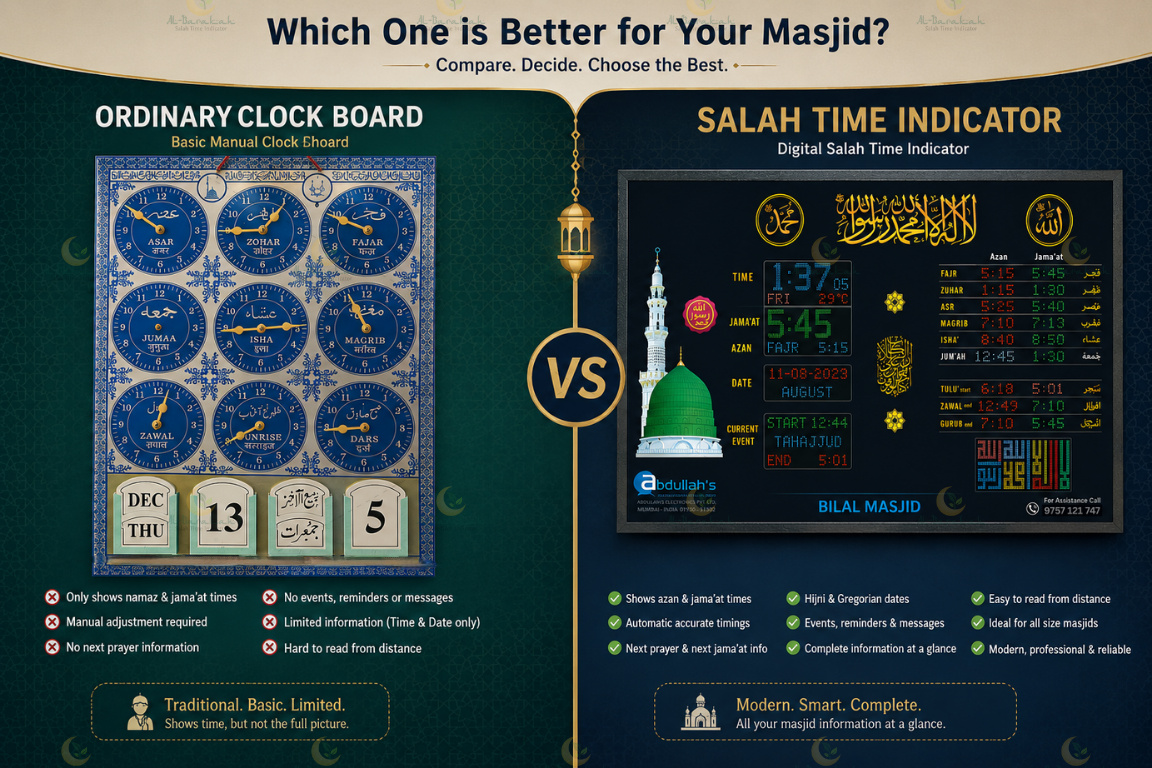
| Feature | Manual Azan Clock Board | Salah Time Indicator |
|---|---|---|
| Current time | No | Yes |
| Salah timings | No | Yes |
| Jama’at timings | Yes | Yes |
| Next Jama’at | Yes | Yes |
| Prayer-related information | No | Yes |
| Masjid announcements | No | Depending on model |
| Hijri date | Yes | Yes |
| Designed for prayer halls | No | Yes |
An ordinary digital clock answers one question:
“What time is it?”
A Salah Time Indicator is designed to answer several related questions:
“What time is it?”
“What is the current prayer timing?”
“When is the Jama’at?”
“When is the next Jama’at?”
And, depending on the model:
Salah Time vs Jama’at Time: What Is the Difference?
This is an important distinction when understanding a Salah Time Indicator.
Salah time refers to the prayer time schedule being followed for the relevant prayer.
Jama’at time refers to the time at which the Jama’at is scheduled to perform that prayer in the particular masjid.
These two timings are not necessarily identical.
For example, the beginning of a prayer time may occur earlier, while the masjid may schedule its Jama’at later to allow musalleen sufficient time to arrive.
This is one reason why a masjid prayer display can be more useful than simply showing a standard prayer timetable. A well-configured display can communicate both the prayer schedule and the masjid’s Jama’at schedule.
What Are the Different Types of Salah Time Indicators?
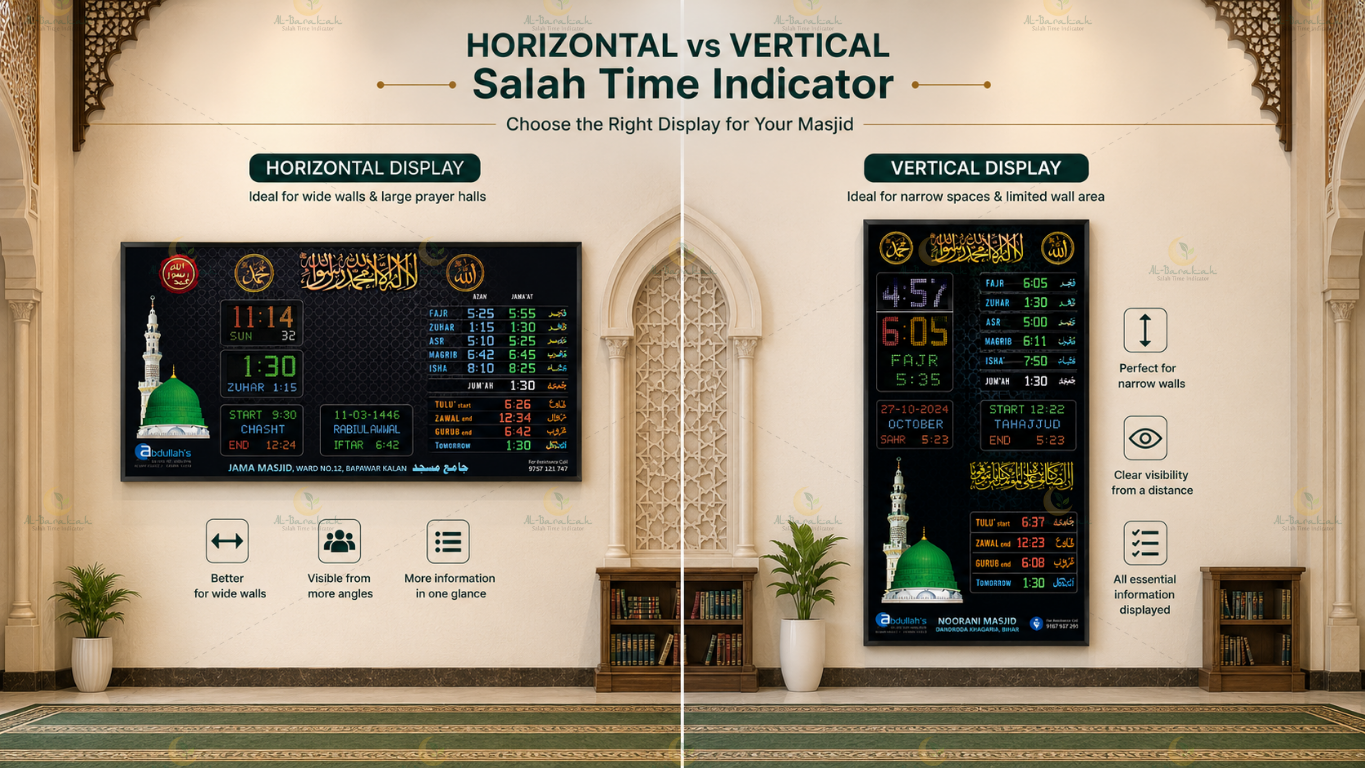
There is no single ideal Salah Time Indicator for every masjid.
The right choice depends on the size of the prayer hall, viewing distance, available wall space, required information, budget, and desired features.
Compact Salah Time Indicators
Medium-Size Digital Salah Displays
Large-Format Salah Time Indicators
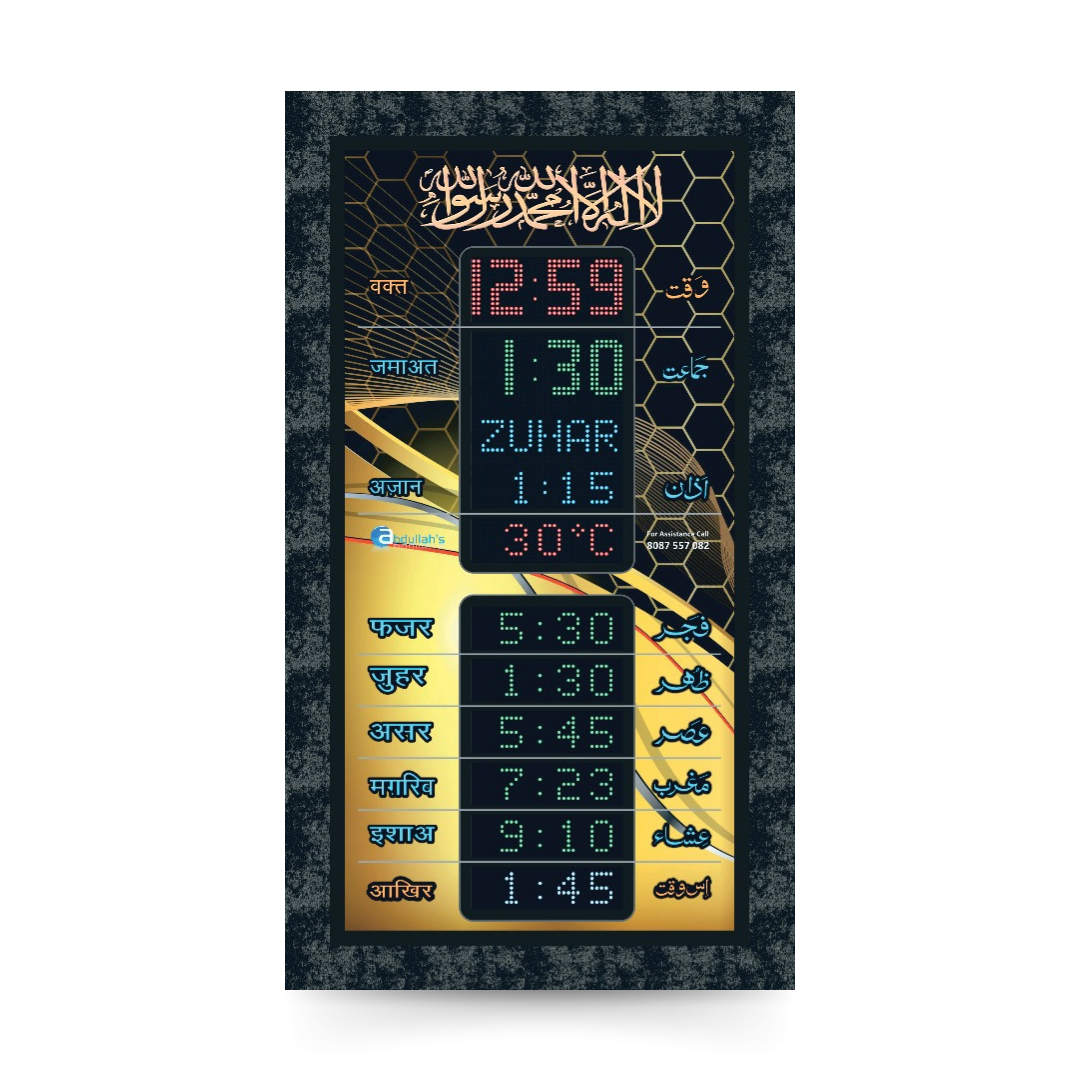
Vertical Displays
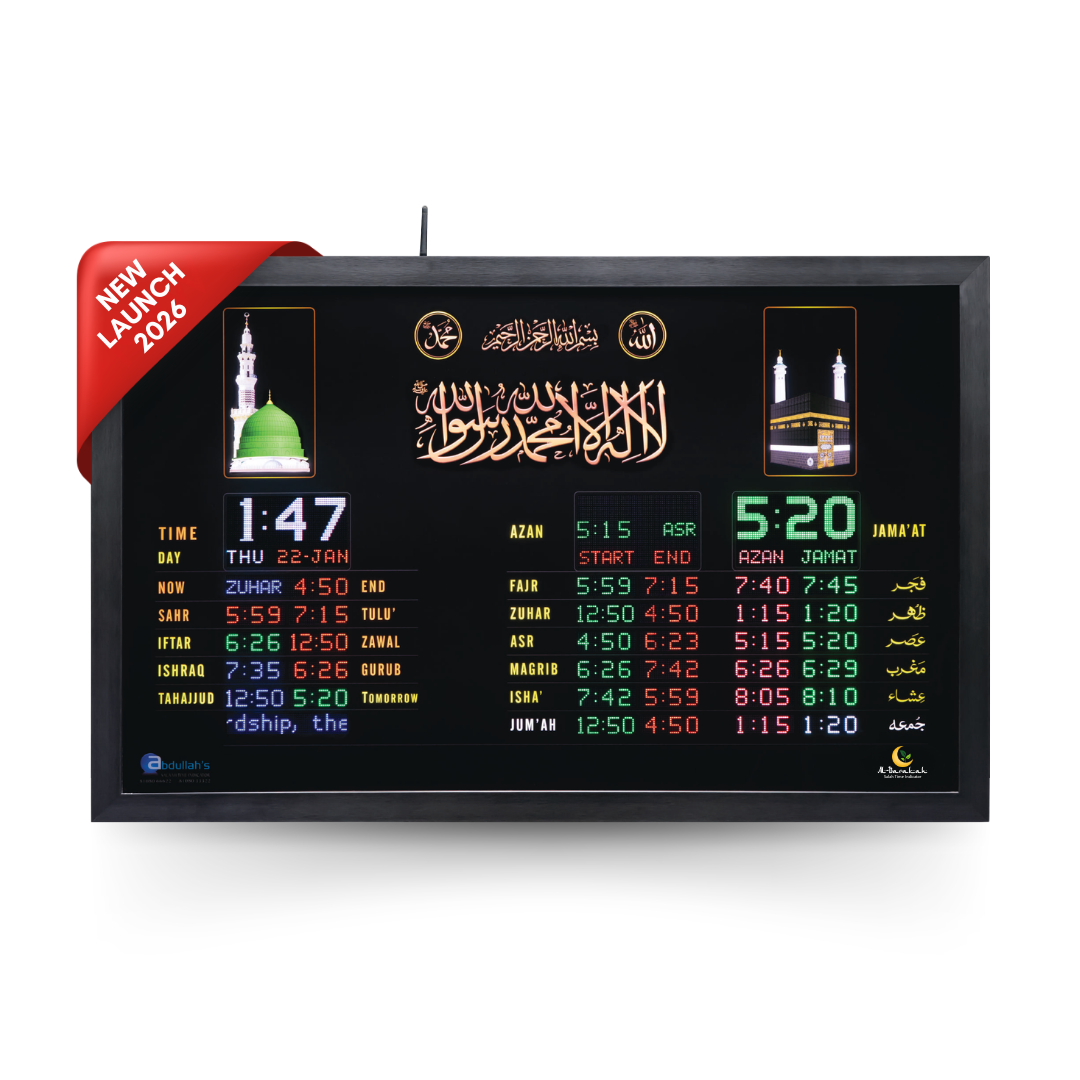
Horizontal Displays
How to Choose the Right Salah Time Indicator for Your Masjid
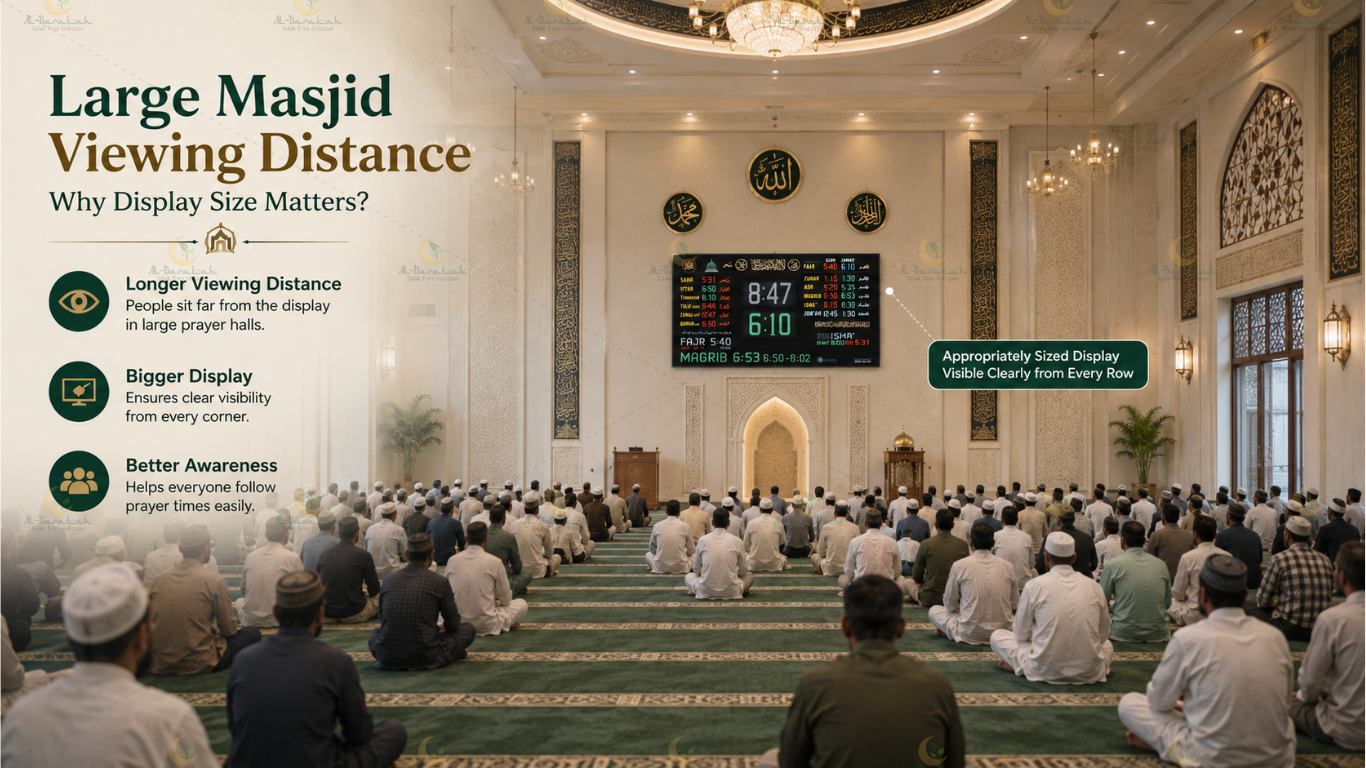
Choosing a Salah Time Indicator should not be based solely on price or appearance. Before purchasing, the masjid committee should evaluate several practical factors
-
Measure the Prayer Hall
Start with the physical space Consider: Prayer hall length, Prayer hall width, Ceiling height, Available wall area, Viewing distance, Potential obstructions. The display should be readable from the locations where musalleen normally sit or stand.
-
Consider Viewing Distance
This is one of the most overlooked factors. Ask: Can someone standing at the back of the prayer hall comfortably read the display? If the answer is no, choosing a cheaper or smaller display may ultimately be a poor investment.
-
Decide What Information You Actually Need
Not every masjid needs every possible feature. Make a list of the information that should be visible: Current time, Salah timings, Jama’at timings, Next Jama’at, Makrooh timings, Hijri date, Gregorian date, Announcements, Other information. Then choose a display that supports the required functionality.
-
Consider Horizontal or Vertical Orientation
Look at the wall where the display will be installed. If horizontal wall space is available, a horizontal model may be appropriate. If the available area is narrow, a vertical display may be more practical.
-
Think About Installation
Before purchasing, determine: Where the unit will be mounted, How power will reach it, Whether the wall is suitable, Whether the display can be clearly seen, Whether lighting affects readability, How the unit will be accessed for setup or maintenance. A good display installed in the wrong location can still be difficult to use
-
Check Setup and Support
A digital prayer display is a long-term masjid installation. The committee should consider: Initial setup assistance, Configuration, Technical support, Warranty, Service availability, Replacement or repair process. This is particularly important because masjid committees may change over time, and future volunteers may need assistance understanding the system.
Why Experience Matters When Choosing a Salah Time Indicator
A Salah Time Indicator is not simply a decorative electronic product.
It becomes part of the masjid’s everyday prayer environment.
That means the supplier’s experience matters.
Al-Barakah states that its founder, Mr. Rehbar Shaikh, has more than 20 years of experience in Salah Time Indicator systems, including extensive involvement with masjids across India. The company also describes itself as an authorized dealer of Abdullah’s Electronics Pvt. Ltd. and provides setup and after-sales support.
For a masjid committee, this type of practical experience can be valuable because the right solution depends on real-world considerations such as prayer-hall visibility, installation location, display size, configuration, and long-term support.
The goal should not simply be to purchase a digital clock.
The goal should be to choose a reliable prayer information system that suits the masjid’s actual requirements.
Common Mistakes When Buying a Salah Time Indicator
Choosing Based Only on Price
Choosing a Display That Is Too Small
Ignoring the Installation Location
Not Considering Future Maintenance
Buying More Features Than Necessary
Does Every Masjid Need a Salah Time Indicator?
Not necessarily.
The right question is:
Would a dedicated digital prayer display make prayer information easier for the people using this masjid?
For a small prayer space with very limited requirements, a simple solution may be sufficient.
For a busy masjid with a large prayer hall, multiple Jama’at timings, many daily musalleen, or a need for highly visible information, a dedicated Salah Time Indicator can be considerably more useful.
The decision should be based on the masjid’s size, requirements, budget, and expected usage.
What Makes a Good Salah Time Indicator?
A good Salah Time Indicator should combine several qualities:
Visibility
Reliability
Appropriate Functionality
Ease of Configuration
Suitable Design
Support
In short:
The best Salah Time Indicator is not necessarily the biggest or most expensive model. It is the one that fits the masjid’s requirements correctly.
Salah Time Indicators for Different Masjid Sizes
Different prayer spaces can have very different requirements.
Small Masjid or Musalla
Medium Masjid
Large Masjid
This is why it is better to select a Salah Time Indicator based on the environment in which it will be used, rather than choosing a model simply because it has the longest feature list.
Where Should a Salah Time Indicator Be Installed?
The ideal location depends on the architecture of the masjid.
In general, the display should be:
- Clearly visible to musalleen
- Mounted at an appropriate height
- Away from major obstructions
- Positioned to minimize glare
- Close enough to a suitable power source
- Easy for authorized personnel to access when configuration is required
The front wall is often a natural location, but it is not automatically the best location for every masjid.
Before installation, consider where musallies actually look during their time in the prayer hall and whether the display can be read comfortably from the furthest relevant seating or standing area.
Can a Salah Time Indicator Replace a Printed Timetable?
Not necessarily.
A printed timetable and a digital Salah Time Indicator serve different purposes.
A printed timetable can be useful as a detailed reference, while a digital display provides large, continuously visible information within the prayer space.
Many masjids can benefit from using both.
The printed timetable can provide detailed reference information, while the digital display communicates the most important current and upcoming information at a glance.
Frequently Asked Questions About Azan Clock
What is a Salah Time Indicator?
A Salah Time Indicator is a digital display designed for masjids and prayer spaces to show prayer-related information such as current time, Salah timings, Jama’at timings, next Jama’at, and other information depending on the model.
Is a Salah Time Indicator the same as an Azan Clock?
The terms are sometimes used interchangeably, but they can refer to different types of products.
An Azan Clock may focus on prayer timings and Azan-related functionality, while a Salah Time Indicator is commonly used to describe a dedicated masjid display that can show prayer and Jama’at information.
The actual features depend on the particular model.
The terms are sometimes used interchangeably, but they can refer to different types of products.
An Azan Clock may focus on prayer timings and Azan-related functionality, while a Salah Time Indicator is commonly used to describe a dedicated masjid display that can show prayer and Jama’at information.
The actual features depend on the particular model.
What is displayed on a digital Salah Time Display?
Depending on the model, it may display current time, Salah timings, Jama’at timings, next Jama’at, Makrooh timings, dates, announcements, and other prayer-related information.
Is a digital prayer display useful for a small masjid?
Yes, if the masjid needs clearly visible prayer and Jama’at information. Smaller displays can be suitable where wall space and viewing distance are limited.
What size Salah Time Indicator should a masjid buy?
There is no universal size. The appropriate size depends primarily on viewing distance, prayer-hall dimensions, available wall space, required information, and the display’s readability.
What is the difference between a prayer time and Jama’at time?
Prayer time refers to the relevant prayer schedule, while Jama’at time refers to the time at which the particular masjid schedules the congregation.
Can Salah Time Indicators display announcements?
Some models include announcement or scrolling-message functionality. The available options depend on the specific display.
Can a Salah Time Indicator show Hijri dates?
Some models can display Hijri dates in addition to other date and timing information. Always check the specifications of the particular model before purchasing.
How much does a Salah Time Indicator cost?
The price varies according to display size, model, features, orientation, and other specifications. Masjid committees should compare the complete solution rather than choosing solely by price.
Final Thoughts
A Salah Time Indicator is more than a digital clock.
For a masjid, it can serve as a central point for communicating important Namaz and Jama’at information clearly to musalleen.
The right display can make it easier to see:
- Current time
- Salah timings
- Jama’at timings
- Next Jama’at
- Makrooh timings
- Dates
- Announcements
- Other useful information
But selecting the right system requires more than comparing product photographs.
Consider the size of the namaz hall, viewing distance, available wall space, required information, display orientation, installation requirements, ease of configuration, technical support, and long-term reliability.
Al-Barakah provides a range of Salah Time Indicators for different masjid requirements, from more compact solutions to larger professional displays. The current range includes high-end, mid-range, economy, home Azan clock, masjid digital clock, and related display categories.
If your masjid is planning to install or upgrade its prayer timing display, start by identifying the actual requirements of the prayer hall. Once those are clear, choosing the right Salah Time Indicator becomes much easier.
Looking for the right Salah Time Indicator for your masjid? Explore Al-Barakah’s range of digital Salah Time Displays and compare the available options based on your prayer hall, viewing distance, and required features.